The excerpt comes from the first chapter of the novel, which I have completed three (rough) chapters of so far. In addition to needing to finish translating the entire novel, the translation of the three chapters I have completed still need a lot of polishing and editing. But I do appreciate Sentinel Editor, Richard Ali being so committed to start featuring translations of African-language works that he urged me to send this in as is.
Ado Ahmad Gidan Dabino is the bestselling author of In Da So Da Kauna, a Hausa language novel that sold over 100,000 copies. Winner of the 2009 Engineer Mohammad Bashir Karaye Prize in Hausa Literature for his play Malam Zalimu, he is also a founding member of the Hausa film industry, and has produced or directed sixteen films in Hausa, including his most recent Sandar Kiwo, which has been shown internationally.
Here is an excerpt from the excerpt:
On Monday, the 23rd day of Ramadan, after we broke fast, my good friend Kabiru visited our house. I saw him as he came into the room, and I quickly got up and grabbed his hand.
“Kai, look who we have here in town today. Kabiru, ashe, are you around? Long time no see!” I said, holding on to his hand.
As we sat down, Kabiru said, “I traveled for a week, that’s why you haven’t seen me. You know that if I hadn’t traveled, it would have been hard to go for seven days without seeing you.”
“I was thinking maybe the fasting was keeping you from going anywhere,” I answered. “You know how the fasting wears you out when the sun is beating down.”
“Well, the sun may be hot, but there’s no sun at night. I was told that you came to my house looking for me while I was gone. Have you forgotten?”
“Oh, I know. I just asked to see what you would say.” We both smiled.
Kabiru looked at me. “Oho, so you want to catch me out, do you?”
“Ai, well, that’s why you should marry relatives. They know you. You know them. If you take the bait, it’s not my fault,” I laughed.
“Ok, well, jokes aside. I have something important I want to talk to you about.”
“I’m listening. What’s up?” I tilted my head to one side to listen.
***
Unfortunately, the English translation published by Sentinel extends beyond the Hausa that was also given, and I have currently misplaced my copy of the book, but as soon as I find it, I will put up the Hausa portion of this excerpt for a side-by-side comparison. To read more, see the Sentinel site.
Hausa novelist Ado Ahmad Gidan Dabino and (translator) Carmen McCain in his office, August 2005.
The past two weeks in my column “My Thoughts Exactly” in the Weekly Trust, I have briefly analyzed and compared the two Nigerian films, The Figurine and Champions of Our Time, that were in competition in the FESPACO Video Feature category. (The week before that I had talked about the politics of what FESPACO considers a film, in “FESPACO: Politics of Video and Afolayan’s The Figurine”). Champions of Our Time, directed by Mak Kusare, won the jury prize (second prize) in the category, as well as a special ECOWAS jury prize. I will copy the articles below (and will add the hard copy of this week’s article when I am able to find one. To read the hard copy, just click on the photo and it should take you to a version big enough to read.) To read on the Weekly Trust site, click here for Part 1, and here for Part 2.
As Africa’s longest running and most famous “pan-African” film festival, FESPACO, kicked off last week, the absence of Nigeria’s sprawling film industry, cited as the second largest in the world by UNESCO, was glaring.
Out of the one hundred and eighty-seven films listed in the official festival catalogue index, only five films from Nigeria were scheduled. Restless City, made by expatriate Nigerian filmmaker Andrew Dosunmu Waheed, was the only Nigerian film in the main feature-length film competition but was withdrawn before it could be screened. Didi Cheeka’s gut-wrenching Bloodstones and Julius Morno’s whimsical The Camera (and apparently Mak Kusare’s Duty[Please note this is a correction from my earlier mistake of identifying the film as Ninety Degrees, a feature length film directed in 2006 by Mak Kusare-CM 9/4/11], though it was not listed in the catalogue) were shown as part of a short film special screening but were not in competition. Only two feature Nigerian films Champions of Our Timedirected by Mak Kusare and The Figurinedirected by Kunle Afolayan even made it into the condescending TV/Video Fiction Category, reserved for feature films submitted on digital formats rather than 35 millimeter film.
Considering the noticeable omission of Nigeria from the festival, I imagine that by the time the jury for the “Best work in TV/Video” category met, they were feeling a certain amount of political pressure to award a Nigerian film with a prize. They awarded South African film Hopeville directed by Trengoue John with the best video prize, and chose Nigeria’s Champions of Our Time directed by Mak Kusare, which was also awarded an ECOWAS special prize, for the special jury (second) prize.
Since I often argue that Nollywood films should be taken seriously, I should be ecstatic that the film Champions of Our Time, a heartwarming, nicely shot tale of a child in a wheelchair and her struggle to participate in a secondary school television quiz competition, did Nigeria proud by winning two prizes at FESPACO. Unfortunately, although I am happy that a Nigerian film received such recognition, I find the selection of Champions of Our Time for the video prize problematic, perhaps because it seemed such an obvious snub of the only other feature-length Nigerian film in the competition, The Figurine, a film I have mentioned in this column as being “the best Nigerian film I have ever seen.”
I had expected The Figurine to win the category. It pushes genre elements developed by Nollywood in a new direction with beautiful cinematography, a moving soundtrack placed at all the right moments, excellent acting and set design, and sophisticated story rooted in certain cultural obsessions as developed in both in Nigerian “high” literature and more popular art forms. I did not see Hopeville so have no point of comparison, but I saw Champions of Our Time, or at least enough of it, to conclude that, at least to me, The Figurine, is by far the superior film, in terms of literary and artistic merit, if not in terms of promotion of a certain social agenda.
Champions of Our Time deals with an important topic I’ve never seen featured in any other Nigerian film, Mak Kusare is a clearly talented director, and the film has a very real emotional power, featuring several touching performances between Segun Arinze and Treasure Obasi, and an electrifying one by Ejike Asiegbu, whose character observes on national television that people throw small change at him, assuming him to be a beggar simply because he is in a wheelchair. However, compared to The Figurine, Champions is formulaic and sentimental, the sort of “disadvantaged character comes out triumphant and teaches everyone else a lesson” that has been done hundreds of times in Hollywood and Bollywood. A formula is fine if it is done in an exciting way. After all, oral tradition is built of formulas, individual performances judged better or worse by the skill with which they are executed. But when it comes to a written screenplay, there’s only so much so much even the best director and actors can do with a stiff and didactic script that quickly reveals its government funding in long memorized textbook passages on Nigerian history parroted by the contestants in the quiz show.
I admit my viewing experience of both Nigerian films was not balanced and my comparison is perhaps not quite fair. First, Champions of Our Time and The Figurine are wildly different in genre, and ideally we should appreciate each on its own merits, the social motivation/advocacy film for what it is, the spiritual thriller for what it is. I would not normally discuss the two films in the same essay. In a different context, I would probably be more positive about the intentions of Champions of Our Time, which is geared towards children—the sort of film we need more of in Nigeria—and the laudable highlighting of difficulties faced by physically challenged people in Nigeria. Second, my viewing experience of the two films was not at all equal. I’ve seen The Figurine twice, once with a stunned audience at Zuma Film Festival in Abuja, and second at FESPACO. On the other hand, I have only seen a preview copy, not even the final cut, of Champions of Our Time at FESPACO after the official copy did not work in the projector. Not only did the picture have “preview” floating over it for a third of the screening, but I did not see the end of the film because the DVD stopped at the emotional climax of the film when Sophia, a young girl in the wheelchair, decides to speak out at the quiz show award ceremony.
In obsessing over what could have made both FESPACO and ECOWAS judges choose Champions of Our Time for their prizes, I have begun to think that the decision was rooted in privileging a simplistic interpretation of “third cinema” (even if funded by problematic sources) over the crowd-pleasing “popular art” of Nollywood. Perhaps Champions won because of its good intentions and because it dealt with a topic that has not been dealt with before in Nollywood—not because it was a particularly exceptional film
At first glance, Champions of Our Time is the film that more self-consciously deals with social issues in Nigerian society. It tells the story of a competition between a privileged girl, Sharon (Feyisola Owuyemi), who wants to win the St. Flair’s NGO sponsored secondary school quiz competition so her father will give her permission to stay in Lagos, and a physically challenged girl, Sophia (Treasure Obasi), who wants to win so that she will have the money to have surgery abroad. Over the course of the competition, Sophia becomes “the voice” of those living with physical challenges in Nigeria. One scene in the film provides insight into the politics of award-giving. As the two girls reveal their equally competitive skills at memorization for the quiz, Sharon’s wealthy mother (Ayo Adesanya) tries to undermine Sophia’s credibility to an already wildly prejudiced committee member (Joke Silva). The mother argues that the committee should think about the international reputation of Nigeria, especially with the new rebranding exercise: if Sophia went on to represent Nigeria in France, people outside would say that the best Nigeria could offer is a “crippled girl.” This statement reveals the character’s prejudice and serves as a critique, on the part of the filmmakers, of such shallow ideas of “rebranding.” Of course, the film implies, the “more enlightened” St. Flair’s organization of France, which was so wildly misinterpreted by its Nigerian committee members, would see nothing amiss or embarrassing about a contestant in a wheelchair.
Ostensibly speaking out in defense of those with physical differences, the film appeals to film festival judges with its political correct ideology. We are the opposite of the prejudiced mother, the film, and its government backers, seems to say. We dare to present a film to represent our nation that features a girl in a wheelchair as the main character and reveals the prejudice of our citizens. This is Nigeria rebranded as UN-charter compliant.
The problem is that it is all too obvious. The film glosses over the complexity of actual experience. The committee member villains are just a bit too flat and stupid and willfully hateful, and the physically challenged people are portrayed as helpless victims until bright young Sophia “becomes their voice.” Even the man with the most powerful voice in the film (Ejike Asiegbu), a PhD holder in agricultural engineering who crawls up three flights of stairs to interrupt the quiz show in defense of Sophia, sighs that he has not been able to get a job. Of course, there are terrible prejudices in Nigeria, as well as a lack of public policy to address the needs of the physically challenged. An exposé of such discrimination in film is a necessary corrective, but it would have been even more empowering and ultimately more respectful to those many professionals with physical challenges living in Nigeria to at least allow the PhD in the wheelchair a job.
Last week, I questioned the motivations behind FESPACO and ECOWAS juries awarding Champions of Our Time, a film dramatizing a quiz competition between two secondary school students, the wealthy Sharon (Feyisola Owuyemi) and the underprivileged and physically-challenged Sophia (Treasure Obasi). I argue that the more deserving Nigerian film in the FESPACO “video feature” competition was the The Figurine, which depicts the changed lives of several Youth Corpers after they find a figurine of the goddess Araromire.
The politics of prize-giving in Champions of Our Time, and the competition between the privileged Sharon and the marginalized Sophia, becomes a prescient introduction to the politics of prize-giving at FESPACO and other award ceremonies. On the face of it, it seems that Sophia has symbolically triumphed. A film highlighting a social problem in Nigeria, featuring a young girl living with a disability, was up against an unapologetically commercial film that had won five AMAA awards and had played to sold out theatres in London. In competition, it might seem that Champions of Our Time was a David against the Goliath of The Figurine. But is this really a fair comparison? Not to me.
While Kunle Afolayan worked independent of established funding structures, funding his film with product placement and a bank loan (which he paid off after screenings at sold out theatres, apparently accomplished by innovative word-of-mouth marketing on facebook), Champions of Our Time was apparently funded by the Lagos State government. Although, The Figurine won 5 AMAA awards, official structures in Nigeria seem to favour their own Champions of Our Time, which rebrands Nigeria as actually being concerned about social issues rather than just embarrassing “ritual films,” a theme The Figurine uses and questions rather than avoiding. At the Zuma Film festival in Abuja, I was shocked when The Figurine, which blew away the audience, received only an honorable mention. Champions of Our Time (which I had not yet seen) won best film category.
If, as I suggested last week, award juries are rewarding Champions for its compliance with the ideals of Third Cinema—outlined by theorist Teshome Gabriel as a “public service institution” which presents the “lives and struggles of Third World peoples” and works as “an ideological tool,” by performers “speaking indigenous language”—how well does the film measure up? On the surface, the exposé of how people living with disabilities are ostracized, seems to well fit the goals of such a political cinema. When one digs deeper, less so.
First, the dialogue was scripted in an over-formal English nobody, other than perhaps the Queen, actually speaks, and which the best of Nollywood has moved past. Second, the entire story revolves around a rather boring quiz show contest, to which the secret of winning seems to be how well one can memorize information in a study manual. If the producers were going after Slumdog Millionaires style success by dramatizing a quiz show, their intentions fell flat.
Even more problematic, while Champions of Our Time follows self-consciously in a “third cinema” tradition of national development, it also reveals a dependency on the affirmation of a Western audience, just as FESPACO and Nigeria’s rebranding program do. Despite all its Nigerian government sponsorship and reciting of Nigerian history, the characters in Champions of Our Time seem to look outward for help. St. Flairs, the organization that sponsors the competition, is based in France, and when the doctor (Segun Arinze) challenges the prejudiced interpretations of the Nigerian St. Flair’s members, he appeals to the more enlightened sensibilities of the European main branch. He goes into such a long description of St. Flairs that I had to google it afterwards to see if the protracted speech was part of a product placement. (It was not, though such valorization of a French NGO could be seen as a plug for French film funding.) The French founders are obviously more enlightened about “physically challenged” people than the Nigerian members. So is the UN, which, the doctor repeatedly claims, has “expunged” the term “disabled” from its language, though such a vocabulary distinction would only matter to an English-speaking audience, and I could find no evidence for this claim on the UN website for the “Rights and Dignity of Persons with Disabilities.” The superiority of NGO work in Nigeria or the appeal to the outside as the arbiter of “more enlightened” views and source of aid is not questioned.
As a teacher, I was particularly disturbed by the kinds of vague questions, expected to be answered in a few minutes, asked in the quiz show (one being “Explain Islam and its Origins”). At one point when Sophia gets stuck on a question, even though she is portrayed as an intelligent girl who reads Time Magazine and is interested in international politics, she doesn’t venture any response from her own general knowledge but rather complains that the answer was missing from the manual she was given to memorize. Instruction which encourages memorization of government textbooks rather than critical thinking is exactly the sort of neocolonial education that Burkinabé filmmaker Dani Kouyaté critiqued in his film Keita: the heritage of the Griot. But, this pedagogy, apparently endorsed by St. Flair’s of France, is not questioned here. Finally, while certainly understandable, the intention of Sophia to use prize money to travel abroad for surgery further reinforces a dependency on outside structures. Ultimately, though the film nobly attempts to “give voice” to the those living with disabilities in Nigeria, thus self-consciously following in a political “third cinema” tradition, Champions seems more an appeal to an elite to be more politically correct in their language than an actual challenge to the deep power structures of society. That said, if the film motivates the elite to use their power to to lobby for more inclusive policy changes, it will have done its job.
The only political claim Kunle Afolayan makes for The Figurine, on the other hand, is that it is an “all-Nigerian” production made by Nigerians in Nigeria. I would venture to argue that its success as a “national Nigerian film” comes from its independence of international, NGO, or government funding, as well as its story rooted in structures of Yoruba storytelling. The Figurine has much more in common with the concerns developed in Nigerian theatre and literature than Champions, asking deeper questions about the psyche of people who often shrug away from personal responsibility with spiritual explanations. It resonates with popular Yoruba plays from the traveling theatre, and intellectual plays by Wole Soyinka and Femi Osofisan; with Nollywood films, and novels by writers like Chinua Achebe, Flora Nwapa, and Helon Habila, which question how one navigates the complex interaction between one’s destiny as foretold by the gods and personal responsibility. The film makes self-conscious, though subtle references, to such influences as can be seen in the tributes to Soyinka scattered through the text and the casting of artist Chief Muraina Oyelami, one of the founding members of the Duro Lapido Theatre Company, as the Professor who explains the myth of Araromire (as well as using Oyelami’s gallery as a location and paintings as props).
In The Figurine the dialogue effortlessly transitions between Yoruba, English, and pidgin in the way Lagosians actually talk and adds to social characterization in the same way that codeswitching between French and Wolof does in Ousmane Sembene’s celebrated films. The pidgen banter between youth corpers and their trainer provides a crowd-pleasing humour I imagine got lost in translation to the FESPACO jury.
Of course The Figurine has its share of imperfections. When I first watched the film at Zuma Film Festival, I was looking for them. I wasn’t sure I believed all the characters were as young as they were supposed to be at the beginning. Tosin Sido, who plays Femi’s (Ramsey Noah) sister, sometimes has that Nollywood whine. I was initially annoyed by the dramatic excesses of Femi’s girlfriend played by Fulola Awofiyebi-Raimi, who is desperate to land a man in her life. I thought she embodied an unfair stereotype of the aging single woman, but, by the end of the film, she won me over as her character deepens and we see her giddiness harden into steel. On a technical level, there are a few moments where it looks like the camera operator was having trouble pulling focus, and the lighting in the storm scene seemed off.
But those moments are less important to me than the brilliance of the overall effect: the story, the soundtrack, the cinematography, the acting. It may be that The Figurine’s defiant independence, unapologetic Naija-ness, and unrepentant commercial appeal is what turned off the FESPACO judges. Yet, it is these same aspects that have made Nollywood Africa’s largest cinema and the second largest film industry in the world. And it is the snobbery against popular audience appeal and an uncritical promotion of tired interpretations of “third cinema” that make FESPACO increasingly more irrelevant.
Concluded.
UPDATE 9 April 2011
Here are the trailers for both films [NOTE that these trailers are embedded in this blog under Fair Use laws, for review purposes]:
Champions of Our Time
The Figurine
As I noted in my review, it was probably not fair of me to be so hard on the multiple award-winning Champions of Our Time without seeing the entire film, while comparing it to The Figurine, which I have now seen twice and am judging on overall effect. The reason I did so was because I didn’t know how I could see the entire film, which is not yet released on video, before the relevance of my article on FESPACO passed and I felt what I had seen was enough to make the specific critiques I made. As I also noted, the two films really shouldn’t be compared, as they are doing two very different things–my problem was in the politics of the award-giving. To read more positive articles about the film, see these links:
For those who did not see the Nigerian Presidential Debates, between General Muhammadu Buhari, Nuhu Ribadu, and Governor Ibrahim Shekarau, you can watch the debates online, here:
I have transcribed the questions Governor Shekarau was asked regarding the hisbah, censorship, and Kannywood during the debates. Emphasis in red mine:
Timecode: 42:56
Moderator: Now Malam Shekarau, Nigeria is a plural society and yet in the state that you govern, Kano State, the hisbah, which is the morality police, is known to brutally enforce sharia and in the process sometimes trampling on people’s rights as enshrined in the Nigerian constitution. How do you reconcile this intolerance with your desire to be the leader of a country as diverse as Nigeria.
Shekarau: Thank you very much. In the first place, I do not agree that the hisbah was brutalizing and overriding the constitutional right of our citizens. We did not just wake up and create the hisbah without going through the legislation. We used the same constitutional provision that allowed any state to create any policy, any program, any law that will maintain law and order within the state. The hisbah is no more than what today you call community policing. We have the hisbah in virtually every community. Their duty is to ensure there is peace, there is law abiding, and this is exactly what they do. It is those who violate the rules of the land, and we did challenge anyone, whoever thinks that the hisbah has done anything to him contrary to the rules and regulations that rule the land to take his case to the law courts and challenge the creation of the hisbah. So we didn’t just by the wave of a hand create the hisbah, it went through the legislation. There was law promulgated. In fact, the first item on the law of the hisbah is that the hisbah is to assist the Nigerian police in the maintenance of law and order. (Clapping)
Moderator: Now, you say that but in practical terms the impact of the hisbah in Kano has included killing a film industry that was providing employment, what is known in Nigeria as Kannywood. So there has been an exodus of filmmakers out of Kano, who get harassed when they are on shoots, who have been asked to submit their scripts for inspection, and a total disregard of the people’s rights to express themselves through art in that particular way.
Shekarau: No, I think that is totally wrong. The hisbah has nothing to do with the censorship. We have a full fledged censorship board, created by law through the legislation. And the censorship board has created rules and regulations that govern the conduct of any film industry. We have a right to decide what is right for the community. The government has the moral responsibility to protect the right, the interest, the instant transformation (?) of the society. (Clapping). So all we did, all we did, we said, if you want to register and run a film industry, you should comply with A,B, C, D, F, and we told anybody who feels any of these rules and regulations contradicts the provision of the constitution of the Federal Republic of Nigeria should challenge us in court, and nobody has done that anyhow.
Moderator: You seem to be very strong in terms of protecting the rights of the majority. What about the rights of the minority inside the state that you govern.
Shekarau: We are protecting. In fact it may interest you to know that Kano state today is the most peaceful state in Nigeria. If you ask any of the so-called minority or non-indigene, they are quite happy, they are quite peaceful. In fact, today, you will be surprised to find that those you call non-indigenes or even the non-Muslim prefer to go for settlement of disagreement within the community either to the hisbah court or to the censorship board. We don’t have any problem at all. The rules are working. The society has accepted it. The film industry is thriving very well. All we say is abide by the rules and regulations. And there is no community that will live without guiding principles, without rules and regulations and will think that there will be discipline and order in that community.
Although I thought the most impressive performance in the debate came from the moderator, Kadaria Ahmed, who had no qualms with interrupting these “big men” with hardtalk style questions (and would gladly vote her for president if I had a vote), from the feedback I saw on Facebook and Twitter, the majority opinion seemed to be that Governor Shekarau “won” the debate. He did speak eloquently and seemed well-prepared.
“we told anybody who feels any of these rules and regulations contradicts the provision of the constitution of the Federal Republic of Nigeria should challenge us in court, and nobody has done that anyhow.”
And
“We don’t have any problem at all. The rules are working. The society has accepted it. The film industry is thriving very well.
From my observations of the interaction between the Kano State Censorship Board and the Hausa film industry based in Kano (and, most recently, in Kaduna) for the past three years, these statements, especially the claim that there has been no legal challenge to censorship implementation, are a bit disingenuous. Below find copied a list of blog posts I have written since 2009 on legal challenges that have been made either to the Kano State government, the Kano State Censorship Board, the Kano State police, and or the head of the censor’s board in his personal capacity.
Well, you know, we started this whole process of going to court with our case on Hafsah when it was arrested in the market, and we challenged the authority of the Kano Censors Board to do so. We have since then initiated another suit against the Kano Censors Board, as a national body, that is MOPPAN, challenging the legality of the board as well as bringing out the issues to do with conflict between the National Film and Video Censors Board and the state Censor’s Board as enacted by the state assembly. It is interesting that ever since we did that, we expected the Kano State censors board to allow status quo to remain until when these issues were clearly explained by the legal authorities. But the state censor’s board has gone on to arrest our members indiscriminately without any cogent reasons.
What principally we needed was an injunction restraining Kano State Censors Board from attacking, harassing, humiliating and imprisoning our members. We dragged four bodies to the court. One is National Film and Video Censor’s Board for issuing a license to our members which gives them the right to exhibit, to sell, and show their films throughout Nigeria, yet a particular state attacks or arrests them for doing that, and they have not come out and said anything. Is the registration they issue our members fake or does it not have jurisdiction in Kano? So here I’m saying there’s a clash between the national and the state jurisdiction of two boards. What we understand in accordance with discussion with our lawyers is that when there is a clash between state and federal law, the federal law takes precedence, so does the interpretation of that in the court. We dragged the Kano State Censors Board to court for its action. We dragged the DG of the Kano State Censor’s Board for the guidelines he issued out which we believe are quite unconstitutional. They contradict some fundamental human rights because the guidelines are too stringent and are quite unbearable. And we dragged the speaker, Kano State House of Assembly for allowing the section of the law establishing the board which contradicts national law. We need them to review the law. We have to look at the laws establishing the board because most of them contradict national laws. That’s why we dragged the four of them to the court.
The case was going fine in the court. We brought our evidence. They said we had to exclude the DG of the censor’s board out of the case. Our lawyer vehemently defended that he had to be in. They said we had to include the Kano State government. We said we sued Censor’s Board and the state house of assembly, because the state assembly are the lawmakers, so Kano State Government is automatically included in the case. He slated 26 of October for the final ruling of the case, and unfortunately [Sarari laughs]… there was this strike [of court workers]. They just resumed this month. So we are just urging our lawyer to find which date are they going to give, and we are very much hoping that the ruling is going to go in our favour.
between the applicants 1. Ashiru Sani Bazanga, 2. Mohammed Rabiu Rikadawa, 3. Aliyu Abdullahi Gora, 4. Sulaiman Sha’ani, 5. Musa Aminu, 6. Jamilu Adamu, 7. Abubakar Sani, 8. Tahir I. Tahir, 9. Tijjani Asase, 10. Yusuf Haruna, 11. Yakubu Lere, and 12. Adam Zango and the respondents 1. Commissioner of Police, Kano State; 2. Attorney General and Commissioner of Justice, Kano State, 3. Chief Magistrate Court 25 Kano, Kano State; 4. Abubakar Rabo. The applicants are seeking damages of Ten Million Naira as compensation for the “violation of the applicants fundamental human rights.”
Other Posts, in chronological order, that may be of interest in learning about the relationship between the Kano State Censorship Board and the Hausa film industry:
I have just arrived back home after a nearly three week trip, as follows: Kano -> (public taxi) -> Abuja -> (flight) -> Lagos -> (public taxi) -> Cotonue -> (bus) -> Ouagadougou -> (private car) -> Niamey -> (bus, motorcycle, and private car) -> Sokoto -> (public taxi) -> Birnin Kebbi -> (public taxi) -> Kano. It’s very good to be back in my own space, to my internet modem, and to my battery and inverter which allows me to charge my laptop and phones even when there is no electricity (as is the case right now).
Hommage to bygone days at the Siege du FESPACO, Ouagadougou, Burkina Faso, March 2011. (c) Carmen McCain
I thoroughly enjoyed my first FESPACO film festival, although I felt the politics of it were problematic. It seems that FESPACO is torn between being an international film festival (that seems to privilege a European [particularly French] aesthetic and audience), a national Burkina Faso tourist attraction promoted by a head of state who has been in power for over twenty years, and a Pan African cultural event that celebrates progressive politics and “third cinema” while showing evidence of being more concerned with a “second cinema” and equally problematic conservative ideas about what make good films. There are many breaks and fissures between these identities, and the absence, in particular, of the largest African film culture of Nollywood, Ghollywood, et al. is quite noticeable.
The Filmmaker.... part of a sculpture display at the Siege du FESPACO, Ouagadougou, Burkina Faso, March 2011. (c) Carmen McCain
The event was, however, attended by several Nigerian filmmakers: Tunde Kelani of Mainframe Movies (who attended the CODESRIA workshop on African film and video but did not have a film screened at FESPACO this year), Kunle Afolayan (whose film The Figurine was competing in the rather condescending Video Feature award, for those films not submitted on 35 mm film) , Mak Kusare (whose film Champions of Our Time ended up winning second prize in the [as noted condescending] FESPACO video feature award, and who also apparently had an impressive short film 90 Degrees there as well, although I did not see it) from the southern industry. Dr. Ahmad Sarari, Nasiru B. Mohammad, and Mikail Isah Bin Hassan (Gidigo) from the northern Hausa film industry of Kannywood also attended the event. There may have been a couple of other Nigerian/Ghanaian filmmakers I missed meeting.
Hausa filmmakers Mikail Isah bin Hassan (Gidigo), Dr. Ahmad Sarari, and Nasiru B. Mohammad at Cinema Burkina, the main cinema for FESPACO. (c) Carmen McCain
Although the main events, such as the opening and closing ceremony, were conducted simultaneously in English and French and while the CODESRIA research workshop I attended was dominated by English, the film screenings themselves were not particularly friendly to non-French speakers. Most of the films I saw (whether in Arabic, or other African language) were only subtitled in French (even when the audio was also in French). Since I speak a little, very poor French, I was able to, with the often stunning visual language of the films, get the basic gist of much of what was going on, but a few of my colleagues who spoke no French had a hard time enjoying many of the films.
The list (in French) of the final winners of the FESPACO awards can be found at Fasozine:
The Golden Yennenga Stallion prize was won by «Pegase» directed by Mohamed Mouftakir of Morocco, (Maroc), with a value of ten million CFA francs
The Silver Yennenga Stallion was won by «Un homme qui crie» directed by Mahamat Saleh Haroun (Tchad), at a value of five million CFA francs
And the Bronze Yennenga Stallion was won by «Le mec idéal» directed by Owell Brown (Côte d’Ivoire), with a value of 2.5 millions CFA francs.
Notable for Nollywood were the prizes awarded in the TV/Video Feature category:
-The Prize for best TV/Vidéo Fiction went to «Hopeville» directed by Trengoue John (South Africa), with a value of two million CFA francs.
-And the special jury prize for for TV/Video fiction went to «Champions of our time» directed by Mak Kusare (Nigeria), with a value of one million CFA francs. «Champions of our time» also did Nigeria proud by winning a special ECOWAS prize.
Champions of Our Time, the Nigerian jury prize winner for the FESPACO Video Feature category
Of the films mentioned here, I only saw the Chadian «Un homme qui crie» and Champions of Our Time, and both of those only partially. (One of my frustrations at the festival was that I didn’t see nearly as many of the films as I had hoped to see.) I love Mahamat Saleh Haroun’s films and I imagine he deserved the Silver Stallion, but I must admit I fell asleep during the entire middle section, which is crucial for understanding the story. It was me, not the film. It was a 10pm showing, the final screening of the film. I was exhausted from late nights, and I had gone all day without eating anything. What I saw of the film, a reflection on an old man and his relationship with his son who has taken over his position at a hotel swimming pool, was pensive and beautiful, the sort of film that wins festival prizes (and indeed won a jury prize at Cannes), but which a non-art-house audience would not go to see. Nigerian film Champions of Our Time was geared towards a more popular audience, using the old formulas of “disadvantaged character competes against privileged characters and teaches everyone a lesson along the way,” in the story of a young girl confined to a wheelchair whose dearest wish is to compete in a televised secondary school quiz show sponsored by the St. Flair’s organization of France. Unfortunately, I went to see it on its third screening, and the official festival dvd that had worked in the two other theatres did not work at this cinema. Director Mak Kusare had not been given a personal copy of the final cut by the producers, so he ended up slotting in a preview copy that was not a final cut and had “preview” floating in big white letters over half the film. The DVD shut off at the emotional climax of the film and refused to go further, so I did not see the rest of the film. The problems with the screening here were also experienced with the showing of the other Nigerian film in the competition, Kunle Afolayan’s The Figurine, which on its first screening at the small venue of the Institute Francaise took about four tries to get the thing started with sound. Similar problems were experienced in the screening of Zimbabwean film I Want A Wedding Dress directed by Tsitsi Dangarembga, also the author of one of my favourite novels Nervous Conditions (Though her novel is one of my favourites, I was less impressed with this film, an “HIV film” which seems dominated by NGO aesthetics.) The European technician ended up cutting short the Q&A after The Figurine screening, saying the schedule was running late (due to the technical problems on the previous films at the venue.) This seemed yet another instance of perhaps unintentional marginalizing of Anglophone films at FESPACO. And although shuttling many of the films out to empty open-air cinemas on the outskirts of Ouagadougou was done in an attempt to draw a local audience into the film festival, I wonder if the extremely low turnout I observed at a screening of Kunle Afololayan’s The Figurine had to do with people assuming the films were just “FESPACO films” and of little popular interest. In several of the screenings I went to, the audiences were 70% European….
I intend to write more reviews of the films I saw at the festival for my column in Weekly Trust and will post them as they are published. But for a sneak preview of what I think about Champions of Our Time winning out over The Figurine in the video competition….. Let’s just say for now that I am very unimpressed with the jury on this decision…. Stay tuned for why….
Nigerian filmmaker Kunle Afolayan, sporting a Kenya cap, promotes his The Figurine, a naija-centric film with Pan-African appeal, at FESPACO. (c) Carmen McCain
Saturday, 05 March 2011 00:00 Carmen McCain
I write from a backless bench in a dark open air theatre on the outskirts of Ougadougou, Burkina Faso, where I’m waiting with director, producer, and actor Kunle Afolayan for the second screening of his film The Figurine. It is far from the city centre where it seems Ouagadougou, with its roundabout monument shaped like a ciné camera, and film fliers at every hotel, has been entirely modified to accommodate the FESPACO.(Festival Panafricaine du Cinema et de la Television de Ouagadougou) film festival. This is my first time in Burkina Faso’s capitol city, which is perhaps best known outside the region for this biennial festival, now in it’s 22nd incarnation. During the festival, one wanders from cinema to cinema, from film to film, from lunch to party, with people who talk about aesthetics and history and cuisine and the politics of film in Africa. In the city centre, this morning, women cycled past on their bicycles and motorbikes. European tourists wandered in gaggles. Street musicians with loudspeakers provided a distant soundtrack. I jumped with startled delight when suddenly the familiar sound of P-Square’s “Do Me, I Do you” filled the air.
Cine Patte Doie, on the outskirts of Ougadougou, where Kunle Afolayan's film The Figurine was screened. (c) Carmen McCain
Here at Cine Patte Doie, the electricity goes off and comes back on two minutes later. The stars are bright overhead. “This reminds me of growing up, in the cinemas,” Kunle says, remembering his father Adeyemi Afolayan, one of the early Yoruba filmmakers who translated travelling theatre to the screen. Dead Weight, the Ethiopian film scheduled before The Figurine plays in jumps and starts. I tell the Burkinabe man beside me in French that the electricity is worse in Nigeria but that everyone has backup generators. “We are a poor country,” he tells me. “We can’t afford generators. We get our electricity from Cote D’ivoire, but with the war, it has gotten worse….”
The first two days of the festival, I attended the Pan-African social research organization CODESRIA’s workshop, “African Film, Video, and the Social Impact of the New Technologies” attended by scholars of African cinema, video, and filmmakers. Much of the symposium was spent in discussions of the relationship of African cinema to the growth of Nollywood, which is challenging old assumptions about how and why African films should be made. While Nollywood scholars like Onookome Okome celebrate how Nollywood reflects the imaginary of ordinary people, telling the stories of the streets, other scholars, particularly Ethiopian scholar Professor Salem Mekuria, currently at Wellesley College, MA, in the United States, were dismissive of the phenomenon. Though she had only seen a few “bad examples” of Nollywood, Professor Mekuria thought the symposium spent too much time talking about Nigerian films. Kenyan documentary filmmaker Judy Kibinge mentioned to me that though she was very interested in Nollywood, especially in its relation to the Kenyan video film industry Riverwood, she thought that too much clichéd rhetoric about Nollywood dominated the discussion. The discussions seemed to revolve around the same old arguments about Nollywood: the rituals in films are giving Nigeria a bad name, the sex in Ghanaian films is getting out of control, the quality isn’t high, people shouldn’t just wake up one day and decide they can be a filmmaker. Even renowned playwright Professor Femi Osofisan didn’t add anything new to the discussion as he repeated his regularly stated concern about the potential harmfulness of Nollywood, although I did enjoy his witty conclusion that the name “Nollywood” was apt because Nigerians traditionally sent bad things to the evil forest—here the “wood” of Nolly. There was little discussion of the internal variances in Nollywood films, and almost no mention of films made in Nigerian languages: Hausa, Yoruba, and smaller languages, such as Nupe and Itsekeri. Though most of the perspectives at the symposium were scholarly, it was refreshing to hear the perspectives of actual filmmakers, particularly Nigerian director and producer Tunde Kelani, who spoke of his frustration at being identified as a video maker when Francophone directors also working in a digital medium were listed as filmmakers.
Nigerian heavyweights, Filmmaker Tunde Kelani, Film scholar Onokome Okome, and Playwright Femi Osofisan at the CODESRIA workshop on film and video. (c) Carmen McCain
This problematic discourse referring to Nigerian popular video vs.Francophone art cinema ran throughout much of the festival, with the snickers from a largely European audience at a Nollywood-style Senegalese short film involving a mammy water spirit, to the listing of Kunle Afolayan’s stunning thriller, The Figurine, shot on a digital camera with cinema lenses, under the television and video competition rather than the main film competition, because it was not submitted on a 35 millimeter print. Ironically, all the films I saw in the main competition were projected from dvd, rather than from the film prints that were supposed to have been submitted. The director of the Toronto International Film Festival told me that other than FESPACO very few film festivals around the world differentiate between films shot on digital and film anymore. Apparently, the transportation of fragile 35 millimeter film prints are usually the most expensive parts of film festivals, and more and more festivals are moving to digital film projection, just as more and more filmmakers are going digital.
Although many Nigerian films reflect the “lives and struggles of Third World peoples,” and although the Nollywood industry began as a grassroots initiative, “managed, operated and run for and by the people,” both aspects of the “combative phase of third world cinema” formulated by theorist Teshome Gabriel, the Nigerian video films have long been dismissed by many Francophone African filmmakers and their critics, as “subpar” productions “concerned only with making money.” However, there are ironies in this critique considering most Francophone African films are seen mostly at festivals attended by a mostly Western and Western-trained elite, have very little accessibility to popular audiences in Africa, and make hardly any money. They are thus unsustainable and have seemingly little responsibility to the preferences of their audiences. African film scholars Manthia Diawara and Roy Armes have pointed out that Francophone African filmmakers often had the topics and style in which they made their films strongly directed from France, where they received their funding, and by the European crews which shot and edited the films. At the workshop it was also pointed out that many French technicians and film graduates who had little working experience in France were pointed to Africa as a place to improve their skills while working on African films. Ironically, with a few exceptions, many of the Francophone films that self consciously responded to imperialism or proudly presented “African culture” were mediated through the aesthetic and thematic preferences of their funders in France. While the filmmakers often subtly subverted outside expectations, it still strikes me as incongruous that despite all the lofty ideals of “cinema” filmmakers, their films often have more relevance to elite festival audience than to the mass viewing public of Africa.
Although Kunle Afolayan’s film The Figurine was shunted by FESPACO organizers to a premier on a small screen at the Institute Francaise and a later screening at the open air theatre with the epileptic electricity, rather than one of the larger theatres, I wanted to jump out of my seat and applaud when Afolayan introduced his film saying that “The film was shot, produced, edited, […] all the members of crew […]are all Nigerian. Everything was done in Nigeria by Nigerians.” I remembered the stunned feeling I had after first watching the film at the Zuma Film Festival, realizing, as I watched the closing credits that almost every name there was Nigerian. The Figurine takes the certain genre elements developed by Nollywood, the ritual horror, the family drama and love triangle, the glamour of wealth, and pushes it to the next level. It is seen at its best in the cinema, as most Hollywood and European films are, but it is a film that stands on its own. It inserts itself, an unapologetic commercial film made in Yoruba, English, and pidgin, defiantly into the artsy programme FESPACO. It doesn’t need validation from the West or European art critics to be a good movie. Though not perfect, The Figurine has an aesthetic integrity that provides the best role model I’ve yet seen for Nigerian filmmakers, and whether FESPACO film critics agree with me or not, I would say that Kunle Afolayan is not just one of the best upcoming Nigerian filmmakers but one of the best upcoming African filmmakers.
Filmmaker Kunle Afolayan waiting for The Figurine to begin at Cine Patte Doie on the outskirts of Ouagadougou, Burkina Faso. (c) Carmen McCain
In the end we leave the theatre early. There are only about twenty people there, sitting in the dark under the stars. But before we leave, a man stands up and introduces his wife, telling Kunle, “This is a very good film. I can tell from even just the beginning.” At the FESPACO premiere, Kenyan documentary filmmaker Judy Kibinge stood up at the end and said, “I’m from Kenya, but I’m as proud of this film as if I were Nigerian.” She didn’t know it but she was echoing an earlier statement of the great Kenyan author Ngugi wa Thiong’o, who told Kunle, “I stand tall as an African, when I see this film.”
Kunle Afolayan's film The Figurine plays under the stars in Cite Patte Doie, on the outskirts of Burkina Faso, during FESPACO. (c) Carmen McCain
[NOTE: This blog post my own follow-up to a Daily Trust article by Abdullahi Yahaya Bello published on 11 December 2010. I report what I have been told by the striking staff of Daula Hotel. I have not interviewed the Kano State government. Where I quote, I am reconstructing conversations I had in Hausa and jotted down as notes in my notebook. I did not tape record the conversations, so they are not exact quotes]
[UPDATE: 18 March 2011. When I stopped by Daula Hotel this morning, the sign on the gate had been taken down, and people were working. When I asked them if they had been paid, they told me they had been paid for two months, and had stopped striking but were still waiting to be paid for three more months]
Daula Hotel, the Kano State owned hotel built in 1974/5, was once one of the nicest hotels in Kano. You can see it in the lines, in the airy covered walkways lined with trees and flowering bushes.
(c) Carmen McCain
It is no longer. I took these photos exactly a month ago 13 January 2011, after a growing curiosity about the closed gates and the handwritten banner flapping outside I saw every time I passed. The hotel lies in ruins, as if in an abandoned city, after a war.
(c) Carmen McCain
Daula Hotel has 140 staff. The few that were standing around in the hotel compound when I visited told me that they had not been paid since October 2010. In addition, they said they haven’t been getting their annual leave, and for ten years haven’t recieved their NSITF trust fund or retirement benefits. The families of those who have died, they said, receive no pension.
Weekly Trust findings show that since Daula Hotel, owned by the Kano state government was commissioned in 1975, there have been no major capital injection or rehabilitation work carried out apart from the cosmetic facelift given to the hotel in 1999 when Nigeria hosted the Under 17 World cup. Mismanagement by successive governments and appointed managers of the hotel, Weekly Trust learnt, also led to the present state the hotel found itself.
According to Comrade Sadeeq Suleiman, branch chairman of the National Union of Hotel and Personal Services, the workers and the hotel are dying gradually. “To say that Daula Hotel has collapsed is an understatement as you have seen after going round the place. We think that there is a deliberate attempt by government to kill this hotel. If not, how can the Kano state government allow this hotel to decay while they have retainership in other hotels in town where they pay bills of nothing less than N350 million for accommodation, feeding and other sundry matters monthly? Yet when they send their guest here, they don’t pay. It will baffle you to know that it takes more than six months for the government to settle just N2 million they owe Daula. If they give us half the amount they spend in other hotels, we won’t be where we are today. They say we are a parastatal but they don’t treat us like a parastatal. Every month we have to go on strike before we can get our salaries. We don’t have service charge and above all, our pension contribution for 10 years was not remitted to the NSTIF. We are suffering. Those who retired have died without pension. We are hounded by landlords all the time and even children school fees are a problem”, he lamented.
For Comrade Dickson Aya, Assistant- General Secretary, National Union of Hotel and Personal Services, one of the pioneer staff of Daula Hotel, it beggars believe that Daula could be so ruined. “I was one of the pioneer staff of Daula Hotel in 1975. This hotel was not just the best hotel in Kano, it was the pride of the north. At its peak up to the late 1990s, we operated at full capacity. If you don’t book in advance, you can’t be sure of getting a room. We had about 300 staff strength then; we generated nothing less than N10 million monthly. Salaries were paid on the 20th of every month and service charge was 15th of every month. We had the best laundry in town. Other hotels liaised with us to send them guests when our hotel is filled up. Weekends were something else. I cannot imagine that the same Daula today can’t operate 30 rooms successfully. It will shock you that we now generate sometimes about N40, 000 in a month.”
(c) Carmen McCain
He said the Shekarau administration is the worst thing to happen to Daula Hotel. “Seven years ago, things were not this terrible. At least, we were still patching things. But today, we are at a standstill. Governor Ibrahim Shekarau came here two years ago and saw the condition of the place. He met everywhere leaking and promised to address the problem in two weeks. Up till now, we have not seen anything from him. We know that those in government have connived with other hotels in town where they inflate hotel bill to get their share. We are aware that if government bill is N5 million, they add another N5 million as their own share. I am a seasoned hotel administrator and I know what I am saying. What we are saying is that we are tired. If they don’t do something fast our frustration has gotten to a level where we can burn down this hotel. The cheating is too much,” he threatened.
Isa Umar, another staff of Daula Hotel said government has politicized Daula Hotel. That most of the people they post as managers to the hotel don’t know anything about hotel management. “Over the years, most of the managers they brought just came and connived with people in the Ministry of Commerce, the supervising Ministry to run the place down. The so called senior managers who are there don’t help matters either. On a monthly basis, they write all kinds of requisition that they never buy. Requisition for food, diesel, drinks, beddings and so on. Why can’t the government come and check all these things they claim to be buying. Today, it is Mai-ruwa (water vendors) that supplies the hotel with water. No borehole. Do you know that rats and snakes have chased guests out of their rooms in this hotel? Those in the laundry now use their leg and soda to wash clothes because the machines are bad. Look even those who have turned Daula into short service centre no longer patronize us because things have worsened. We are appealing to the government to come to the rescue of the staff and the hotel”
(c) Carmen McCain
A source who prefers anonymity, told Weekly Trust that the government has retainership with Tahir Guest Palace, Hotel Horizon, Royal Tropicana, Kano Guest Inn, Niima Guest Palace, among others. None of these hotels, according to him, is up to Daula but yet government neglected the place and prefers spending millions with these hotels. He said if government can give Daula N50 million every year, it will save huge resources they are expending on hotels and Daula too will generate profit for the government.
I delayed writing this blog post right away because they told me they hoped to be paid in the next few days. I did not want to post all these photos if they were about to be paid. Several told me that the governor had approved for them to be paid, but the ministry of commerce was delaying the payment. Today, when I visited Daula again, several asked me, “What happened to those photos? What happened to the piece you were going to write?” It has now been four months since they have been paid, three months since they’ve gone on strike.
(c) Carmen Mccain
Striking staff took me around the hotel, through the lobby, footprints marked in the deep dust and then layered over again. We walked through the overgrown gardens, and up the stairs into rooms where the doors hung off their hinges. Insulation dripped from smashed ceilings, and spider’s webs screened broken windows.
(c) Carmen McCain
Of the 192 rooms in the hotel, only thirty-five are functioning, they tell me. I ask them to take me to a functioning room. Dirty mattresses hang off of old bedframes, the walls are stained. A light bulb dangles from a wire in the bathroom. “How much would this room be if I want to stay?” I asked. “N5000,” they tell me.
The habitable room. (c) Carmen McCain
“How are you surviving?” I ask, “not having been paid for so long? How do you eat?”
“We try to manage,” they smile, grimly. “We ask relatives for help. We live on what little bit we’ve been able to save.”
“I have five children,” one man told me. “They have kicked them out of school. I haven’t been able to pay their school fees.”
“We’ve gone to the Public Complaints Commission, but they didn’t do anything. Daily Trust, Freedom Radio, NTA has reported it but nothing has come out of it. We are fighting for our rights, but the ministry of commerce says we don’t want to work. We want to work but how can we when we are not being paid? There are old people who have been working at the hotel from the beginning who are dying without seeing their pensions?”
“How long has the hotel been like this,” I ask?
“We’ve been needing renovations for a while,” they told me, “but we were managing. For the past seven years it has been worse. For the past five years, we have had to strike in order to be paid our salaries, but this time it has been three months. The governor came to inspect the place around 3-5 years ago, but nothing changed.”
(c) Carmen McCain
As they took me around the hotel, I could see that the place could be beautiful. The bones are all there. The garden is overgrown but alive. The fixtures, though broken, are attractive. I could imagine it a pleasant place to stroll on a cool Kano evening. But, for now, with its layered over footprints and shattered glass and dusty lion fixtures, it reminds me of C.S. Lewis’s description in his fantasy novel The Magician’s Nephew of an abandoned planet where everyone has died.
(c) Carmen McCain
The pool at Daula has an apocalyptic feel about it, drained of water, lawnchairs scattered haphazardly, a random couch, backless with the stuffing coming out.
(c) Carmen McCain
Once they had taken me around to the pool, the workers thanked me and left me to make my way back out.
The light had nearly gone by then, and the photos came out dull and gray.
I am very much behind in posting photos of my columns here. I’m hoping to catch up in the next few days. I had hoped to get this up before Zina Saro-Wiwa’s “Sharon Stone in Abuja” gallery show at Location 1 in New York ended on 22 January 2011, but I obviously didn’t…. Here is my column, “Sharon Stone in Abuja, Nollywood in New York,” published in the Weekly Trust on 11 December 2010.
To read the article in its original version, click on the photo below. It will take you to a large photo on Flickr that you should be able to read comfortably. Enjoy.
Nigeria’s educated elite have a fraught relationship with Nollywood. Nigeria’s film industry may be identified by UNESCO as the second largest film industry in the world but talk to many Nigerians abroad, and they find the films embarrassing in their departure from Hollywood aesthetic norms or the theory-driven ideology of much European and African cinema. Recently while I was back in New York on a quick visit, several Nigerian artists at a dinner party told me they “hated” the films, finding them “unrealistic and excessive.” I’ve received similar feedback in emails responding to this column, one reader remarking that Kannywood films “are poor in artistic quality and lack originality.”
Yet, for every Nollywood snob you come across, there are dozens of avid fans who may laugh a little at the melodrama and the low budget quality of the films, but who love them all the same. What is it in these films that draws an audience of millions? This is one of the questions asked in the art exhibition “Sharon Stone in Abuja,” named after the 2003 Nigerian movie of the same name, on display from November 5, 2010 to January 22, 2011, at the New York gallery, Location 1. Notes on the exhibit, which is co-curated by Nigerian filmmaker Zina Saro-Wiwa, point to the “power and energy in these films, […] Through our visual narratives, we hope to reveal the psychodrama of Nigerian life beneath Nollywood’s breathless and voluble hyperbole, […] and to explore the power in the home grown amateur aesthetics that Nollywood presents.” The gallery features the work of Nigerian photographer Andrew Esiebo, American portraitist Mickalene Thomas, South African photographer Pieter Hugo, Kenyan artist Wangechi Mutu, and three experimental film installations by Zina Saro-Wiwa.
During my brief New York trip, I walked into the gallery forty-five minutes before closing time, so what I write here will be more a first impression than a studied review. The exhibit invites a self-conscious reflection on the creation of Nollywood art, audience, and fame. One of my favourite pieces is a large strikingly intimate portrait, by James Esiebo, of Nollywood stars Aki and Pawpaw, displayed in the corridor across from a wall inscribed with the names of thousands of Nollywood films. At the end of a corridor, the gallery opens up into parlour space created to set off Mickalene Thomas’s portraits of Nigerian actresses. On pedestals are “video sculptures,” looping Saro-Wiwa’s twenty minute segments of Nigerian actresses staring into the camera while crying.
The parlour space was carefully arranged into a kind of anthropological display of how Nigerian audiences watch films, using couches and chairs that could be found in many Nigerian homes, end tables piled with stacks of vcds. The only bizaare note in the room were the zebra-striped and leopard print throw pillows, reminding the visitor that this was not a home in Nigeria but a gallery in New York, where animal print is often the easiest visual shorthand for Africa. Nollywood may be the creation of Nigerians, the set up of the parlour implies, but it is received and reinterpreted by audiences all over the world.
These ideas of representation, authenticity, and appropriation are particularly evident in several of South African photographer Pieter Hugo’s photographs, taken from his Nollywood series, that hang on the wall opposite the parlour. I dislike Hugo’s work. The photographs in this show, the most striking one of which shows a woman dressed in lace sitting beside a man in monster makeup, take elements of Nollywood horror films out of context and flatten them into the blank stares of a freak show. While technically quite beautifully composed and lit, his photographs remind me of early 19th century exhibitions of the “Hottentot Venus,” in which a naked Khoi woman with large buttocks was put on display for the “scientific examination” and titillation of European audiences. They also remind me of the portrayal of Nigerians as savage gangsters in Neill Blomkamp’s film District 9. As with the Congo in Joseph Conrad’s novel Heart of Darkness, Nollywood becomes the not-so-blank slate onto which these artists project their own psychological hang-ups. Nigeria through a South African lens reveals more South African stereotype of Nigeria than anything else. This is not Nollywood, or Nigeria, but perhaps it is what an outside audience wants to see.
Zina Saro-Wiwa’s short films Phyllis and The Deliverance of Comfort, which for me were the heart of the exhibition, had a similarity to Hugo’s work in their artistic appropriation of Nollywood. But there is an affection and intimacy to them, I also felt in Andrew Esiebo’s portraits of Nollywood stars, that was lacking in Hugo’s photographs. Saro-Wiwa’s art films, likely to be watched and appreciated by a much smaller audience than those who watch the Nollywood films to which she pays homage, make a profound intervention into intellectual discussions of Nigerian film. Of the two short films, I was most struck by Phyllis, a surreal portrayal of a day in the life of Phyllis, a woman who watches Nollywood films all day long in an apartment filled with Christian calenders and Nollywood posters, marking time by changing into multicoloured European wigs. Whenever she removes a wig to replace it with another, her eyes roll back into her head, indicating spiritual possession. The techno heartbeat soundtrack played in these moments reminded me of similar sounds indicating spiritual presence in Cameroonian filmmaker Jean Pierre Bekolo’s science fiction film Les Saignantes, which won the Silver Yennenga Stallion award at the 2007 FESPACO film festival. In Les Saignantes, the director’s voiceover, asking self conscious questions about filmmaking in postcolonial Africa, structures into sections a bizaare tale of two Cameroonian prostitutes and their use of spiritual powers to appropriate the body of a powerful government official. Both Les Saignantes and Phyllis interact with the popular imagination of spiritual power, linking it to ideas on the communicative power of film.
In Saro-Wiwa’s film, Phyllis, who has seen herself appear on screen, goes out into the streets of Lagos, hawking her multicoloured wigs on a tray. She lures another woman into her possession cult when the woman strokes the hair of the wig and then tries it on. Phyllis grips the woman in a vise as the initiate’s eyes roll back into her head, and then releases her to wander off dreamy-eyed. At the end Phyllis returns to her apartment, changing her wig again, and sits under a clock of a white Jesus with outstretched arms. She laughs while crying tears of blood.
There’s too much to untangle here in a short review. But in the visual metaphors of wigs and reoccurring motifs of Christian paraphernalia, Saro-Wiwa seems to be making a critique similar to those who complain of cultural imperialism in Nollywood’s unthoughtful adoption of Western standards of beauty and who question the Christian solutions so often proffered in the films. What are we being possessed by? Saro-Wiwa asks. One reading of the film could be that both Christianity and movies are the “opiate of the masses.” Yet Saro-Wiwa’s critique is far more sophisticated than most, affectionately acknowledging its own creative inspiration as dependent on Nollywood. As with Bekolo’s film, for Saro-Wiwa, ritual becomes metaphoric for possibilities in film that, while at times quite harmful, seem to offer particular power to women.
It is just this sort of thoughtful engagement that is needed in intellectual discussions of the world’s second largest film industry. Nevertheless, the exhibition may be flawed by its over-reliance on a Western audience. I would be interested in seeing the same exhibition brought to Lagos and Abuja and hearing what a non-expatriate Nigerian audience would make of its tropes of alienation and self-representation.
I’m sorry I have been absent from this blog for almost a month. Have been overwhelmed by many, many things.
But tonight, I had to write. I’ve been toggling between AlJazeera and CNN, laughing at the way the journalists are swallowed up in jubilant crowds. People grab their hands and lift them up in a salute, dance around, women in head scarves at midnight, bareheaded teenage girls, and little boys on their father’s shoulders, young men waving flags.
A woman standing through the moonroof of a car in Alexandria held up a flag. (David Degner for the Wall Street Journal) (click the image to be taken to original WSJ photo blog)
I have been marvelling at getting to see in my lifetime a moment this beautiful. How powerful ordinary people can be when they come together and say they’ve had enough. 30 years of the Mubarak regime. 17 days of committed protest.
(c) Nevine Zaki posted on YFrog "A pic I took yesterday of Christians protecting Muslims during their prayers #jan25" Click on the photo to be taken to the original.
And tomorrow all the sensible practicalities will settle in, and the complications of what comes next, the plans on how to transition from military to election, from decades of emergency rule to the law of the people, but tonight is a celebration.
A man in Cairo held up a laptop displaying an image of celebrations in Egypt after hearing the news that Mr. Mubarak was resigning. (Guy Martin for the Wall Street Journal) (to see original photo on WSJ photoblog, click on the photo)
And, if they can do this in Egypt, where else can we do it? If the young and old come out together, and insist, no, no, no, you wax faced old men, no, no, no, you vampires in your Ilmorog competition of thieves and robbers, who drone long speeches about responsibility to the nation, while tucking away millions into your pocketed bellies, no, no, no, we facebook, we tweet, we take to the street. We’re gassed, we’re beat, we sleep in the street. We die, we shout, our mother’s cry, but we do not go home, we do not go in, we stay, we stay, we protest, we pray.
(c)Euronews
It’s shocking, it worked.
Yesterday, the old man rambled about how he was Egypt, and today he left. And Egypt is now this collective person, this person who has filled the streets, the laughter, the tears, the shouts, the flags waving.
Was it the passion? Is that what it is? Can we do that? Or we all too content to complain, and keep managing?
On Facebook, this video has been going around. It is the voice of the young. Questions. Dreams. Imagine this, they say
First they ignore you.
Then they laugh at you.
Then they fight you.
Then you win.
The song was apparently posted on YouTube a few days ago, but, as music and art so often is, it was prescient, confident of success, yet reflective on the anxieties of revolution: “We know freedom is the answer, the only question is, ‘Who’s Next?’
On YouTube, the info on the song is listed as follows:
Inspired by the resilience of Egyptian people during their recent uprising, several notable musicians from North America have teamed up to release a song of solidarity and empowerment. The track is fittingly titled “#Jan25” as a reference to both the date the protests officially began in Egypt, and its prominence as a trending topic on Twitter. Produced by Sami Matar, a Palestinian-American composer from Southern California, and featuring the likes of Freeway, The Narcicyst, Omar Offendum, HBO Def Poet Amir Sulaiman, and Canadian R&B vocalist Ayah – this track serves as a testament to the revolution’s effect on the hearts and minds of today’s youth, and the spirit of resistance it has come to symbolize for oppressed people worldwide.
And as the night grows old, and the morning is near, look at the faces again, and pray for the days ahead.
Many families joined in the celebration in Alexandria. (David Degner for the Wall Street Journal) (To view the original photo blog, click on the photo)
I am still trying to process all that has been happening in Jos… Arizona… and elsewhere, and I will do a Jos-related post soon, but in the meantime….
I’m sure that when the “One Nigeria Coalition” paid God knows how much for a nearly one page ad on the front page of Leadership yesterday they did not realize the deep painful irony that would result…..
It does not seem to have hurt him tonight….
And for a little political hyperbole. Here are some more posters for Jonathan as I saw them sometime last year in Abuja. I suppose the Messaih is a good stand in for the Messiah….
And in other well-thought political placement….
The Quranic verse translated into Hausa in front of this political poster says, “He who does not pity others, will not receive pity.”
I have put off writing anything on this blog about the Christmas Eve bombs in Jos, in part out of weariness, in part perhaps feeling that if I didn’t write anything perhaps it would not be true, in part because we know so little real information–I don’t want to add to the rumour mongering and disinformation that so easily causes problems during these times. I am in Jos, right now, but most everything we hear is just hearsay.
Here is what I know and have seen: I went with my family to a Christmas Eve church service on the south side of Jos that started around 6:30pm. We crossed over the Gada Biyu Bridge on our way to the service around 6:15pm or 6:20pm. At the end of the service, someone came onto the loud speaker encouraging people to go home because there had been a bomb that had gone off around the Polo field. Looking at my phone, I saw I had two missed calls from one of my friends in Jos. When I called him back, he told me he had seen bomb blasts on Ring Road at Anguwar Rukuba. Thinking the earlier reports of bombs at Polo field were reported in the wrong location, we headed home down Zaria Road. Around the Polo roundabout, where the traffic was getting heavy and people seemed to be terrified, we were turned back by a panicky policeman who told us the road was closed and we should go “find a place to hide.” We could smell smoke and hear gunfire.
Fortunately, my brother has a place not far from where we were turned back, and, although he had planned on spending Christmas eve with us at my parent’s house, we ended up spending the night at his apartment. We sat around on his balcony drinking hot cocoa and hovering over the radio listening for news, listening to the night which became increasingly more quiet except for the lorries which kept rumbling by on the road (perhaps trying to find streets that were not blocked off?) I posted as my status on facebook via phone:
Red moon rising over jos, and now that the bombs hv stopped and the gunfire quietened, and the cars chased frm the streets, it is a silent night, (except for 1 distant siren/
It was a bizaare moment, the eerie silence marred by the occasional siren or gunshot. Going inside, flipping through television channels, watching interviews with Matt Damon and Harry Potter stars, and then seeing a brief blurb on BBC with Jos identified on a blocky map of Nigeria. Making out beds on couch cushions and blankets, knowing that less than a kilometre away, there were dead bodies, and fire, and mourning families.
Around 6:40am, my father got us up and said we should go. A guard working at the compound had just come through Gada Biyu and said the traffic was flowing. We left around 6:55am and passed through Gada Biyu around 7:03am. There were people out on the road, but we saw no mobs. I saw families with small children, with suitcases, perhaps looking for transport out of town. People were walking in groups of two or three as if out to see the damage. As we drove through Gada Biyu we passed several parked lorries. One of them had been partially burned, but there was still a cow with gigantic horns sitting in the back, alive, and seemingly unharmed.We later found out that at around 7:30am, people began burning cars at Gada Biyu, so we had passed through just in time.
Heard from others: The rest of the day, yesterday, Christmas day, seemed fairly calm from our location in Jos North. When on Christmas evening I spoke with my friend Godfrey Saeed Selbar, who had told me about the bombs at Ring Road, he told me that he had been out and had heard the first bomb blast on Ring Road, sounding distant. He had gone outside and had only been a few metres from the second bomb that went off. He said he knew at least four of the people killed in the blast and that he tried to help one victim whose leg had been blown off. He said he still had blood on his clothes. He said later there was another bomb at a drinking spot not far from where he was. He has photographs of around 15 people killed in the bomb. He also told me that a few other people had been killed by the youth on Christmas morning. He will upload photographs to his blog when he is able to access the internet. When I just tried to call him to get an update (4:19pm, 26 Dec 2010), his phone was switched off. [UPDATE: 30 December 2010: Godfrey has just uploaded a few photos and an account of his experience of being “flung to the ground” by one of the bombs in Anguwar Rukuba. WARNING that there is at least one graphic photo of a dead body on his site.]
Another friend told us that a nine year old son of a friend had been caught in the blast while running an errand. He had not been killed outright but had his jaw and the side of his face blown apart and was taken to the hospital hardly breathing.
I have also heard that youth have blocked off Ring Road with corpses insisting that the governor come and see. According to the hearsay, some tension over this ended in soldiers shooting some of the youth. Apparently some of the corpses have since been taken away. (But this paragraph is all hearsay)
What happened, according to the news: From the reports I’ve read, it seems that about 6 or 7 bombs went off in two different locations, on Ring Road and the Anguwar Rukuba area and at Kabong near the new Gada Biyu overpass bridge, around 7pm on Christmas Eve. News reports from various agencies are reporting that there were 32 killed and 74 wounded in the attacks.
Destroyed building and brunt Trailer following the Christmas eve bomb blast in Jos (c) Vanguard
Briefing journalists yesterday, Plateau State commissioner of police, Mr. Abdulrahman Akano, said a total of seven explosives were planted in two parts of the state capital.
According to him, five of the explosives were planted at the Kabong area while two were planted at Angwan Rukuba. One of the bombs was planted in a busy market at Kabong where people were making last-minute purchases for Christmas while another was planted at a relaxation spot in Angwan Rukuba.
He said the police and other security agencies had swung into action to get to the root of the matter and had already got some leads which were being followed to unmask the culprits. He said dynamites and about 100 match boxes were recovered from one of the places combed by men of the bomb unit of the police and were being analyzed.
The most recent information I have found is from RTE: “Houses set alight in Jos, Nigeria.” 26 December 2010. Xinhuanet also reports that at least one was killed and houses burnt today, Sunday 26 December. 2010. In church today, we heard news that there was tension around Katako Junction and have heard from other friends living near the abatoir that there has been conflict in that part of Jos. However, we have seen no smoke and have not heard very much gunfire from where we are.
As a Christian, it is quite a blow to have such violence committed on a day so sacred and devoted to peace. One of the best known Christmas scriptures (Luke 2:14) features angels bursting through the night sky to sing to shepherds:
“Glory to God in the highest, and on earth peace, good will toward men.”
It is hard to understand. Why? Why on Christmas? (Why ever?) Why kill innocent people celebrating the birth of Jesus, who is venerated in Christianity and Islam?
I have seen a lot of anger from Christian friends on the internet. And it is completely understandable. However, I think the important thing to remember is that these bombs were the acts of extremists and cynics. Any acts of violence against the innocent Muslim population in Jos will play right into the hands of those who planted the bombs. The bombs were planted to create chaos in Jos. The best way to defeat the intentions of the evil people who did this is to act in accordance with the very peace that we celebrate during this season.
When I first heard of the bomb blasts I thought immediately of the article for my column I had submitted to my editor at Weekly Trust only two days earlier, set to come out the following day on Christmas. In it I celebrated the successful Peace Cup Games, organized by the Young Ambassadors for Community Peace and Inter-faith Foundation, in which teams, made up of half Muslim/half Christian participants, from Jos North and Jos South concluded a two week peace-building football camp with a final match.
Players from the teams from Jos North and Jos South hold hands as they enter the stadium for the Jos Peace Cup games, 21 December 2010. (c) Carmen McCain
I had been very hopeful about the peace-building efforts and the friendships built between youth on these neighborhood teams and their communities, quoting the idealistic words of the musicians who had performed at the Peace Cup ceremony: Jeremiah Gyang, the multi-ethnic rock band Threadstone, and the Hausa hiphop group JAPS:
The musicians perhaps said it best. “All our wounds were self inflicted cause we burned down our bridges,/ then we realized that hope was all we had,” belted out the Threadstones in their “Miracle for a Lost City.” Hiphop musician Sani Japs told me, “What religion has shown us, both in Islam and Christianity, is peace. The Quran has shown us we are all one, but the best one among you is the one who forgives and forgets. So what I think will bring peace is if all of us think of ourselves as One Nigeria, brothers and sisters.” This sentiment was also expressed by Jeremiah Gyang, who sang, “Zo, mu rera wakar Nigeria, Zo mu rera waka sallama.” Come let’s sing the song of Nigeria, Come let’s sing the song of peace.”
And my thoughts wandered back to that old Christmas hymn, “O Holy Night”: “Truly He taught us to love one another; / His law is love and His Gospel is peace./ Chains shall He break, for the slave is our brother/ And in His Name all oppression shall cease.”
Barka da Kirismati. Happy Christmas. May the peace of God be with us all.
Sani Japs and Nazeefy Shuiabu from the hiphop group JAPS perform at the Jos Peace Cup games. (c) Carmen McCain
Umar Jawfu (guitar) and A.Jay Kafang (vocals) of rock band Threadstone perform at the Jos Peace Cup games, 21 December 2010, Bukuru Stadium. (c) Carmen McCain
Jeremiah Gyang sings at the Jos Peace Cup Games, 21 December 2010, Bukuru Stadium. (c) Carmen McCain
Sitting on my brother’s balcony I sent this text message to my editor:
“My column tomorrow is going to look awfully ironic. Jos in flames again. Apparently at least 5 bombs have gone off. We had gone out for christmas eve service and can’t get home but fortunately my brother has an apt in town where we are holed up.
But re-reading over the article, I was glad I had written it anyway. Perhaps the uneasy calm that lingers over some parts of Jos (I say this with the knowledge that my words here may later sound ironic) has something to do with the efforts of the Young Ambassadors, who have been tirelessly going around the state trying to bring Muslim and Christian communities together. Slowly, slowly, step by step, if we can continue to follow the teachings of Jesus who taught peace and love, patience and forgiveness, truth and justice, perhaps we can achieve peace.
And to those angry people, claiming Christianity, I have seen on the internet advocating a war of revenge and retaliation against Muslim communities you are assuming to be guilty, with no proof, please look first at this sermon preached by the great American civil rights leader Martin Luther King Jr. on Christmas 1957: “Loving Your Enemy.” I keep posting this link over and over again on this blog, but I was particularly touched when I went back on Christmas morning, after finally reaching home, and read it again, realizing that it was actually a Christmas sermon. We need his words, reminding us of the peace Jesus came into the world to bring, now more than ever:
First, we must develop and maintain the capacity to forgive. He who is devoid of the power to forgive is devoid of the power to love. It is impossible even to begin the act of loving one’s enemies without the prior acceptance of the necessity, over and over again, of forgiving those who inflict evil and injury upon us. It is also necessary to realize that the forgiving act must always be initiated by the person who has been wronged, the victim of some great hurt, the recipient of some tortuous injustice, the absorber of some terrible act of oppression. The wrongdoer may request forgiveness. He may come to himself, and, like the prodigal son, move up some dusty road, his heart palpitating with the desire for forgiveness. But only the injured neighbor, the loving father back home, can really pour out the warm waters of forgiveness.
Forgiveness does not mean ignoring what has been done or putting a false label on an evil act. It means, rather, that the evil act no longer remains as a barrier to the relationship. Forgiveness is a catalyst creating the atmosphere necessary for a fresh start and a new beginning. It is the lifting of a burden or the canceling of a debt. The words “I will forgive you, but I’ll never forget what you’ve done” never explain the real nature of forgiveness. Certainly one can never forget, if that means erasing it totally from his mind. But when we forgive, we forget in the sense that the evil deed is no longer a mental block impeding a new relationship. Likewise, we can never say, “I will forgive you, but I won’t have anything further to do with you.” Forgiveness means reconciliation, a coming together again.
Without this, no man can love his enemies. The degree to which we are able to forgive determines the degree to which we are able to love our enemies.
Second, we must recognize that the evil deed of the enemy-neighbor, the thing that hurts, never quite expresses all that he is. An element of goodness may be found even in our worst enemy. Each of us has something of a schizophrenic personality, tragically divided against ourselves. A persistent civil war rages within all of our lives. Something within us causes us to lament with Ovid, the Latin poet, “I see and approve the better things, but follow worse,” or to agree with Plato that human personality is like a charioteer having two headstrong horses, each wanting to go in a different direction, or to repeat with the Apostle Paul, “The good that I would I do not: but the evil which I would not, that I do.”
This simply means that there is some good in the worst of us and some evil in the best of us. When we discover this, we are less prone to hate our enemies. When we look beneath the surface, beneath. the impulsive evil deed, we see within our enemy-neighbor a measure of goodness and know that the viciousness and evilness of his acts are not quite representative of all that he is. We see him in a new light. We recognize that his hate grows out of fear, pride, ignorance, prejudice, and misunderstanding, but in spite of this, we know God’s image is ineffably etched in being. Then we love our enemies by realizing that they are not totally bad and that they are not beyond the reach of God’s redemptive love.
Third, we must not seek to defeat or humiliate the enemy but to win his friendship and understanding. At times we are able to humiliate our worst enemy. Inevitably, his weak moments come and we are able to thrust in his side the spear of defeat. But this we must not do. Every word and deed must contribute to an understanding with the enemy and release those vast reservoirs of goodwill which have been blocked by impenetrable walls of hate.
Let us move now from the practical how to the theoretical why: Why should we love our enemies? The first reason is fairly obvious. Returning hate for hate multiplies hate, adding deeper darkness to a night already devoid of stars. Darkness cannot drive out darkness; only light can do that. Hate cannot drive out hate; only love can do that. Hate multiplies hate, violence multiplies violence, and toughness multiplies toughness in a descending spiral of destruction.
So when Jesus says “Love your enemies,” he is setting forth a profound and ultimately inescapable admonition. Have we not come to such an impasse in the modern world that we must love our enemies-or else? The chain reaction of evil-hate begetting hate, wars producing more wars-must be broken, or we shall be plunged into the dark abyss of annihilation.[Emphasis mine-CM]
Another reason why we must love our enemies is that hate scars the soul and distorts the personality. Mindful that hate is an evil and dangerous force, we too often think of what it does to the person hated. This is understandable, for hate brings irreparable damage to its victims. We have seen its ugly consequences in the ignominious deaths brought to six million Jews by hate-obsessed madman named Hitler, in the unspeakable violence inflicted upon Negroes by bloodthirsty mobs, in the dark horrors of war, and in the terrible indignities and injustices perpetrated against millions of God’s children by unconscionable oppressors.
But there is another side which we must never overlook. Hate is just as injurious to the person who hates. Like an unchecked cancer, hate corrodes the personality and eats away its vital unity. Hate destroys a man’s sense of values and his objectivity. It causes him to describe the beautiful as ugly and the ugly as beautiful, and to confuse the true with the false and the false with the true.
A third reason why we should love our enemies is that love is the only force capable of transforming an enemy into a friend. We never get rid of an enemy by meeting hate with hate; we get rid of an enemy by getting rid of enmity. By its very nature, hate destroys and tears down; by its very nature, love creates and builds up. Love transforms with redemptive power.
May the peace and love of our Lord Jesus Christ be with us now and forever more, and may we be granted the miracle of peace this Christmas, in this city Jos, and in this country, Nigeria. Amen.
For more information on the most recent violence in Jos, see the following reports:
Carmen McCain is a participant in the Amazon Services LLC Associates Program, an affiliate advertising program designed to provide a means for us to earn fees by linking to Amazon.com and affiliated sites.
If you buy on Amazon by clicking through links to on my blog through my #AmazonInfluencer store, I’ll earn some pennies.

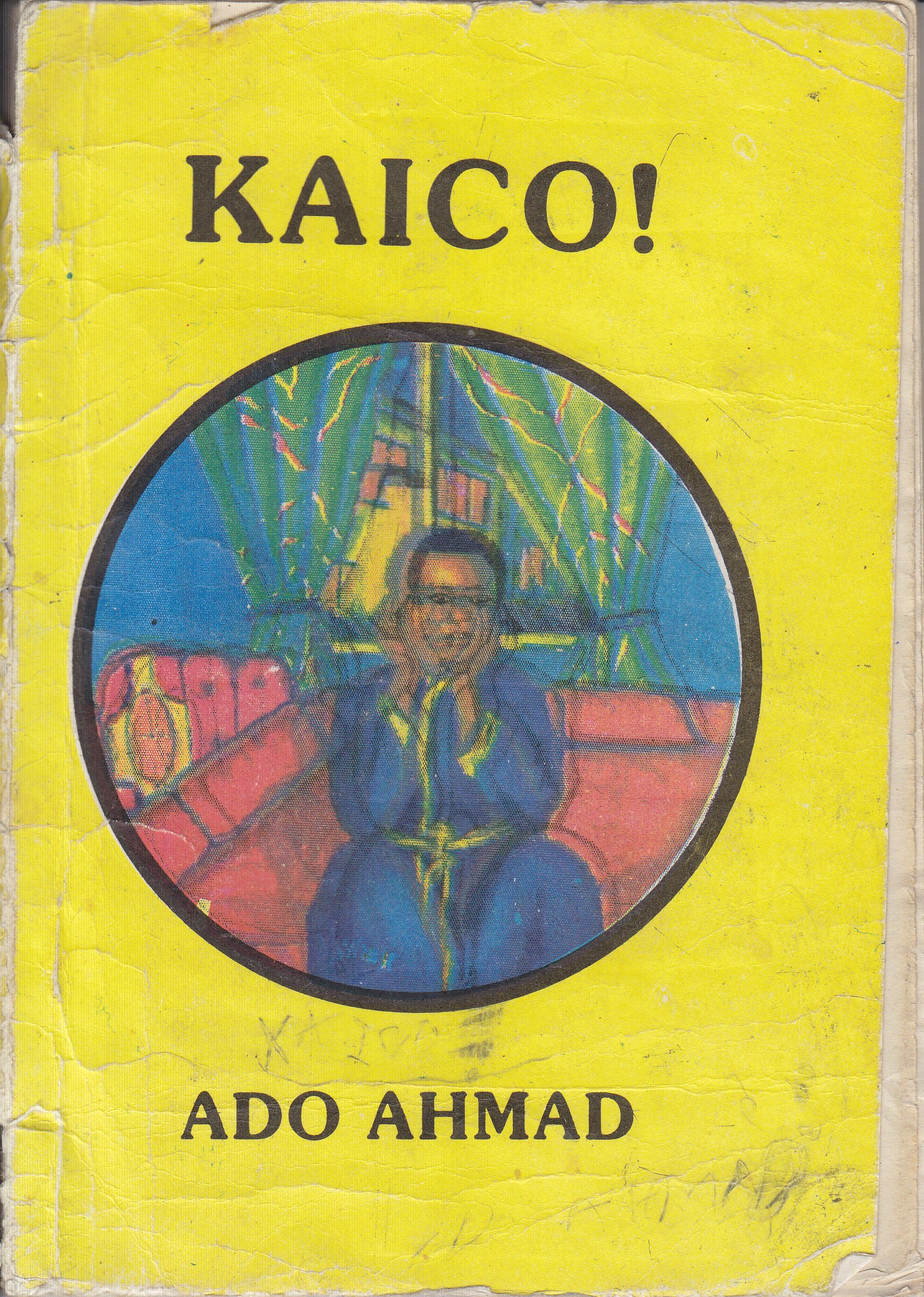
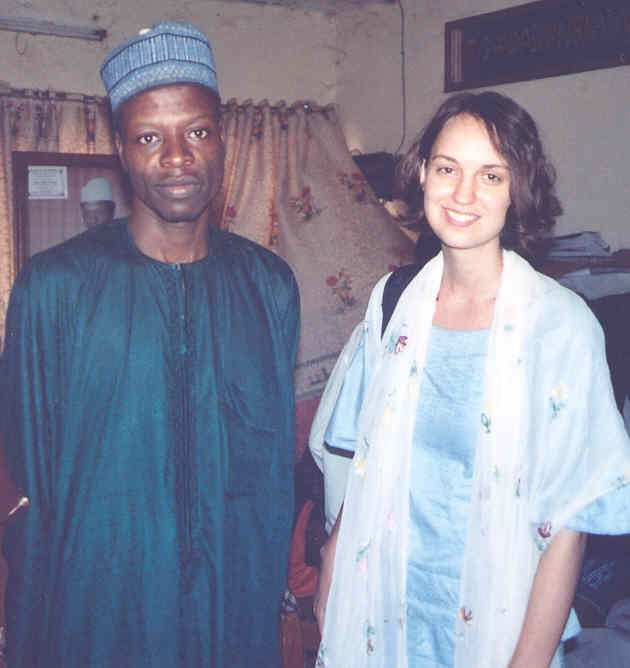


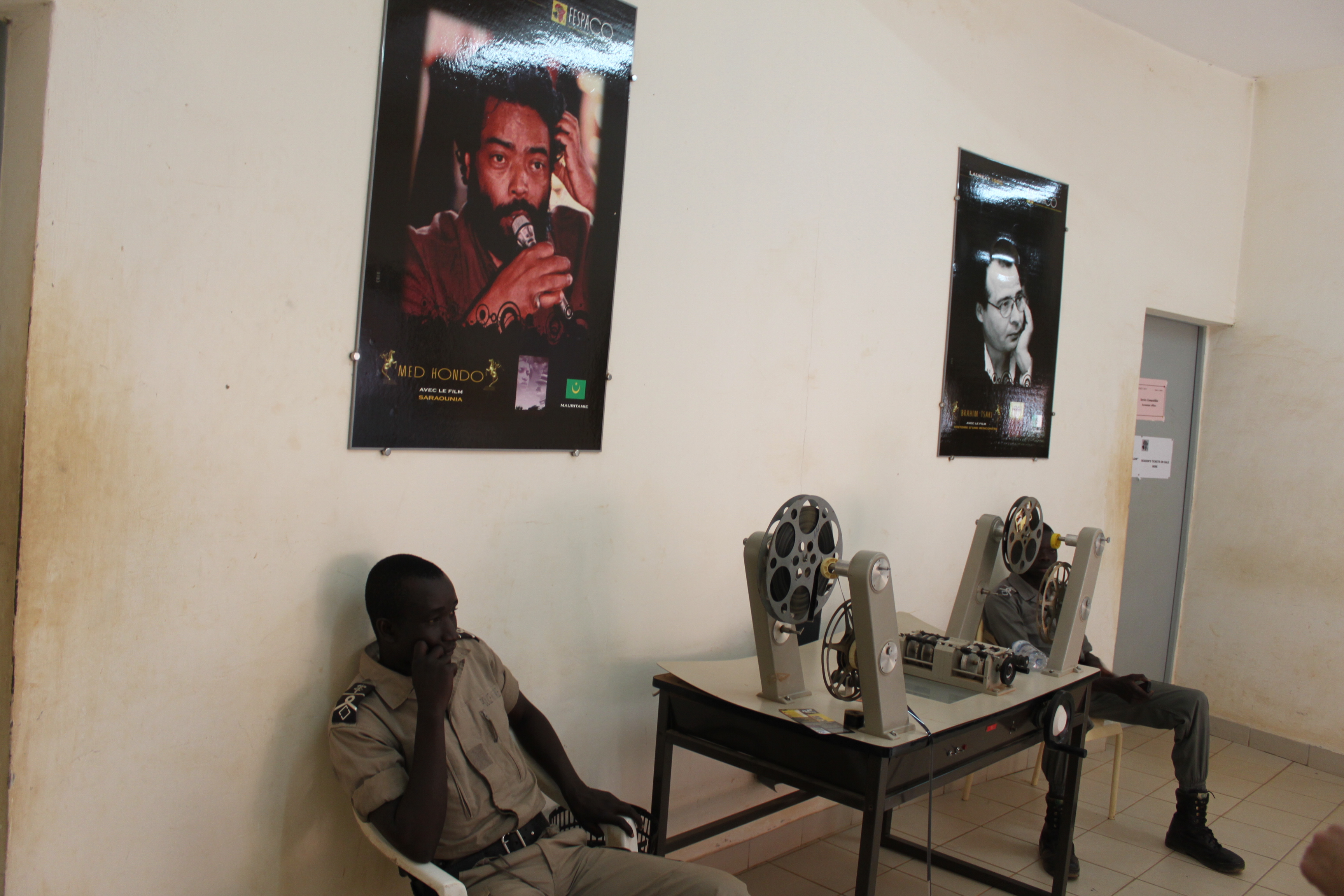


 A Tunanina...