
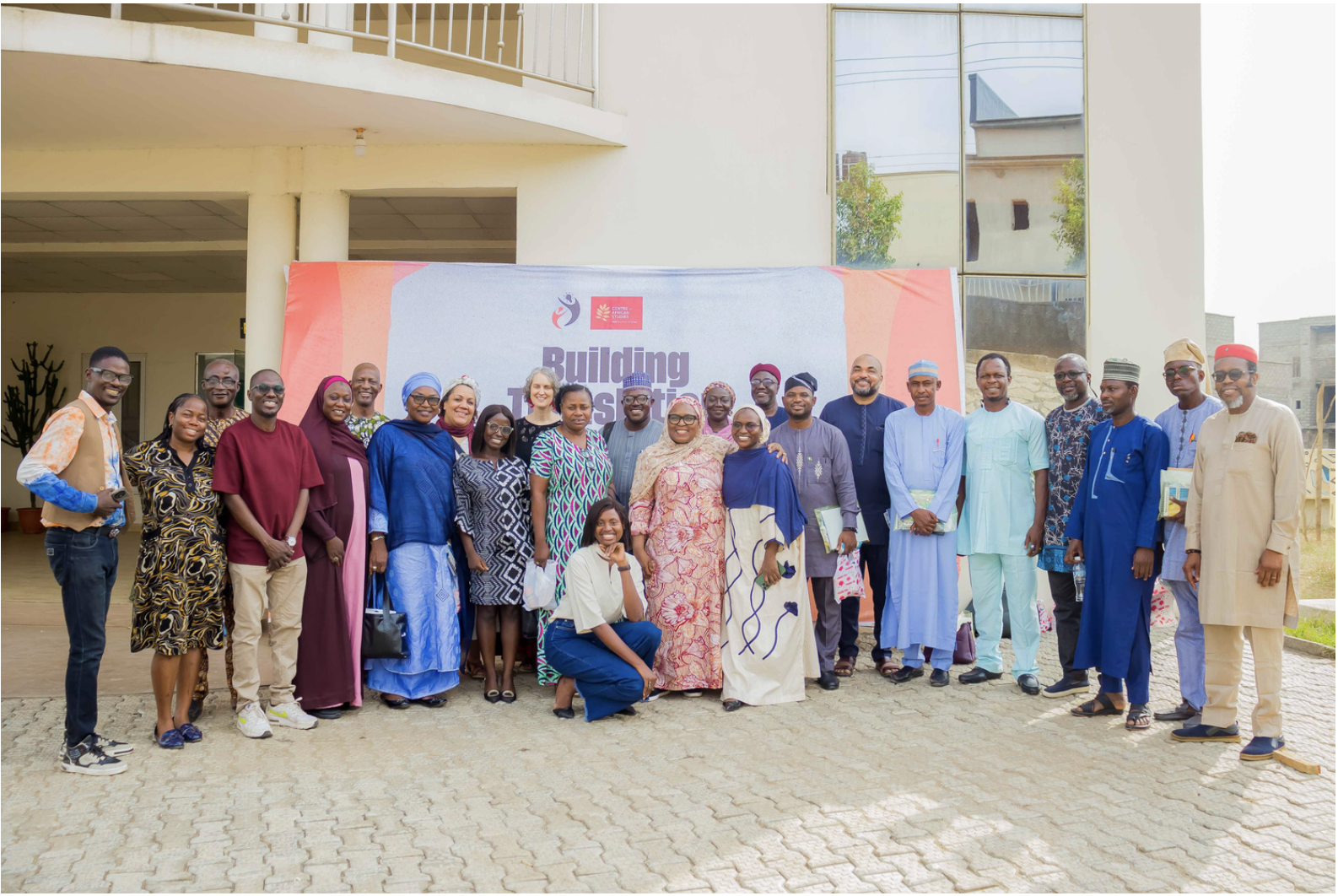
My last post was to publicize two forums on translation sponsored by the ISPF ODA fund and hosted first by the Centre for Nigerian Languages, Translation, and Folklore at Bayero University, Kano, and by the Open Arts Foundation at the Association of Nigerian Authors Mamman Vatsa Writer’s Village Abuja the last week of March. We had stimulating conversations in both locations, and participants raised important questions about what is needed to promote more translations between African languages and other world languages. Next week’s Plateau International Literary Festival will follow this conversation on translation with a workshop on translation, Saturday, 23 May. In this post, I will give a few more details about the conversations held at the workshops and promote a call for papers for an African literary translation stream at the African Studies Association UK conference that will be held 10-12 September at Durham University. If you are interested in that, please scroll to the bottom of the post. The deadline for abstract submission is 22 May.
The Translation Forums in Kano and Abuja
My colleague Ida Hadjivayanis gave a thought provoking keynote in both locations about her own experiences translating between English and Swahili, in particular her experience translating Alice in Wonderland and Nobel laureate Abdulrazak Gurnah’s novels Paradise as Peponi and Theft as Dhulma into Swahili. (You can read one of her articles about translating Gurnah here and purchase the novels in Swahili on her publisher Mkuki na Nyota‘s site here) What stood out to me was how the Tanzanian state’s promotion of Swahili language infrastructure has created opportunities for translation of Swahili novels into English and vice versa. Although Hausa is the largest language in Africa after Swahili, it has not had the same level of investment from either government or private entities. Therefore, even though Hausa has a thriving literary culture and tens of thousands of novels, films, and other cultural productions, there are fewer than ten novels translated from Hausa to English. There is a real need for investment in language education, publishing, and translation infrastructure to raise the profile of the Hausa language in the world. The Centre for Nigerian Languages, Translation, and Folklore at Bayero University have been doing impressive projects in translating health education and science textbooks born out of the passion of the scholars working at the Centre. It would be encouraging to see wealthy members of society invest in “cultural capital” both by sponsoring such educational initiatives, and by providing infrastructure to support the sort of innovative literary writing and filmmaking that is being done in Hausa. For example, the popularity of Japanese and Korean as languages that students take at SOAS and at other Western universities is in large part because of the novels, films, music, and other cultural productions in those languages that have been translated and/or marketed to a global audience. Students have been exposed to these cultural productions, have fallen in love with the art, culture and history and want to learn the language. We should be doing this for Hausa, and translation is one of the major ways we can promote the language and cultures of Africa.
AI often came up often in the conversation. Prof Abdalla Uba Adamu, for example, is quite optimistic about the possibilities provided by AI and spoke about some of his own experiments with it. Professional translators, such as Hannatu Bilyaminu, however, cautioned that while translators are almost forced to use AI tools now there are many issues in relying on machine translation, which loses the nuance and uniqueness of the human voice. While AI translation might work for more more generic writing, relying on it for literary translation is problematic to say the least. (In my personal experience–where I have had to read through hundreds of pages of AI-generated content submitted by students and even a few colleagues–I have grown to hate with a passion the sort of soulless metallic generic voice that AI produces and the way it zombifies our students, who have outsourced intellectual inquiry and experience to a machine. In fact while reading yet another AI output someone had put their name on and asked me to read last week, I began to feel like I was living in a horror film, where AI writes and AI reads and those who genuinely create art are lost in a nightmare of funhouse mirrors. Who will want to read anything if (almost) everyone is using AI to write? Owen Yingling’s article “The Great Zombification” that I read yesterday captures some of those feelings of horror.)
Nuance was an important part of the discussion. Author Balaraba Ramat Yakubu, for example, spoke about how disappointed she was by translations of her novels by men who drained the nuance of women’s experiences from her writing. She proclaimed that henceforth she would seek out women to translate her novels, as women would better understand a woman’s emotions and experiences. In this she echoes previous critiques she has made of the film adaptation of her novel Alhaki Kuykuyo Ne, which focused more on the sensationalist behaviour by the ‘karuwa’ second wife than on her longsuffering protagonist Rabi. The film turned a woman’s story of surviving a loveless and abusive marriage into a film that catered to the male gaze.
Other topics that came up were the nuances of translating in culturally appropriate ways and how translators balance faithfulness to the text to what they think will be acceptable to their audiences. For more experiences of the workshop in Kano, which I will probably write about at more length in future posts or articles, see the following interviews that the Fitila podcast did at Bayero University
There were several other interviews that The Fitila podcast put up on Facebook, which you can access here: interviews with writers Ismail Bala , Hannatu Bilyaminu and Nasiba Babale.
While the focus was on translation between Hausa and other languages in Kano, in Abuja participants questioned how to promote translations in and between languages that do not have the rich historical written literary resources that Hausa has. This led to conversations about how audio materials are important contributions to an oral literary tradition. Perhaps we could focus more attention on the creation of audio books and oral translation. Hausa novels have long had life as audiobooks read serially over the radio, and popular music in large languages like Yoruba or smaller languages like Tarok and Berom is growing ever more popular. Cassava Republic experimented with making stories available in written and audio versions when they commissioned translations of the stories in their 2015 Valentine’s Day anthology that were accompanied by audio recordings of the stories being read in those languages. That neither the stories nor the audio files are still online points to the challenges of digital publishing when universities and businesses are no longer willing to continue hosting files. (The Caine Prize also has posted audio files of shortlisted authors reading their stories). So, there is no need to limit our discussions of literature and translation to the written word. The first day, there was also a stimulating panel discussion between publishers, editors, and booksellers Richard Ali, Abdulkareem Baba Aminu, and Rakesh Khanna (who zoomed in from Chennai, India), and copyright lawyer Benjamin Torlafiya. On the second day, we had another publishers panel and a translator’s panel, with Hausa-English translators Sada Malumfashi and Ibrahim Malumfashi, Amharic-English translator Bethlehem Attfield, and English-Swahili translator Ida Hadjivayanis.
I will add some of the coverage of the event in an update to this post, which I am trying to publish today.
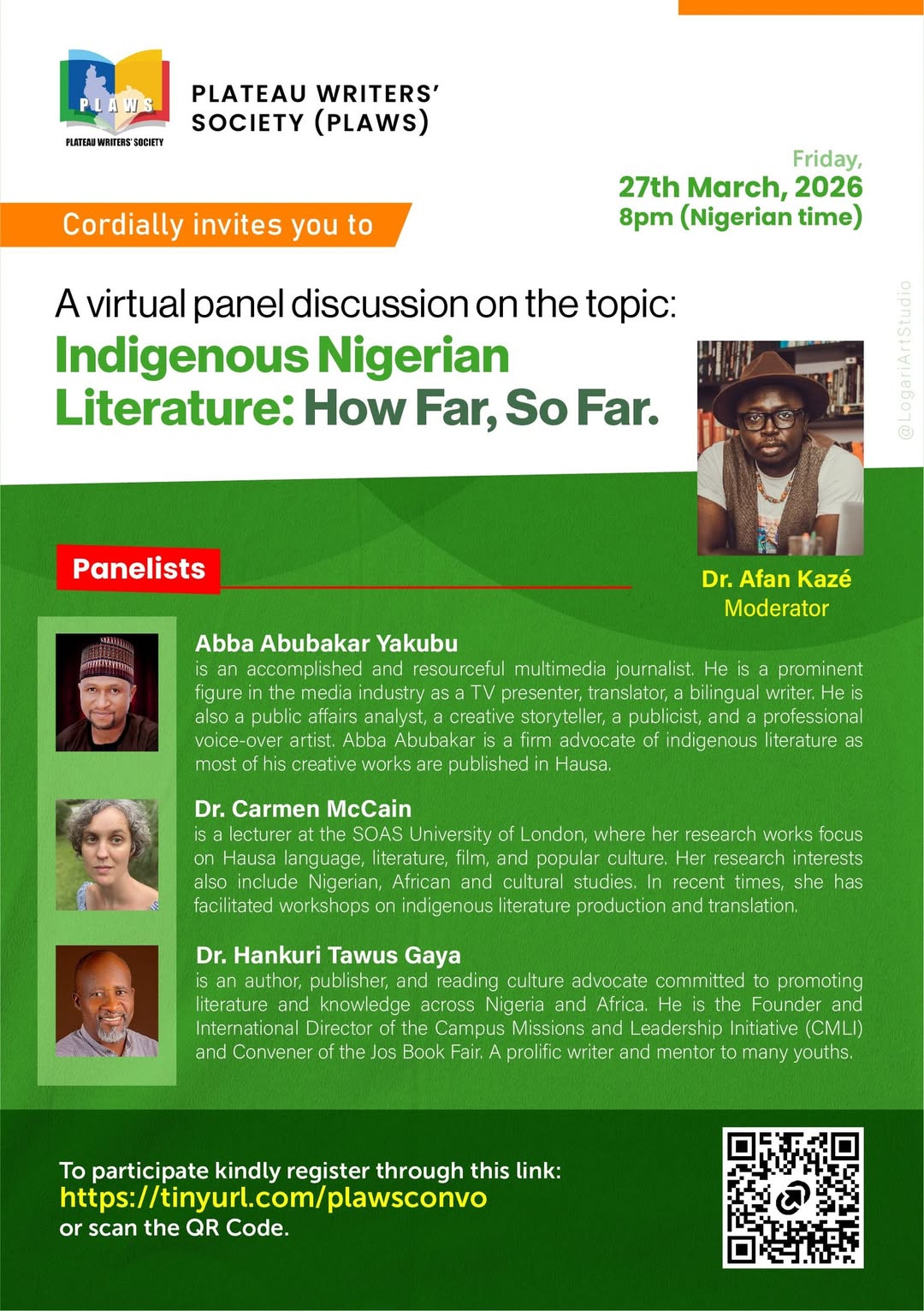
I was able to followup on the forum the evening of the final event by speaking about my interest in translating Hausa language literature in an online virtual panel discussion on indigenous Nigerian literature organized by the Plateau Writer’s Society.
And the next day, I was excited to see how Daily Trust has expanded from the print newspaper I was a columnist for from 2010 to 2014 to a TV station, when I had a chat with the hosts of Daybreak Extra.
Upon our return to London, we were also able to continue these conversations started in Nigeria through the Centre of African Studies at SOAS, with an online discussion on African-language translations of Antoine de Saint-Exupéry’s novel Le Petit Prince, between the Swahili translator Walter Bgoya and Hausa translator Ibrahim Malumfashi, joined by the French-English translator of the 2010 edition Ros Schwartz. Some of the questions that were discussed included questions of how closely these translations stayed to the original and what sort of adaptations were made to fit with the cultural values of the target language.
On May 20, the Centre of African Studies SOAS will host an event “Conceptualising Translation Studies: Ethiopia and African Traditions Beyond” with English-Amharic translator Bethehem Attfield on Wednesday May 20, 3-5pm. The link to join is here.
I’m looking forward to continuing these conversations next week in Nigeria at the Plateau International Film Festival and at the African Studies Association UK conference 10-12 September. If you would like to join us, please register to attend one of the above events or send in an abstract for the ASAUK conference stream. The final deadline for abstract submissions for ASAUK is May 22. Unfortunately, we do not have funding to bring people, but if you are in the UK or your university provides funding for conference travel, see the call for abstracts below:
Call for abstracts for Questions of Literary Translation and Translation Infrastructure in Africa at ASAUK
DEADLINE: 22 May 2026
CONFERENCE DATES: 10-12 September 2026
VENUE: Durham University
Questions of Literary Translation and Translation Infrastructure in Africa
Convenors: Carmen McCain cm74 (at) soas.ac.uk , Ida Hadjivayanis and Wangui wa Goro
In the past decade and a half there have been several efforts to promote literary translation into and out of African languages, from the Jalada special issues seeking translations of a short story by Ngugi wa Thiong’o into over 100 languages and over 50 translations of a poem by Wole Soyinka, to the Cassava Republic Valentine’s Day issue where love stories from English were translated back into the author’s language of origin, to more recent initiatives such as Zukiswa Wanner’s African Translation Project focusing on translations of southern African languages into English and the University of Georgia Press African Language Literatures in Translation series. In Tanzania, Mkuki na Nyota publishers has invested in translations of African literature, such as the works of Nobel-prize winning author Abdulrazak Gurnah into Swahili. At SOAS, as part of a project funded by the ISPF ODA fund, we are working on conversations between Swahili and Hausa as two of the largest literary languages in Africa. Although both languages have large archives of literary activity, of the tens of thousands of Hausa novels, there are fewer than ten translations of novels into English, and while translation out of Swahili is slightly healthier, it is still surprisingly low considering the number of literary productions. This paucity of translation is indicative of larger problems in African literary translation training, funding, publishing opportunities, and an international reading culture that does not value African language literary production.
Our goal for this stream is to bring together scholars, writers, translators, publishers, and cultural institutions to brainstorm ideas on how to promote literary translation and discuss how to build networks of African literary translators and connections to publishers willing to invest in translations, and access funding for translation and publication.
We invite papers that focus on the theory and practice of translations into and out of African languages, as well as those that focus on language policy, publishing, infrastructure, and advocacy as it relates to literary translation. We also welcome working translations from translators willing to read excerpts and speak to their current literary translation projects. We envision two or more panels on African literary translation practice and infrastructure and at least one panel that focuses on readings from literary translations in progress.
How to submit your abstract.
See this information from the ASAUK website’s Call for Papers
We invite abstracts for the ASAUK 2026 Conference: Narrative, Power and the Making of African Worlds, taking place at Durham University from 10–12 September 2026.
You can view the full list of conference streams and identify the most suitable one for your proposed paper here: asauk.net/streams-for-asauk-conference-2026. When submitting your abstract, you will be asked to select a stream. Abstracts will be reviewed by the relevant stream convenors. If you would like to discuss the suitability of your presentation for a particular stream in advance, please contact the stream organiser directly.
Abstracts (maximum 1,000 characters, approximately 200 words) should be submitted under the heading “Abstract Additional Comments.” The deadline for abstract submissions is 30 April 2026 [extended to 22 May], though we strongly encourage participants who require a visa to submit as early as possible. The abstract submission system can be accessed here.
Please note:
ASAUK conferences do not limit participants’ contributions, and conference participants are allowed to present as many papers as are accepted by the organisers. However, it is advisable to limit each person to 5 panels for the sake of time-tabling. Participants are allowed to take on multiple duties as chairs and discussants.
We are not yet able to provide the final prices for conference attendance, but we expect to publish an indicative price list in early 2026 and expect prices to be similar to previous ASAUK conferences.
The officers of the ASAUK are not remunerated, and all income from the conference is used to cover the costs of organisation, to offer subsidies and bursaries, and to continue the Association’s flagship Writing Workshops.
Calls for single panels and individual papers will be published no later than 7th November 2025, and in some cases, we shall suggest that you join a panel that is organised by one of the streams.
—
If you would like to join the African Studies Association UK, see information about ASAUK Membership


