Remembering September 11 through a lens of fourteen years

Even all these years later, seeing the date September 11 still gives me a small jolt. Last night I was up past midnight trying to put up a course syllabus online. When I glanced at the date in the top right-hand corner of my screen, I jumped a little. I was chatting with my brother online about a documentary on climate change we are working on, and I said, “oh my goodness I just saw that it was Sept 11.” “Yeah,” he said.

I forgot again today until I saw this tweet from President Obama

I responded

Because remembering September 11, now, through a lens of fourteen years, I think of how America’s knee-jerk response, the war in Afghanistan and the war in Iraq, the years of bombings that often killed people as innocent as the ones working in those towers, ultimately led to rise of ISIS, maybe even Boko Haram. If we could go back to that time, if America had not gone to war, if we had investigated better, if we had responded less violently, what would the world look like now? Perhaps it is futile to play “what if” games, perhaps even worse things would have happened. But despite all the trauma of the day, since September 11, 2001, the world has been filled with bombs. Hundreds of them have gone off in Nigeria since 2010. I was closer to the Boko Haram bomb at the COCIN Headquarters Church in Jos on 26 February 2012 than I was to the World Trade Centre on September 11. Americans are loud in their grief, but elsewhere far more people have been killed than were in the towers, the planes, and the Pentagon on that blue-skied day in September fourteen years ago.

Yet it remains an epochal day in the history of the world, the scale of it, and by what it precipitated in the world. I’ll post here a few of the other articles I’ve written about my experiences on September 11. I’ve revisited those memories many times over the years. Reading back over them, I am struck by how each time I remember, other details emerge, while others fade away. Here are three columns I wrote in 2011, around the ten year anniversary of the tragedy.

Daily Trust has recently updated their website. The dedicated site for my column is gone, and almost all of my articles have their introductory paragraphs cut off now. I will try to slowly begin to archive them here on my blog from pre-edited copies that I submitted to my editor. The first article I will post here is on the event of the 10-year anniversary of the attack on New York published on 10 September 2011 and the second and third are from articles I had published in January of 2011.

https://flic.kr/p/aE2urn

September 2001, ten years later

(published in Weekly Trust on 10 September 2011)

Ten years ago, September 11, 2011, my flat mate and I arose to a crisp, clear-skied Tuesday morning in the New York City borough of Brooklyn and began preparing for the day. I had recently quit my job as an editor at a small children’s book publishing company in order to return on a Fulbright scholarship to Nigeria, where I planned to live in Jos for the year, doing research before applying to PhD programmes. I hoped to spend that Tuesday packing. While my flatmate got ready for work, I made tea and turned on the radio to listen to the news on New York’s National Public Radio (NPR) station. A crisis had begun in Jos on September 7, where both my flatmate and I had gone to school. NPR had begun to cover it in previous days, and we were anxious to hear the news. But when I turned on the radio, all I could hear was static. Strange, I thought, and turned the dial trying to find a signal. I tuned in to a different radio station, where the news was being reported of a plane flying into the World Trade Centre in lower Manhattan. I imagined that it was a freak accident involving a small private plane that held only a few people, like the one JFK Jr. had crashed in two years earlier. But as we ate breakfast, a school friend of ours from Jos now living in the U.S. called, her voice high and worried. “I just saw a plane flying into the World Trade Centre,” she said. “On TV. Are you Ok?” This was the second plane. The story became clearer. Both planes had been commercial flights. Both towers of the World Trade Centre were on fire and seemed to be structurally damaged. The news was unthinkable. Neither of us knew how to process the information. I had been in Atlanta during the 1996 Olympics and had visited the Olympic park the day before American domestic terrorist Eric Rudolph set off a bomb there, but this was larger and more frightening than anything I had ever heard of. “Are you sure you should go to work?” I asked my flatmate, as she prepared to walk out the door. “Do you think the subways will be running?” “My meeting is in Brooklyn, not in Manhattan,” she said. “I’m sure I’ll be fine.”

We were very young, and neither of us had any idea of the world that day was christening us into. As she proceeded to the subway, I quickly dressed and ran down to the pier on the Hudson River only a few blocks from where we lived, which had a clear view of lower Manhattan. In previous columns I have written about standing on the pier with other New Yorkers, mouths agape as we watched hot fire devour the centre of towers, white smoke pouring across the blue sky into Brooklyn. I’ve described how a ripple of smoke ran down the South Tower before we saw it collapse into dust, how I walked numbly away from the water back towards my apartment, through deserted streets, televisions blaring through open windows. By the time I got back home to the radio, the second tower had also fallen. I lay on my bed, hot tears trickling into my ears trying to calling my flatmate, another friend I thought had been in the tower, my aunts and uncles. All networks were busy. My flatmate got home around noon, covered in soot. She had not yet arrived at work when the train stopped. She had walked about 70 city blocks back home through the ash blowing across Brooklyn, holding a paper serviette from a deli across her mouth and nose. Later, we went back out together, down to the pier where I had seen the first tower fall. The sky was clear and blue and the afternoon sun, hot. Where the gleaming silver twin towers had once loomed over the skyline of lower Manhattan, there was nothing but smoke. Suddenly, we heard the sound of planes overhead. My body tensed. There was a no-fly order imposed. There were not supposed to be any planes in the sky. When we looked up, they were fighter planes. It was a symbol of what was to come.

The next few days, we stayed at home and listened to the radio with two other friends who came to stay with us because they didn’t want to be alone. The couple who lived below us in the brownstone house were both newspaper editors, and one day I stayed with their children while they both went in to work. The children asked me why someone would fly planes into the World Trade Centre. I didn’t know what to tell them. “There are crazy people in the world,” I said. “There are bad people.” Around the city, family members posted photos of missing loved ones on subway walls and lamp posts. Small shrines sprung up around them, with candles and ribbons and letters. A bagpipe procession went past our window, as a funeral was held for a fireman at the Catholic church down the street. The Muslim shop owner around the corner from my house put up a gigantic American flag.

Two weeks later I boarded my plane back to Nigeria, on my way to another wounded city, where my parents had hosted a refugee camp at their house, churches and mosques had been burnt, and one of my father’s students had been found murdered, washed up on the banks of a river. It felt, in those days, as if the whole world were on fire.

Ten years later, both countries I call home are harsher more violent places. The U.S. has turned on itself. American extremists lash out against Muslims, who they blame en-masse for the attacks, filling the internet and airwaves with hatred. Al-Jazeera reports that in the past ten years the FBI has “investigated more than 800 violent acts against Muslims, Arab Americans, or people perceived to be of Middle Eastern origin.” The violent rhetoric in the U.S. does not stop at American borders. Norwegian terrorist Anders Behring Breivik, who killed seventy-seven people in a bomb and a shooting this July, cited American bloggers in his online manifesto. In the countries the U.S. invaded following the 9-11 attack the death toll is much higher, and such actions are used by violent extremists as justification for further violence.

In Nigeria, the entity popularly called Boko Haram has, this year, initiated Nigeria’s first suicide bombs, only a few weeks ago attacking the UN building, which, like the World Trade Centre, represented the existing global system. Ten years after the first large crisis, Jos has become an appalling place. The first few crises may have been instigated by politicians, by “bad, crazy people” as I told my landlord’s children in the wake of 9-11, but is continued through communities seeking revenge. Those who were children at the time of the first crisis have grown up to become murderers, committing atrocities against those with whom they might have been friends had they lived in a different city, but whom they have been taught to despise. Parents and clerics and leaders who should be restraining them, encourage hate, or else refuse to speak because they are afraid their children will turn on them.

One of my favourite writers C.S. Lewis imagines in his novel The Great Divorce, Hell, as a place where people continue for an eternity in the path they decided to follow on earth. Unforgiveness, hatred, and arrogance eat away all their good characteristics till they become shadows, left with nothing but the sins they refuse to give up. Given a chance to go to heaven, most of the ghosts in the novel return voluntarily to hell. In heaven they are unable to hold on to their hatred, and they’d rather live in hell than forgive.

Ten years after the Jos crisis and the 9-11 attacks, I am only left with questions and fear for the future. What are our children learning? What are they becoming? What kind of world will we leave them? Where will we be in another ten years? Are we willing to do the hard thing, forgive those who have killed our loved ones and teach our children peace, or do we want to take revenge after revenge, until we have made for ourselves hell on earth?
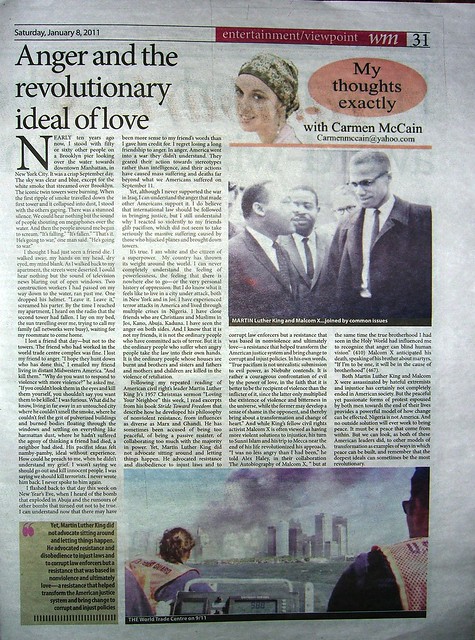
2011-1-8-Weekly Trust-column-Anger Revolutionary Love

Anger and the Revolutionary Ideal of Love

(published in Weekly Trust on 8 January 2011)

Nearly ten years ago now, I stood with fifty or sixty other people on a Brooklyn pier looking over the water towards downtown Manhattan, in New York City. It was a crisp September day. The sky was clear and blue, except for the white smoke that streamed over Brooklyn. The iconic twin towers were burning. When the first ripple of smoke travelled down the first tower and it collapsed into dust, I stood with the others gaping. There was a stunned silence. We could hear nothing but the sound of people shouting on megaphones over the water. And then the people around me began to scream. “It’s falling.” “It’s fallen.” “That’s it. He’s going to war,” one man said. “He’s going to war.”

I thought I had just seen a friend die. I walked away, my hands on my head, dry eyed, my mind blank. As I walked back to my apartment, the streets were deserted. I could hear nothing but the sound of television news blaring out of open windows. Two construction workers I had passed on my way down to the water, ran past me. One dropped his helmet. “Leave it. Leave it,” screamed his parter. By the time I reached my apartment, I heard on the radio that the second tower had fallen. I lay on my bed, the sun travelling over me, trying to call my family (all networks were busy), waiting for my roommate to come home.

I lost a friend that day—but not to the towers. The friend who had worked in the world trade centre complex was fine. I lost my friend to anger. “I hope they hunt down who has done this,” I emailed my friend living in distant Midwestern America. “And kill them.” “Why do you want to respond to violence with more violence?” he asked me. “If you couldn’t look them in the eyes and kill them yourself, you shouldn’t say you want them to be killed.” I was furious. What did he know, living far away in an untouched city where he couldn’t smell the smoke, where he couldn’t feel the grit of pulverized buildings and burned bodies floating through the windows and settling on everything like harmattan dust, where he hadn’t suffered the agony of thinking a friend had died, a neighbor had died. His pacifist ideas felt namby-pamby, ideal without experience. How could he preach to me, when he didn’t understand my grief. I wasn’t saying we should go out and kill innocent people. I was saying we should kill terrorists. I never wrote him back. I never spoke to him again.

I flashed back to that day this week on New Year’s Eve, when I heard of the bomb that exploded in Abuja and the rumours of other bombs that turned out not to be true. I can understand now that there may have been more sense to my friend’s words than I gave him credit for. I regret losing a long friendship to anger. In anger, America went into a war they didn’t understand. They geared their action towards stereotypes rather than intelligence, and their actions have caused mass suffering and deaths far beyond what we Americans suffered on September 11.

Yet, although I never supported the war in Iraq, I can understand the anger that made other Americans support it. I do believe that international law should be followed in bringing justice, but I still understand why I reacted so violently to my friends glib pacifism, which did not seem to take seriously the massive suffering caused by those who hijacked planes and brought down towers.

It is true. I am white and the citizen of a superpower. My country has thrown its weight around the world. I can never completely understand the feeling of powerlessness, the feeling that there is nowhere else to go—or the very personal history of oppression. But I do know what it feels like to live in a city under attack, both in New York and in Jos. I have experienced terror attacks in America and lived through multiple crises in Nigeria. I have close friends who are Christians and Muslims in Jos, Kano, Abuja, Kaduna. I have seen the anger on both sides. And I know that it is not my friends, it is not the ordinary people who have committed acts of terror. But it is the ordinary people who suffer when angry people take the law into their own hands. It is the ordinary people whose houses are burnt and brothers and sisters and fathers and mothers and children are killed in the violence of retaliation.

Following my repeated reading of American civil right’s leader Martin Luther King Jr’s 1957 Christmas sermon “Loving Your Enemies” this week, I read excerpts from his book Stride Toward Freedom that describe how he developed his philosophy of nonviolent resistance, from influences as diverse as Marx and Ghandi. He has sometimes been accused of being too peaceful, of being a passive resister, of collaborating too much with the majority in power. Yet, Martin Luther King did not advocate sitting around and letting things happen. He advocated resistance and disobedience to injust laws and to corrupt law enforcers but a resistance that was based in nonviolence and ultimately love—a resistance that helped transform the American justice system and bring change to corrupt and injust policies. In his own words, “True pacifism is not unrealistic submission to evil power, as Niebuhr contends. It is rather a courageous confrontation of evil by the power of love, in the faith that it is better to be the recipient of violence than the inflicter of it, since the latter only multiplied the existence of violence and bitterness in the universe, while the former may develop a sense of shame in the opponent, and thereby bring about a transformation and change of heart.” And while King’s fellow civil rights activist Malcom X is often viewed as having more violent solutions to injustice, his turn to Sunni Islam and his trip to Mecca near the end of his life revolutionized his approach. “I was no less angry than I had been,” he told Alex Haley, in their collaboration The Autobiography of Malcom X, “ but at the same time the true brotherhood I had seen in the Holy World had influenced me to recognize that anger can blind human vision” (410). Malcom X anticipated his death, speaking with his brother about martyrs. “If I’m to be one, it will be in the cause of brotherhood” (467).

Both Martin Luther King and Malcom X were assassinated by hateful extremists, and injustice has certainly not completely ended in American society. [UPDATE: In 2015, with the constantly reported killings of young black men at the hands of the police, this becomes particularly clear.] But the peaceful yet passionate forms of protest espoused by both men towards the end of their lives provides a powerful model of how change can be effected. Nigeria is not America. And no outside solution will ever work to bring peace. It must be a peace that come from within. But we can look, as both of these American leaders did, to other models of transformation as examples of ways in which peace can be built, and remember that the deepest ideals can sometimes be the most revolutionary.

2011-1-22-Weekly Trust-column-Sad consequences of hate

The Sad Consequences of Hate

(published in Weekly Trust on 22 January 2011)

In September 2001, my flatmate and I were closely following the events in Jos. We had both grown up in Jos and had moved to New York together after finishing university. Each morning we would turn on New York public radio to listen for coverage of the crisis raging across what we remembered as a peaceful, quiet city. Then, on September 11, two jets slammed into the twin towers in New York, and Jos fell off the international news radar. Although my parents didn’t have a mobile phone in those days, I was able to get through to some other friends in Jos, who had a landline. My parents got word that I was fine when someone came to deliver a bag of garri for the several hundred people camped out in and around their house. They later told me they hadn’t really had time to be worried about me. They had heard the news but figured I wouldn’t have been in the World Trade Centre. In the meantime, there was gunfire on the streets of Jos and hundreds of refugees to find food for.

As New York draped itself in American flags, distraught family members plastered photos of their missing loved ones on subway walls. All over the city, candles were lit in little makeshift shrines to the dead. Two weeks after September 11, I left New York to fly to Jos. My trip back had been planned for almost half a year. I had quit my job in anticipation of spending a year in Jos, and now I was flying from one city in mourning to another. I didn’t want to go. I wanted to stay in New York and heal with the city. But I thought that if I let the attacks change my plans, I would be giving in to the terrorists. So, half in defiance, half because I’d already quit my job, I travelled back to my other home where people went about with haunted eyes, trading stories of where they had been, what they had seen during the crisis. “Happy Survival,” they said. It was an apt greeting for the time.

Those first few months back in Jos, I’d spend hours watching CNN, wincing at the endless replays of the jets slamming into silver buildings, eagerly following the cleanup in New York, listening to stories of the families of those who had been killed in the planes and the towers. A few months after I had settled, the cultural affairs section of the US embassy brought an exhibit to the University of Jos of “Ground Zero” photos taken by a New Yorker photographer—beautiful abstracts of fallen beams, of light rays defined by dust, and portraits of firemen and clean-up workers at the site where the towers had collapsed. I was hungry for images of New York, but as I walked through the rows of photos, I was struck by how the other people around me shook their heads at photos of smoke and ash and weeping people. “This is terrible, this is terrible,” they said. I felt a sense of vertigo. The same people who had just lived through nearly a week of war, of smoke on the horizon and shootings in the streets, the same people who had neighbors gone missing, never to be seen again, these same people were shaking their heads in sympathy for the tragedy in America.

Yet what did America know about what had happened in Jos. CNN was not covering it then. There were no international exhibits of photography travelling around to educate the globe on the thousands of deaths Jos had suffered. In that moment, my world shifted further on its axis. I still grieved New York. But now I wanted to collect the stories of those not constantly on global television, make heard the voices buried under the loud mourning of my homeland.

Sadly, almost ten years later, Jos does rise to the top of African headlines. The shock that a peaceful city would erupt into violence is no longer there. News coming out of the Jos is increasingly more horrifying. “God forbid,” wrote one of my Hausa actor friends on Facebook, when someone invited him to shoot a film in Jos, the home of the National Film Corporation, the National Film Institute and once a booming centre of Hausa films. Jos is now one of the Nigerian cities most likely to make international headlines for violence.

Living in Nigeria with emotional investments both here and in the United States, I continue to recognize eerie parallels between my two homes. The first week of 2011, there was an upsurge of violence in Jos between rival factions, after a car-load of people returning from a wedding party were killed and a bus passing through Jos from Lagos to Yola was burnt. The second week of 2011, a gunman in Tucson, Arizona, shot American Congresswoman Gabrielle Giffords, and eighteen others. Following the shooting, there was the kind of partisan bickering and casting of blame that has become usual in American public discourse. But whether the kind of violent metaphors and imagery used by “teaparty” political agitators against their political rivals had anything to do with the motivations behind the shootings or not, the rhetoric of hatred that is used regularly in American political discourse contributes to a general atmosphere of dehumanizing “the Other.” The consequences of such hateful rhetoric are seen even more tragically in Jos, where people seem to be killed on an almost weekly basis.

There is a long history of how dehumanizing rhetoric is used to justify violence. In the United States, Americans excused their enslavement and brutal treatment of Africans and their descendents by reasoning that they were not actually human beings. In the genocide in Turkey against the Armenians at the beginning of the 20th century, Armenians were called dogs and swine. In Nazi Germany as death camps were set up, propagandists repeated the old poisonous libel used during pogroms throughout the centuries that Jews drank the blood of Christian babies. In Rwanda the Tutsi were called cockroaches as they were being slaughtered.

I am, thus, horrified and apprehensive when I hear similar kinds of dehumanizing rhetoric in America or Nigeria. In America, extremist members of the conservative “teaparty” movement question the citizenship of President Obama, and make calls to “take America back.” Members of Congress have been called by racial epithets, spat on, had doors and windows of their offices smashed in, and had their home addresses published by opposition parties. In Nigeria, I’ve heard Beroms called “arna” and “blood-thirsty savages.” I’ve seen Fulanis called “dirty/stinking”, “hoards” and “marauders.” I’ve seen calls urging “indigenes” to “drive away the settler,” with violence if necessary. Such rhetoric is followed by attacks, which while also seemingly political in origin, take an even more dramatic toll on ordinary people. Hundreds of people in Plateau State have been killed in the past year, thousands in the past ten.

Right before sending in this article, I received an email telling how two nephews of a Muslim friend “were killed in Anguwan Rukuba. They were machine drivers. The wife of the one killed got a cell phone call. ‘They have me, they’re about to kill me.’ Somebody in the background said, ‘tell them Anguwan Rukuba.’ His people went with soldiers the next day and found the bodies.”

Those in both countries I hold dear would do well to take heed to the warning Congresswoman Gabrielle Giffords made in March 2010 after her office was vandalized. In a chilling anticipation of the attack in January 2011, where she would be shot in the head, she said: “The rhetoric is incredibly heated. Not just the calls, but the emails, the slurs.[…]I think it’s important for […] community leaders, figures in our community to say, ‘Look, we can’t stand for this.’ […] For example, we’re on Sarah Palin’s targeted list, but the thing is, the way she has it depicted has the crosshairs of a gunsight over our district. And when people do that, they’ve gotta realize there’s consequences to that action.”

Wa Zai Auri Jahila? Balaraba Ramat Yakubu’s novel on Child Marriage

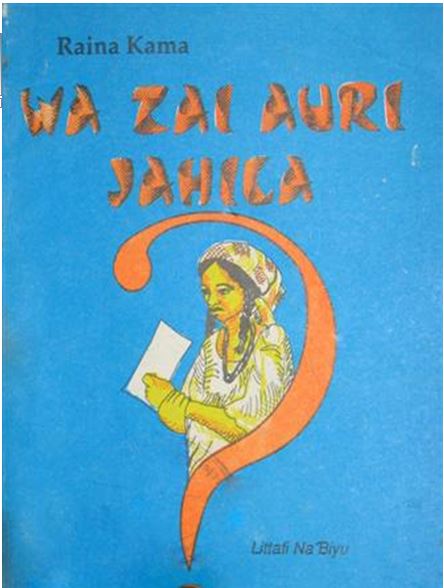
The novel was published in two parts. This is the second part, of 164 pages.

The novel was published in two parts. This is the second part, of 164 pages.

In 2013, Abuja-based Cassava Republic Press asked me to choose a September 2013 “Book of the Month.” I wrote about Balaraba Ramat Yakubu’s Hausa novel Wa Zai Auri Jahila (Who Will Marry an Illiterate Woman?). Unfortunately, Cassava Republic took down the piece the next month to make way for their next book of the month. I was recently reminded of the short essay as I have been working with my friend Hausa novelist and journalist Sa’adatu Baba Ahmed on summaries and short translations of Hausa novels for an exhibition of photographs by photographer Glenna Gordon at the Open Society. (She eventually turned it in to a photobook Diagram of the Heart.) I thought it was about time to make the piece available online again through my blog. Note I am reproducing it as it was originally published with updates in brackets.
Wa Zai Auri Jahila? Balaraba Ramat Yakubu’s novel on Child Marriage

Much of the public discourse about literature in Nigeria is about literature written in English. According to most African literary prize-giving institutions, English is the language of literature. Yet, Nigeria also has a rich heritage of literature written in languages such as Arabic, Efik, Fulfulde [see here and here], Ibibio, Igbo [see here and here], Tiv, and Yoruba [see here and here], among others. Hausa literature is, however, currently the largest indigenous-language publishing movement in Nigeria, if not in Africa. According to scholar Abdalla Uba Adamu, between the 1930s and mid-1980s, fifty-four Hausa-language novels were published mostly by government-subsidized publishers. The upsurge in literacy promoted by the UPE (Universal Primary Education) initiative from 1976 and the advance in personal computer in the 1980s led to an explosion in Hausa self-publication in the early 1980s. Since that time, thousands of novels in Hausa have been published. The School of Oriental and African Studies in London has over 2000 of these novels in their collection.

Called variously Kano Market Literature, or “Soyayya” (romance) novels, scholar and author Yusuf Adamu’s suggestion of the term “Adabin Hausa na Zamani/Contemporary Hausa literature” is probably more appropriate. These novels cover a wide range of genres and themes, from crime fiction and romance, to muckraking social critique and fantasy adventure. While they are often printed in multiple parts in 80-120 page pamphlets to make it affordable for students and housewives, most are not novellas but serialized novels that sometimes run to 700 pages or beyond. And they are wildly popular. According to the author’s print run records, the bestselling novel of the movement, Ado Ahmad Gidan Dabino’s two part novel, In da So da Kauna, published in 1990, sold over 100,000 copies—200,000, if you count sales of individual parts. Gidan Dabino is currently preparing to release a new edition of the novel in a single three hundred page volume. Other exciting developments in Hausa publishing include the opening last month of an online shop for Hausa novels, Mamuwa.com, by the Mace Mutum women writers association led by novelist Rahma Abdulmajid. [Unfortunately, in 2015, this site is no longer viable.]
Rahma Abdul Majid and Ado Ahmad Gidan Dabino with me in 2005.

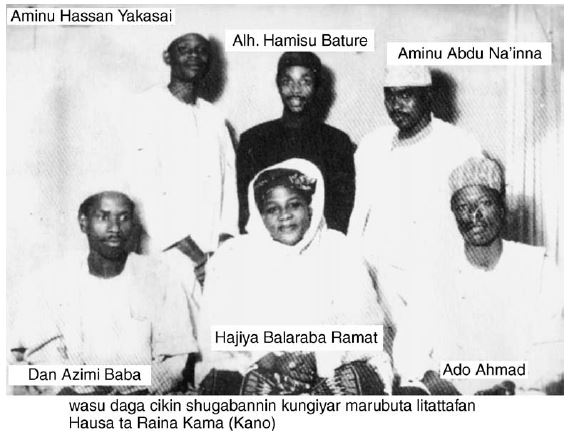
Recently, I have been reading the novels of Balaraba Ramat Yakubu, one of the pioneers of the so-called “soyayya” movement (and also the younger sister of the former head of state Murtala Muhammad). She was part of the Raina Kama writing club that began in the late 1980s, which also included authors, Ado Ahmad Gidan Dabino, Dan Azimi Baba, Aminu Hassan Yakasai, Alkhamees D. Bature, Aminu Abdu Na’inna, and Badamasi Shu’aibu Burji.

Raina Kama literary Association photograph duplicated in many of their books

Raina Kama literary Association photograph duplicated in many of their books

Married at 12 to a 48 year old man and quickly divorced, [as she recounts in this short autobiographical text], Hajiya Balaraba was finally able to access education through adult education offered in Kano. She began by writing plays as class assignments and published her first novel, Budurwar Zuciya in 1988. She has written over nine books, including novels and plays. She has also produced several films and writes popular radio plays. Her novels are generally muckraking exposés of the corruption of hypocritical men and they critique polygamy, forced marriage, and other issues of concern to northern women. While she was not the first woman to publish a novel in Hausa—that honour goes to Hafsat Abdulwaheed, whose short novel So Aljannar Duniya won a 1979 Northern Nigerian Publishing Company (NNPC) writing competition and was published in 1980—Hajiya Balaraba is the first woman to have a novel translated from Hausa to English.

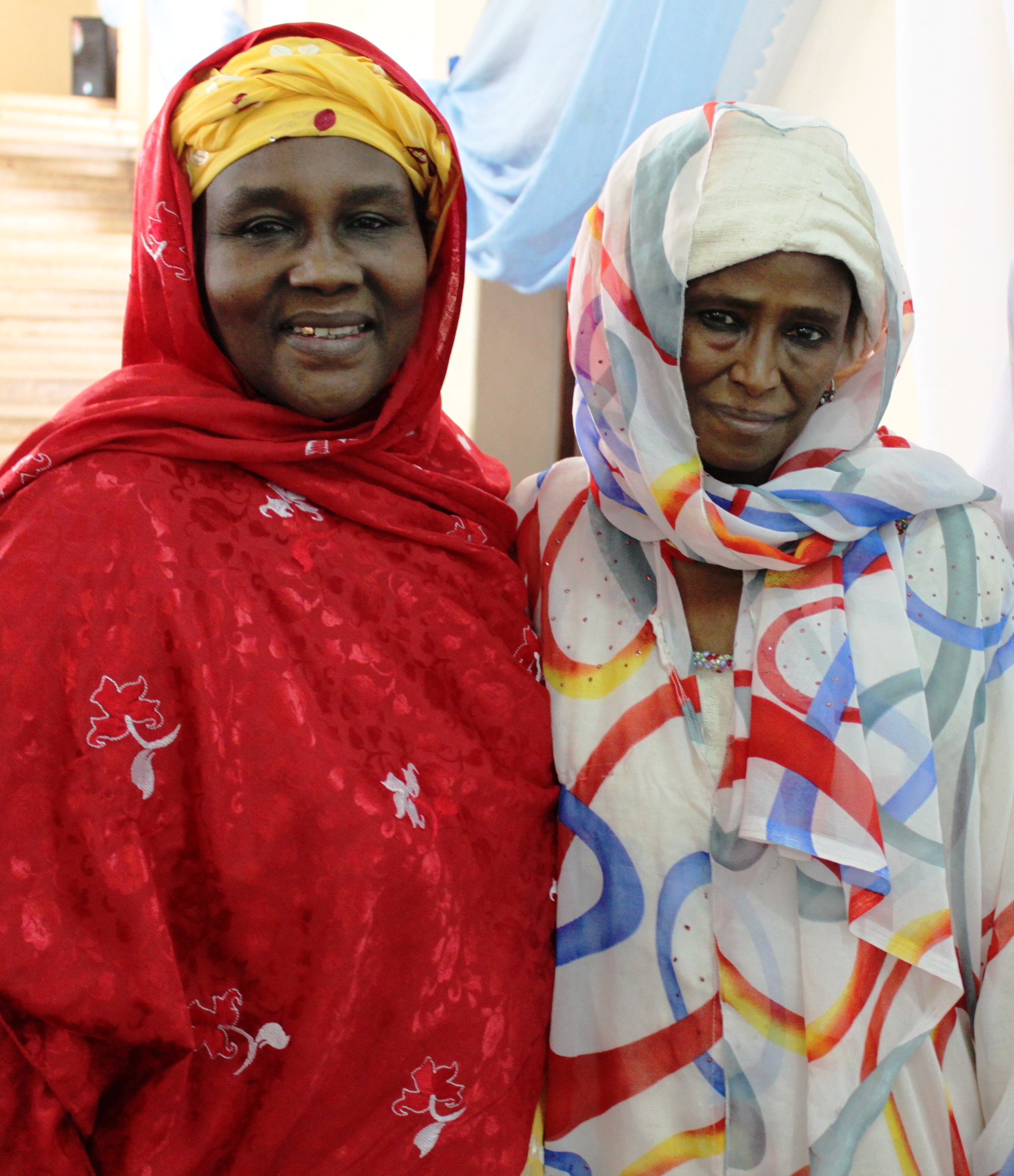
Hausa novelists Balaraba Ramat Yakubu and Hafsat Abdulwaheed at an event celebrating the work of literary critic Ibrahim Malumfashi, Kaduna, December 2012 (c) Carmen McCain

Hausa novelists Balaraba Ramat Yakubu and Hafsat Abdulwaheed at an event celebrating the work of literary critic Ibrahim Malumfashi, Kaduna, December 2012 (c) Carmen McCain

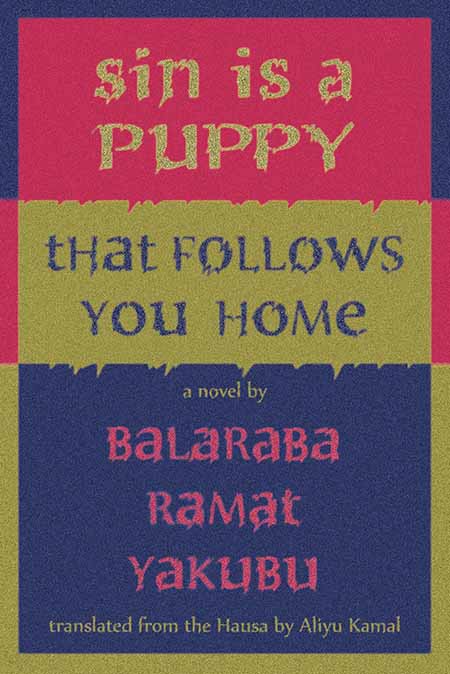
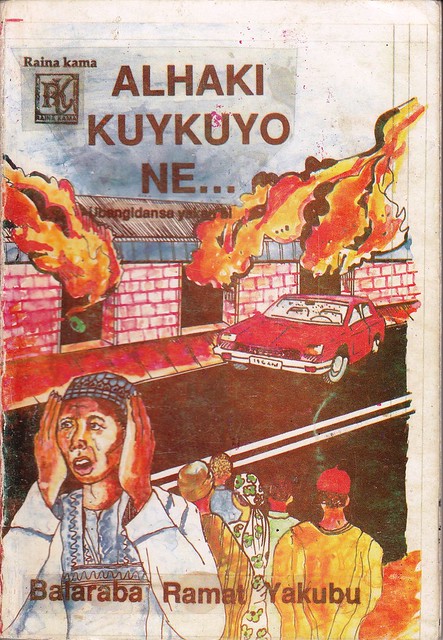
In 2012, the Indian publisher Blaft sponsored and published Aliyu Kamal’s English-language translation of Hajiya Balaraba’s 1990 novel Alhaki Kuykuyo Ne…Ubangidansa Yakan Bi as Sin is a Puppy… that Follows you Home.

The translation of Balaraba Ramat Yakubu's novel Alhaki Kuykuyo Ne published in 2013 by Blaft Publishers.

The translation of Balaraba Ramat Yakubu’s novel Alhaki Kuykuyo Ne published in 2013 by Blaft Publishers.

Balaraba Ramat Yakubu’s novel Alhaki Kuykuyo Ne published in 1990.

The novel tells the story of a wealthy but womanising trader, who spends most of  his salary chasing prostitutes, only giving a fraction to his wife Rabi for the upkeep of the nine children in the house. When he marries an old prostitute who picks a fight with Rabi, he divorces his wife and sends her and her children away. Although Rabi finds life independent of her selfish husband liberating, she is eventually forced by her brothers and her son-in-law back into a more traditional home. The novel critiques the patriarchal society in which Rabi and her daughters are caught with bitter irony rather than explicit condemnation. [For my longer review of the translated novel, see this blog post.]

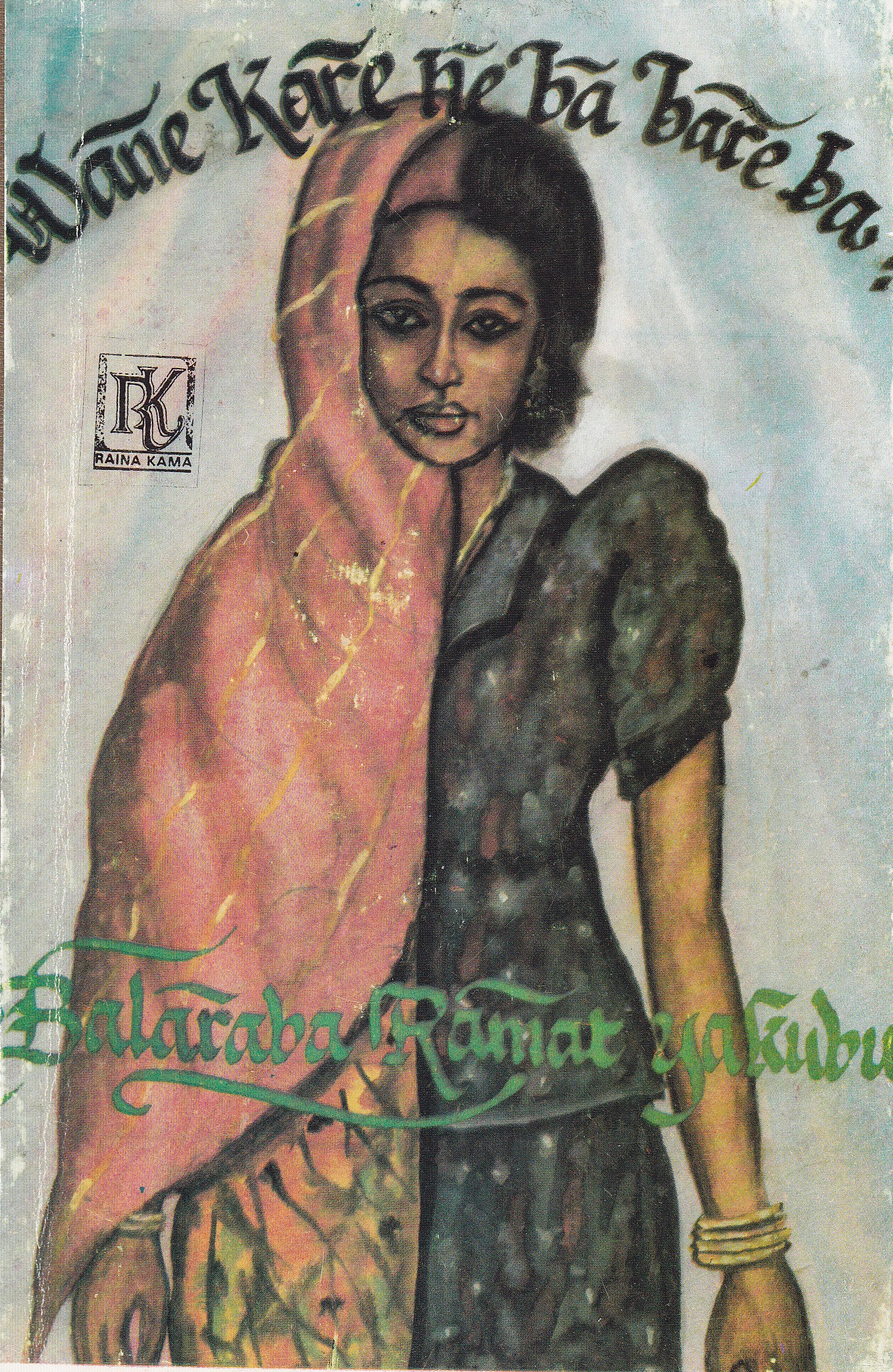
Wane Kare ba Bare ba is perhaps Hajiya Balaraba’s most controversial novel,

Balaraba Ramat Yakubu's novel Is the Man a Dog or Just an Outcast? published in 1995.

Balaraba Ramat Yakubu’s novel Is the Man a Dog or Just an Outcast? published in 1995.

and it quickly went out of print shortly after publication in 1995. It is about the outwardly respectable Alhaji Gagarau, who in private is a predatory sexual deviant. He molests almost every young girl he comes into contact with, including most of his daughters and his wives’ sisters. As in Sin is a puppy…., however, Alhaji Gagarau’s sins will follow him home; this time in the form of a hand wounded while committing a rape, which turns gangrenous and begins to rot. Like Oscar Wilde’s picture of Dorian Gray which shows the secret corruption of its owner, Alhaji Gagarau may be able to hide his sins but he cannot hide the smell of his rotting hand, which eventually exposes his secret.

Amidst these muckraking tales of corruption in the home, my favourite is the tender novel Wa Zai Auri Jahila?/Who will Marry an Illiterate Woman? in which Hajiya Balaraba draws on her own experiences as a bride of 12. Published in 1990 [and soon to be adapted into a mini-series produced by Hajiya Balaraba], the novel is relevant to the ongoing debate of child marriage, recently brought back to public attention by Senator Yerima’s vociferous insistence that he has the religious right to marry a wife or give out his daughters in marriage whenever they start menstruation, whether “at the age of nine, 13, 14.” In Wa Zai Auri Jahila?, Hajiya Balaraba counters this male narrative with the woman’s side of the story. Thirteen-year-old bookworm Abu is withdrawn from school when her Qur’anic teacher tells her father it is no longer appropriate for a grown girl to be out in public. Embarrassed, Abu’s father quickly seeks to marry her off to her childhood sweetheart, her cousin Ahmadu, to whom she has been promised for years. But Ahmadu, now in university in Kano, has had a taste of city life and city women and will have no more of his young village cousin, whom he calls illiterate and backward. Meanwhile, a local aristocrat, the potbellied, red-eyed fifty-two year old Sarkin Noma has been plotting to marry Abu before he has even seen her, as a way to subdue his three other quarrelling wives. The headstrong Abu makes no secret of her disgust for him, but her father, humiliated by the immature Ahmadu’s rejection of his daughter, forces his young daughter to marry the old man. Sarkin Noma, initially just in search of fresh new blood, continues his pursuit of Abu as revenge for disrespecting him, telling her, “No matter how much you refuse me, I will marry you.” The first part of the novel traces the ever more wretched conditions Abu faces, as a child bride facing brutal rape by her old husband.

However, Abu is not a subservient victim, and she takes her fate into her own hands, running away to Kano to make a new life for herself. The second part of the novel traces Abu’s maturity and knowledge as she enrolls in adult education classes and begins a career, first as a teacher and later as a nurse. Like the corrupt men in Hajiya Balaraba’s other novels, as Abu grows in power, Sarkin Noma dwindles away and becomes impotent. But he is the only one in the book who

part 1 of the novel, 182 pages.

Part 1 of Balaraba Ramat Yakubu’s novel Wa Zai Auri Jahila.

is not changed for the better by Abu’s self-improvement. As the other men in the novel learn humility and respect for their female companions, they find much sweeter lives. Ultimately, Abu is allowed the happiness that escapes many of Hajiya Balaraba’s other heroines—having redefined her value, not just as an illiterate girl to be given away but an educated woman who has much to give back to her family. The title is thus ironic, the real question is not “Who will marry an Illiterate Woman?” but rather “Who is good enough to marry an Educated Woman?”

Wa Zai Auri Jahila? challenges the stereotype of the northern woman as merely silent and oppressed and gives her an agency of her own. Unfortunately for those who read only English, Wa Zai Auri Jahila? is available only in Hausa. However, if you want a taste of Hajiya Balaraba’s writing you can read her novel Alhaki Kuykuyo Ne, published in translation as Sin is a Puppy… by Blaft. If more effort were put into building up an infrastructure to support translators, perhaps a wider public would be able to access more of these striking stories written by women and young people in northern Nigeria. Instead of awarding a single author with $100,000 every year, the administrators of the NLNG prize may want to consider that.

Read my previous reviews of Balaraba Ramat Yakubu’s novels Sin is a Puppy… and Wa Zai Auri Jahila? here.

Global Reach?

Several times I have proposed keeping up with the blog by posting photos from my vast archive and writing a quick memory of the context behind the photograph, and today I intend to start that–begin the rhythm of a new blog posting schedule.

I went into my photos folder and picked a date at random. And this is the first photo that came up.

IMG_1681

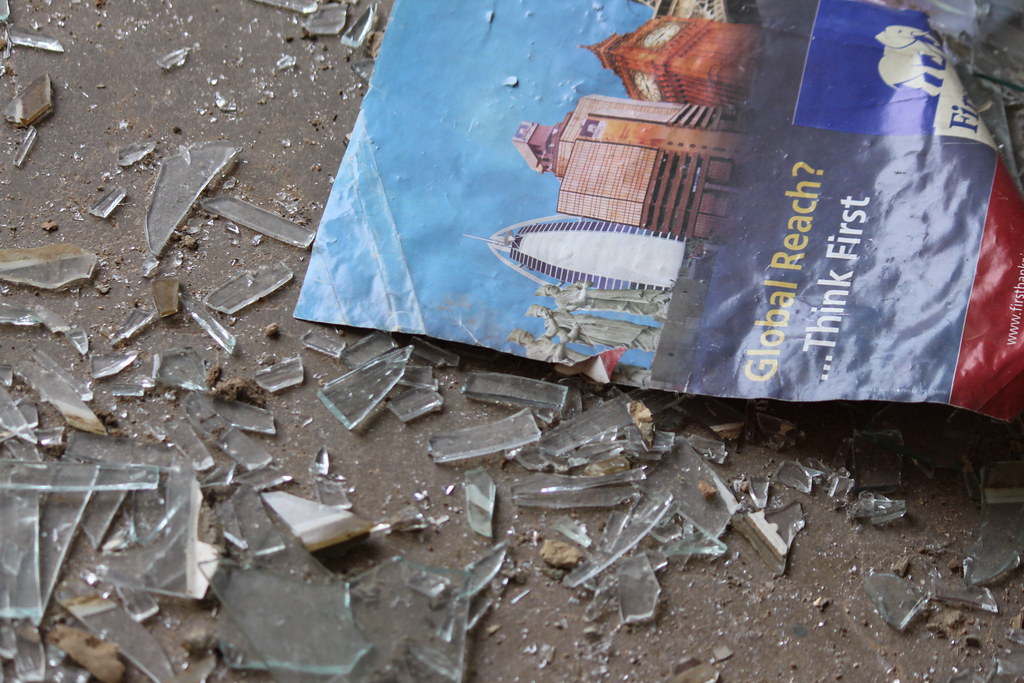
Taken on 26 February 2012 after the Boko Haram bomb at COCIN Headquarters church in Jos, Nigeria (c) Carmen McCain, all rights reserved

The date: 26 February 2012

The photo: A bank flier amidst broken glass from a Boko Haram bomb at COCIN Headquarters church. I had been living in Jos at the time, while writing my dissertation, and the church was only a block and a half from my house. It was around 7:15am. I was lying in bed, procrastinating getting up, when suddenly an ear-splitting BOOM came, shaking the house. I lept out of bed, tangling in the mosquito netting. I couldn’t find my keys to run out of the front door, so I ran out the side door. In the sky were thousands of bats.

The closed windows in my neighbour’s houses had shattered. We all sat on the ground in a neighbour’s house, listening to the shouting outside the wall. Later that afternoon, when tensions cooled, I walked over to the church to take a few photos. I later wrote about the experience in more detail.

With the recent attacks on mosques in Jos and Kano, church in Potiskum, and during a biometric verification exercise for state workers in Zaria, it felt like a the right photograph to post today, expressive of multiple ironies. It expresses the uncertainty that we continue to face about the “global reach” of terror, in a time when ISIS, Al Shabaab, and Boko Haram often seem to work in conjunction (and in a time when more stories of terror against minority populations in the U.S. and Europe are being heard); the tensions of Nigeria’s economic expansion and attempts to join marketplaces of global capital in a time of Boko Haram. And so on.

Hopefully, my next photo will be a little more cheerful.

Missing Kannywood

During the celebration of Kannywood at 20 (c) Sani Maikatanga

During the celebration of Kannywood at 20, Kano, December 2010 (c) Sani Maikatanga

There are many posts I have wanted to write, but I put them off because there is always something else I am supposed to be doing.  I am currently skipping over an important post I have been planning for a month, namely, the election and the euphoria of Buhari’s win (when people stood in line all day and all night to vote and partied on Twitter) and a series of photos I took in Lagos during the second election for House of Assembly members and governors. Hopefully I will get to that.

Today, though, I am missing Kannywood. Where I live now, in western Nigeria, I have made friends with a young Hausa girl in Junior Secondary 2. She comes to my house to visit me, and we talk in Hausa, she braids my hair and asks to see photos of Kannywood. I scroll through old albums. She wants to see photos of Adam A. Zango and Sadiq Sani Sadiq, who she calls “mijina.” I have so many folders ordered by month and day that I cannot quite remember where everything is, so I swoop in at random and pull things up, and usually it is something she wants to see. I think maybe on this blog, I should start posting random photos every week, if I don’t have anything else to write about.

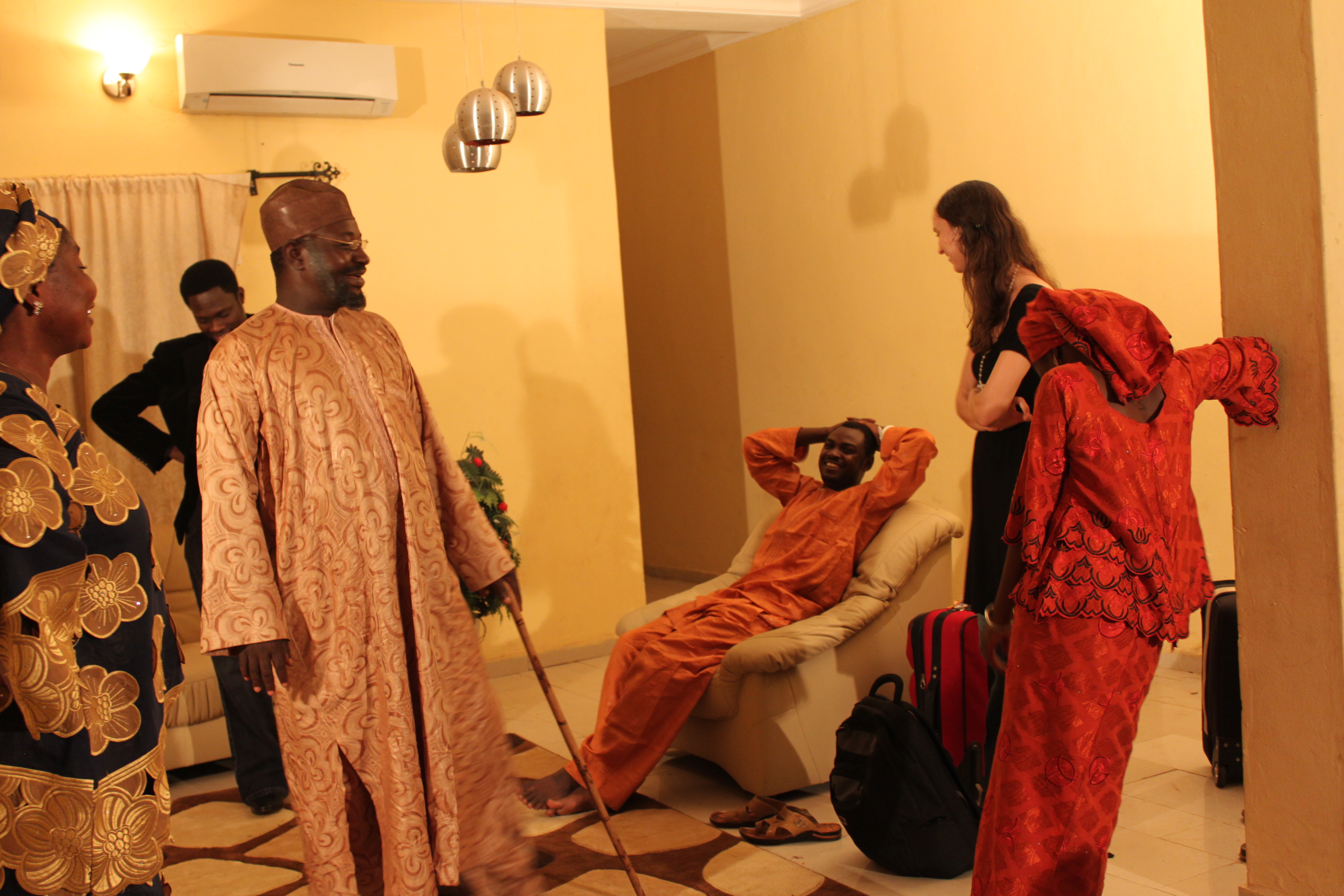
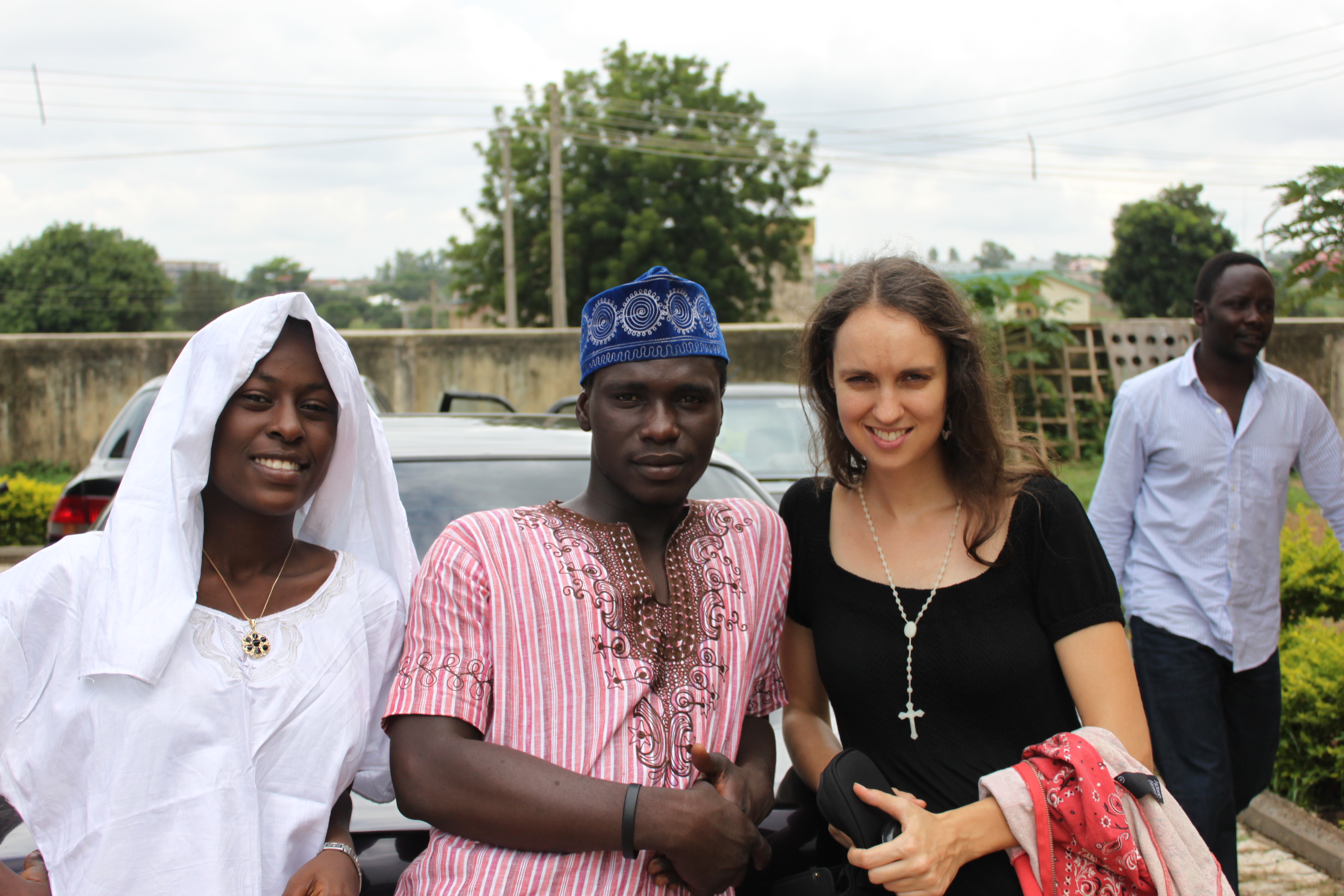
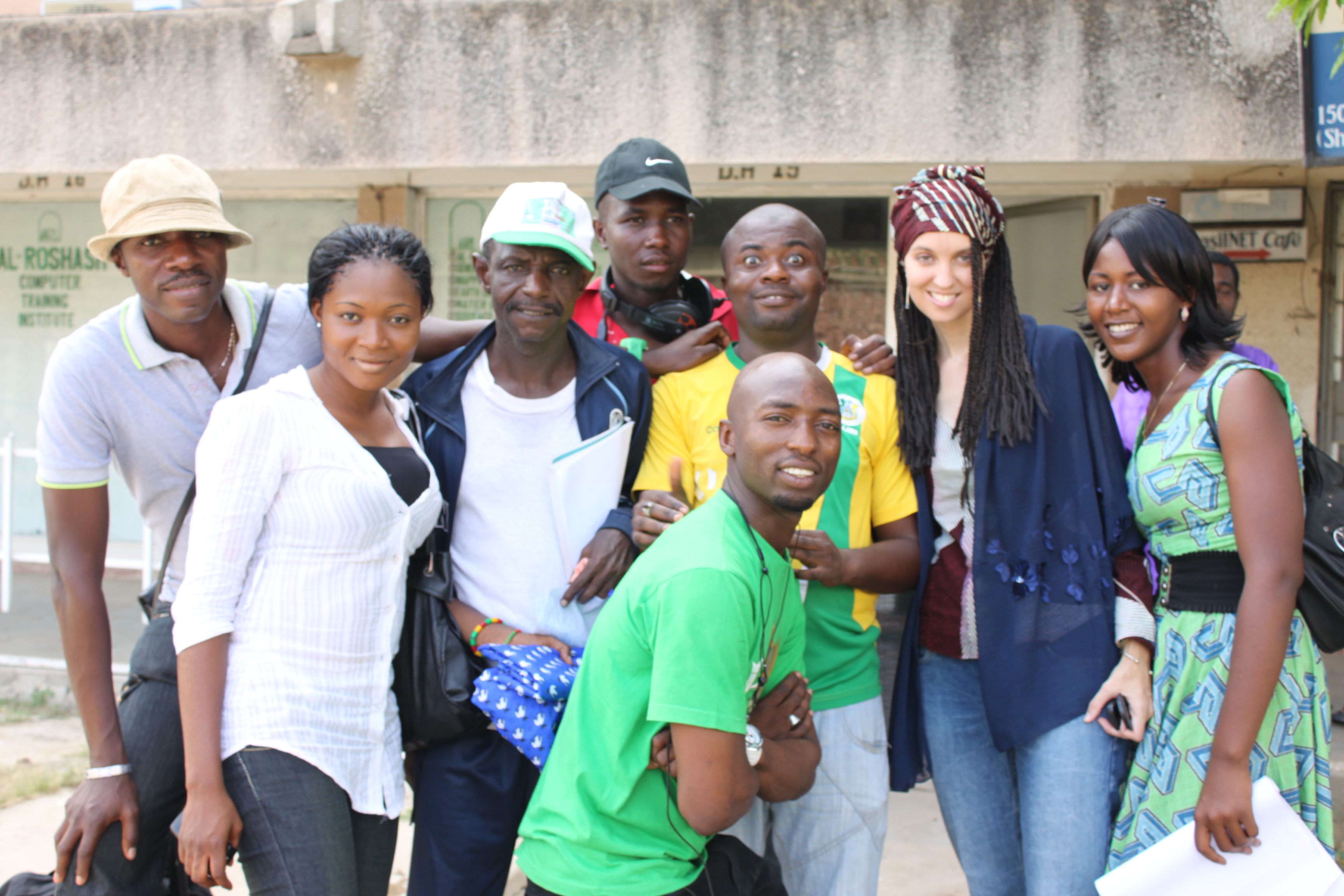
So, here, today, I will post a few photos of the years I was in Kano and involved in Kannywood– it was equal parts glamor and exhaustion, occasionally terrifying for a shy me, at over-long bikis, on film sets, and industry meetings, workshops, and award ceremonies.  But more than anything, it was community. I felt like I had been adopted into a family, and I spent much of my time in Kano in studios and offices, hanging out, listening to gossip and political debates and jokes. I miss that. And those days in Kaduna, Zaria, Jos, on sets, smooshed five to a backseat in cars on the way to the next location, five ladies to a bed in hotels while one actress watches the Zombie Apocolypse on DSTV until 2am and another has long midnight calls, the times you sit around watching people saying their lines over and over again, the banter and the long conversations that happen behind the scenes, while waiting for the last scene to wrap.

Where I am now, people continuously shout “oyinbo” at me. It is nothing new. I grew up in Nigeria and I know that it is rarely malicious, often affectionate. But is alienating nevertheless. It reminds me that I am foreign, that I do not belong. In Kano, there was a familiarity, in my own small community that spilled over to the larger public once people began to recognize my face. I was not just a “baturiya.” I was “their” baturiya–a Baturiya Bahaushiya–a baturiya at home. Most of all I miss that. The ability to, if not to quite fit in, to belong, to be in a place where I was not just an alien but a “member” of a community who can straddle two worlds.

The last time I was in Kano was briefly in 2013. It was not the same as I remembered it. Homes left behind never are. Lives move on. Friends marry, move studios, leave film for other work. But from 2008 to 2011, this place was my community. These people, my home.

In the past couple of days, I have gotten phone calls from my Golden Goose crew, the studio I spent much of my time in the first few years in Kano. I thank these my friends for remembering me. Much love to them all.

Golden Goose Studio, 2008 (c) Nazir Ahmad Hausawa aka Ziriums

Golden Goose Studio, Kano, 2008 (c) Nazir Ahmad Hausawa aka Ziriums

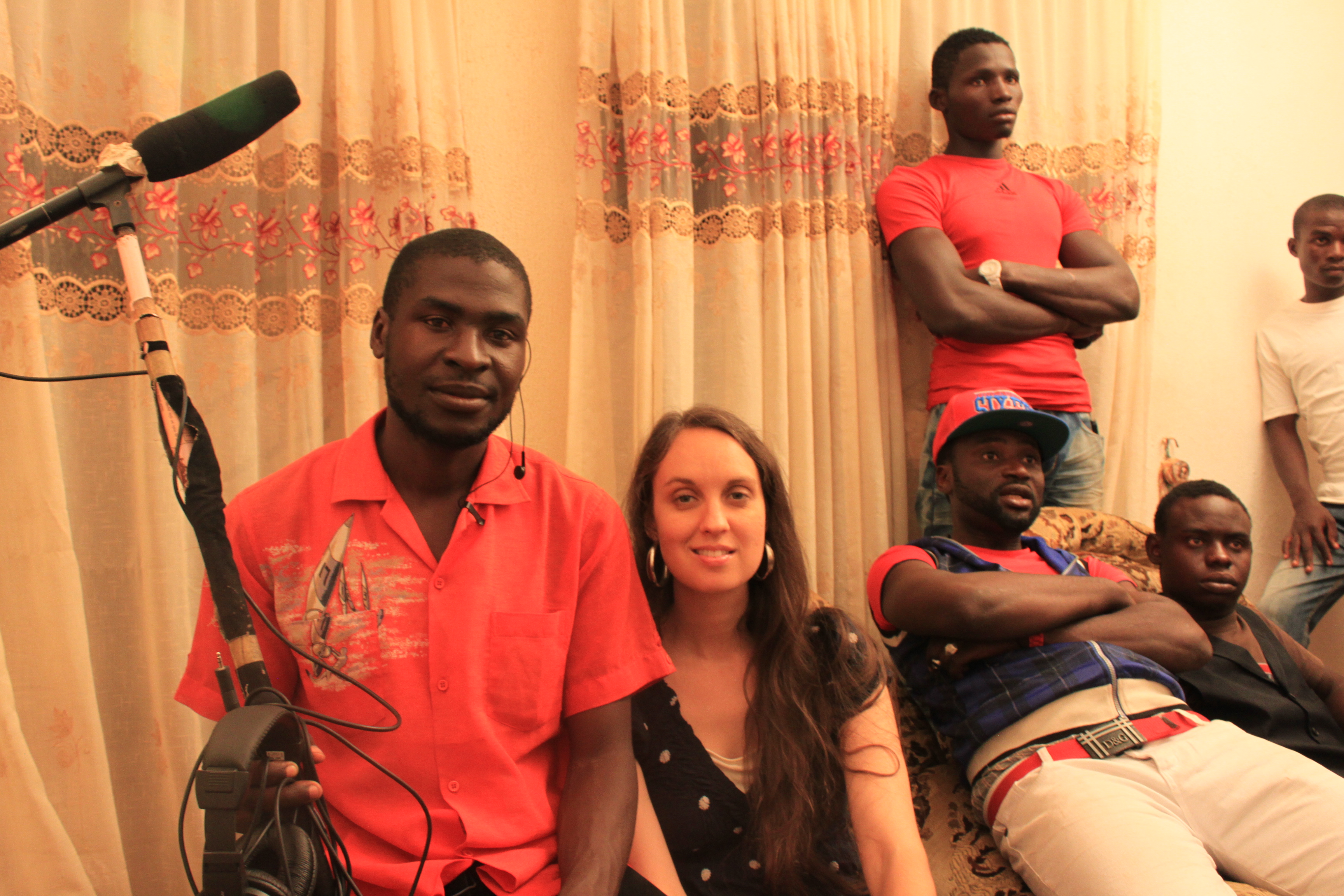
Kannywood actress Fati Tage and me at the wedding of Binta Mohammed and Tahir I. Tahir in March 2009, Kano.

Dan Auta and me joking around on set of Likita, Zaria, May 2010.

On set Likita, Zaria, 2010

On set Likita, Baba Ari and Gatari, Zaria, May 2010

On set of Jidda, Kaduna, January 2010.

On set of Jidda, Kaduna, January 2010.

Golden Goose buddies at the wedding of editor, Sulaiman Abubakar MPEG, Mrch 2010.

Golden Goose buddies at the wedding of editor, Sulaiman Abubakar MPEG, March 2010.

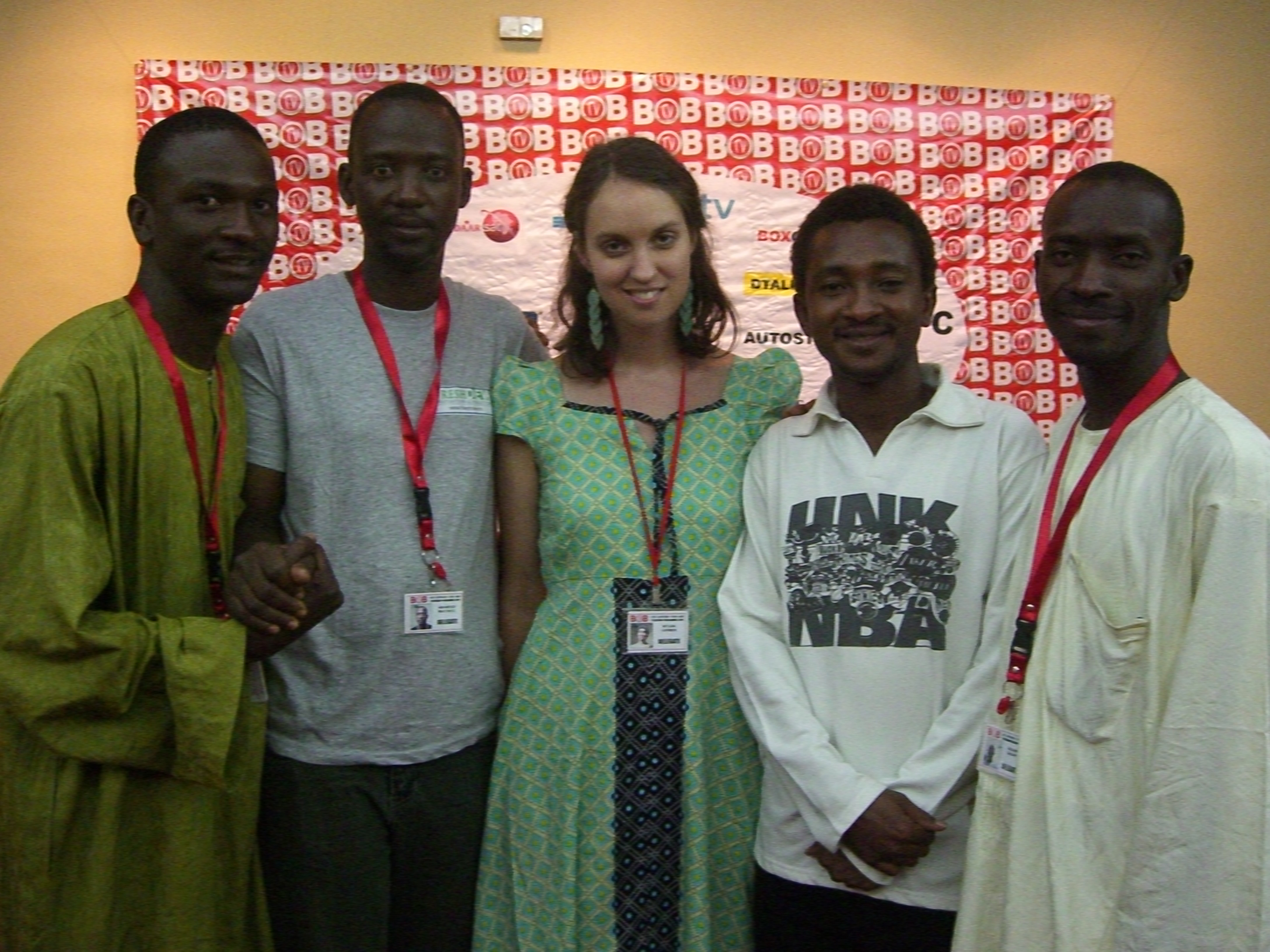
With Kannywood peeps, BOB-TV, Abuja, 2009.

With Kannywood peeps, BOB-TV, Abuja, 2009.

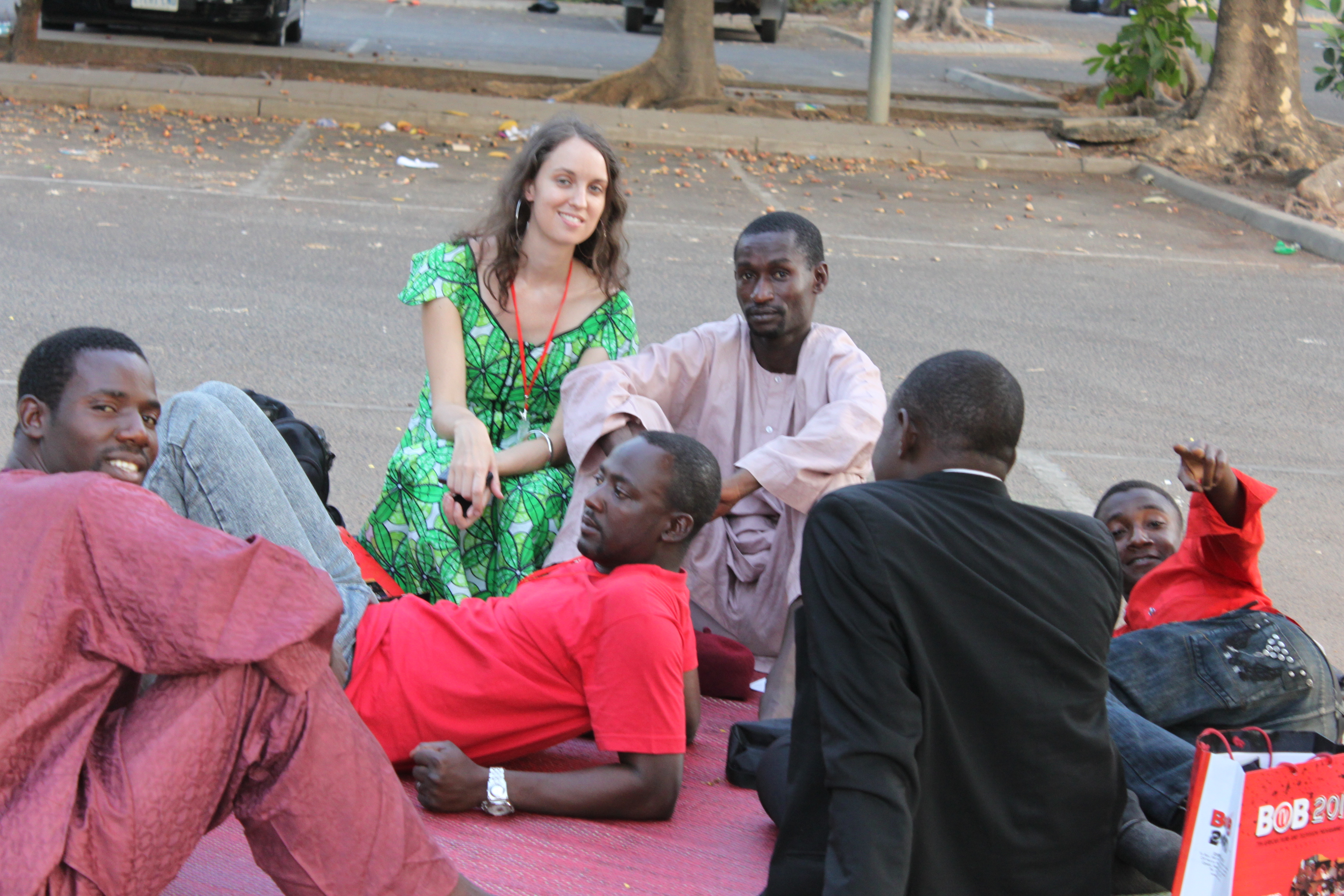
Hanging out in the Sheraton parking lot, at BOB-TV, Abuja, March 2010.

Kannywood peeps hanging out in the Sheraton parking lot, at BOB-TV, Abuja, March 2010.

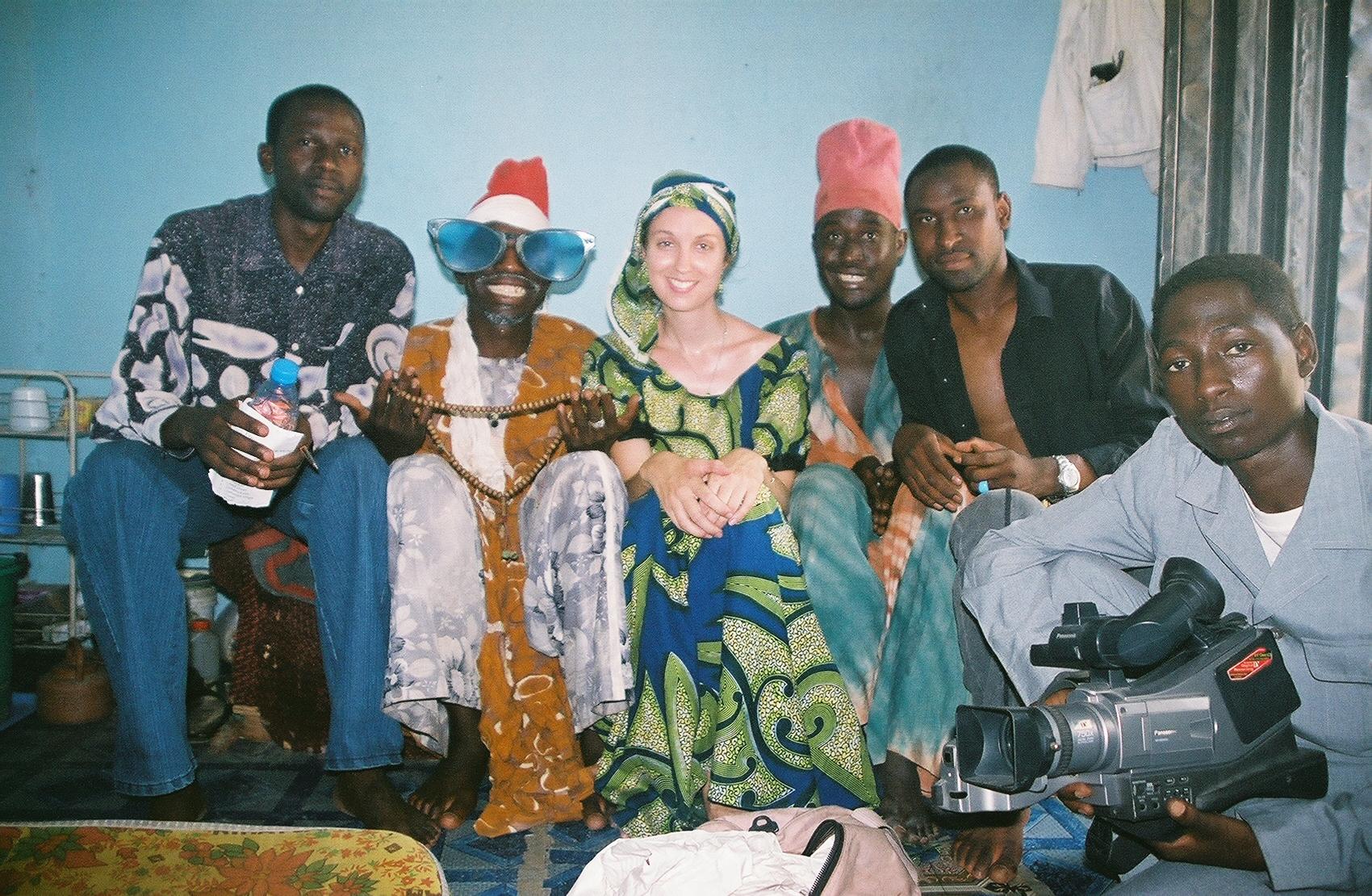
On set of Ibro Ya Auri Baturiya, 2009.

On set of Ibro Ya Auri Baturiya, Kano/Jigawa, 2009.

IMG_6619

On set, Mutallab, directed by Aminu Saira, written and produced by Nasir Gwangwazo, Kaduna, August 2010.

Ali Nuhu and me on set Mutallab, August 2010.

The last day of the Mutallab shoot, Kaduna, August 2010.

The last day of the Mutallab shoot, Kaduna, August 2010.

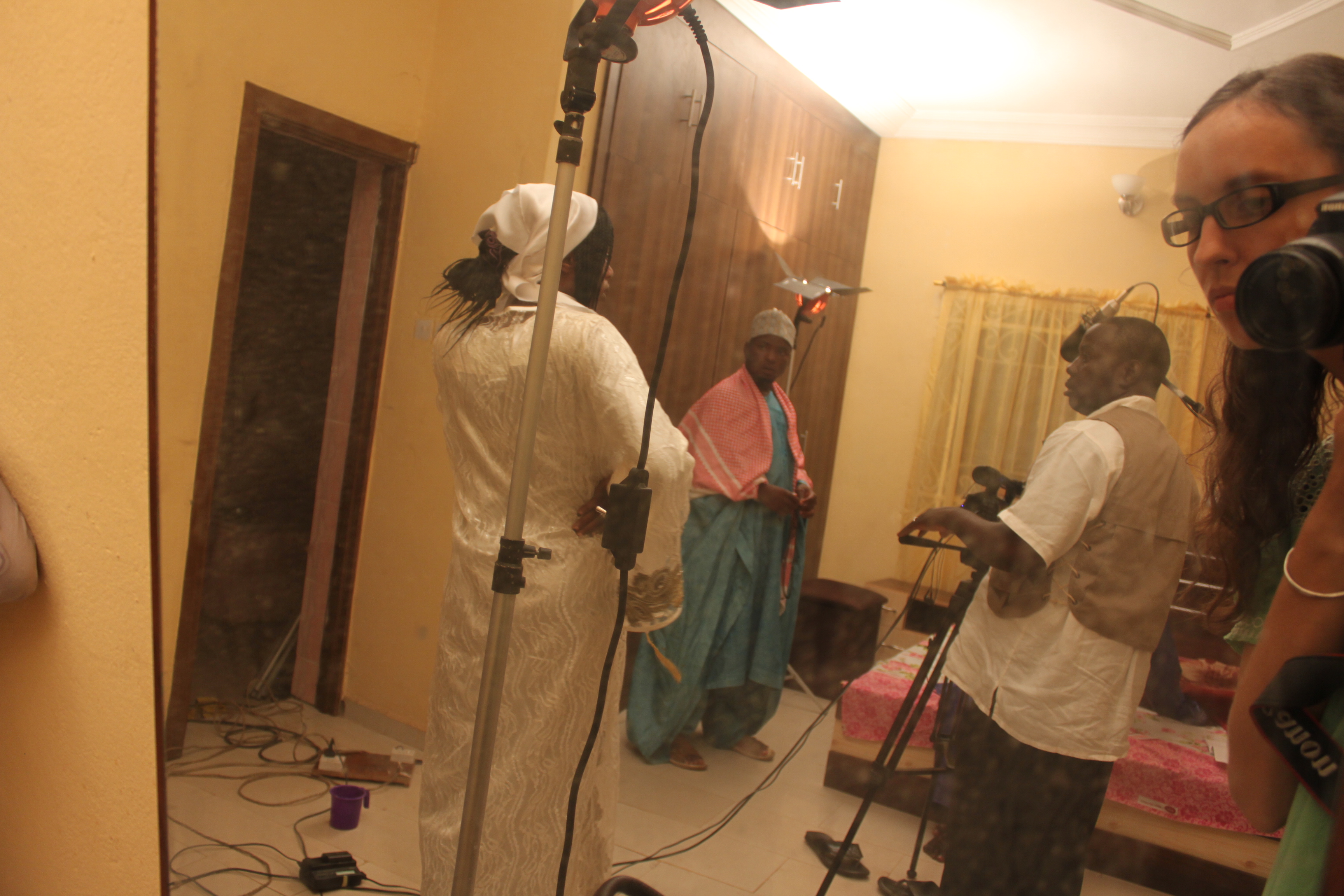
Mirror selfie on set Janni-Janni, Kaduna, August 2010.

Mirror selfie on set Janni-Janni, Kaduna, August 2010.

On set of an AGM Bashir film, Kano, 2010.

On set of an AGM Bashir film, Kano, 2010.

On set of the Hajiya Aisha Halilu film Armala, April 2011

On set of Abbas Sadiq film, Jos, 2012.

On set of Abbas Sadiq film, Jos, 2012.

Sai na dawo.

On the eve of the election: Podcast with Ade Torrent on blogging from Nigeria

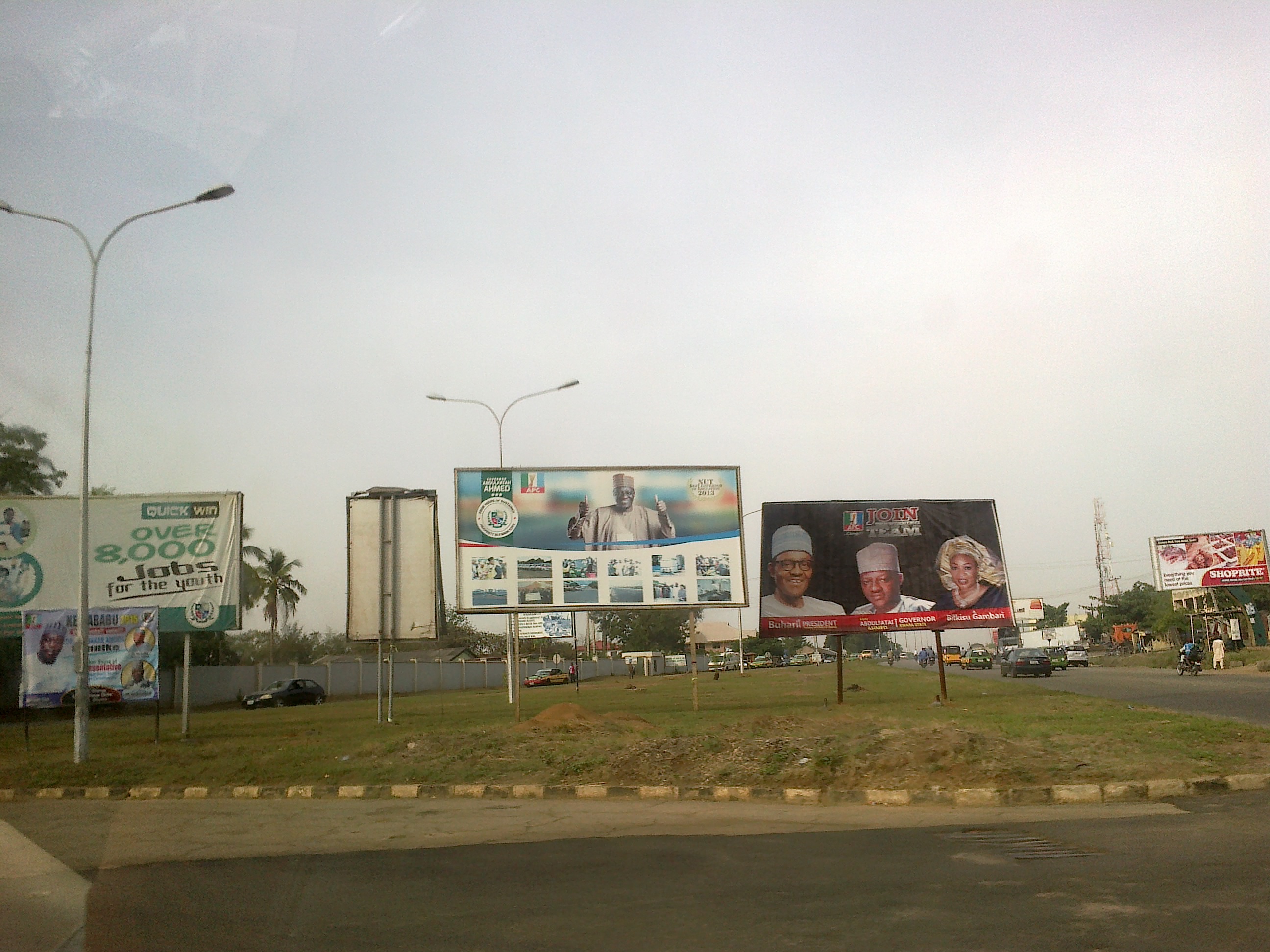
PDP poster shoved through bus windows, 25 March 2014. (c) Carmen McCain

PDP poster shoved through bus windows, 25 March 2014. (c) Carmen McCain

Two days ago, while returning in a university bus from the institution in one of the western states of Nigeria where I teach, we ran into a PDP rally. The people danced and shouted, pounded on the bus and pushed posters of Jonathan and Sambo through the windows.  I smoothed the crumples and put it in my bag–a souvenir of this time. I was relieved when we left the mob behind us.

When I got home, there was no light. There had been no light for five days. I tried to turn on my stove to cook supper, and there was no gas–a leak somewhere.  I ate cornflakes, which I keep on hand for times like this, and went to bed. The next morning, waiting for someone to come fix the gas leak, I washed clothes on the front steps. There was a moment, when black smoke billowed up and then drifted across the sky, that I had that familiar clenched feeling in my stomach–gut memories of Jos, Kano. Black smoke on the horizon and the grumble of distant shouting.

They have started, I thought, (as I had thought when I heard gunshots in Benin after an election.) But the smoke drifted away and dissipated. The sky was blue again.

On the eve of the election. March 27, 2015.

On the eve of the election. March 27, 2015. (c) Carmen McCain

On the eve of the election. 27 March 2015. (c) Carmen McCain

On the eve of the election. 27 March 2015. (c) Carmen McCain

Since yesterday evening, there has been light, on and off. More than I have had in the two weeks I have lived in this compound. I hope it lasts through the election. I finally have enough battery time to go online and read the most recent  articles about Boko Haram and the people who have escaped from them. [Al Jazeera (whose journalists in Maiduguri have most recently been confined to their hotel rooms) has a particularly horrifying series about women who have escaped  forced marriages in Boko Haram camps and the huge number of orphans who have been left behind.]

Boko Haram propaganda video playing on the phone of an IDP I interviewed. (c) Carmen McCain

Boko Haram propaganda video playing on the phone of an IDP I interviewed. (c) Carmen McCain

I finally have enough NEPA to turn on AIT, the only station I get with my jerryrigged wire that works as an antenna, and see all the election adverts. A jovial president and bright-faced young people celebrating all that he has done while in office. The occasional beleaguered advert from the opposition.

Nigeria 2015 campaign, February 2015

Nigeria 2015 campaign, February 2015 (c) Carmen McCain

A friend tells me over the phone that he is watching  a documentary on Buhari’s VP running mate, Osinbajo, on Silverbird Dream network, when suddenly it goes blank with only a station logo on it. It stays that way for about 10 minutes before coming back on again. I think of the night in February when elections were postponed. How immediately after Jega’s announcement, PDP adverts played on the state television network NTA.  The president laughing. The president running on a treadmill, the president and his wife singing with Nigerians of every tribe and people about  “Mama Peace.”  Shiny happy people holding hands and celebrating the anticipated return of The President.

This morning, I also have enough NEPA to finish a blog post I started several days ago.

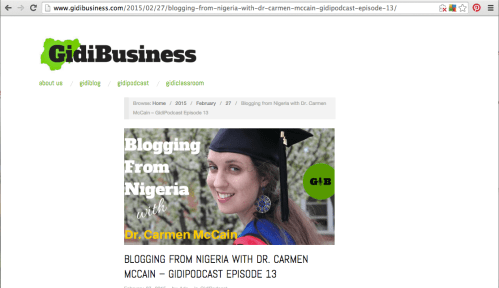
Last month, while briefly in the U.S. to take care of getting my STR visa, so that I could make a more permanent move to Nigeria, I recorded a podcast with London-based blogger Ade Torrent, for his series of podcasts on his website GidiBusiness.

Screen Shot 2015-03-27 at 11.34.22 AM

Ade had asked me months ago if we could do a podcast, but when we tried it while I was in Nigeria, Skype cut off about every 10 seconds. So, it was not until I visited the U.S.  and had steady enough light and electricity to have a 30-ish minute chat without being interrupted, that we were able to record the podcast about blogging from Nigeria.

I returned to Nigeria at the beginning of March to begin a job at a lecturer in a part of the country I have never lived before. Since my arrival, I have struggled with even more severe problems than I discussed in the podcast. Today is one of the first days we have had more than a few hours of light. Thus, the delay in posting this.

I’ve never done a podcast before, but I had a lot of fun with this one. We talked about lack of light and solar options (I am still working on that), balky internet, blogs and search terms for Hausa porn (the most common search term I have gotten in my 5+ years on this blog has been “hausa films blue films” followed not far after by “kannywood sex”) that draw people to my site (to be oh so amusingly thwarted), my research on the Hausa film industry, and what I am doing these days. And the inspiration I have gained from other Nigerian bloggers like Abidemi Sanusi, Teju Cole, Nkem Ifejika, Chikodili Emelumadu, Ainehi Edoro, Nura Abubakar, and Abubakar Adam Ibrahim.

The postcast is here, and while you are at it,  check out his latest podcast with voiceover artist, Sanjo Ogunseye. It’s a really great listen. Ade also has many other sites:  GidiBusiness, a YouTube channel, Google+,  Twitter, Pinterest, a personal website and more. My personal favourites are his photoblog, A Torrent of Photos, which record his wanderings with his camera, and his YouTube channel A Torrent of Videos, where he vlogs while wandering around London and beyond, camera rolling.

Ade Torrent (c) Ade Torrent

The light has gone again. And I need to go reload my internet credit, so that I don’t run out over the election weekend.

Let me end with a text message I just got from a pastor in Jos:

The hour has come 4Nigerians 2decide 2morrow.Dworld waits. Let us all join hands n hearts 2PRAY 4PEACE 2Reign as we vote n that God?s will be done. Prayer works n it is not an escape route. God Rules n Reigns. Not D riggers, the merchants of death, the sycophants, the false prophets, the merchants of corruption n those who plot Nigeria?s break-up if they lose, but GOD.It is He who has the final SAY. Let us UNITE 4PEACE nDnation?s survival.Vote Wisely.

Interview with Award-winning filmmaker Kenneth Gyang at the African Studies Association Conference, 2014

poster courtesy of Shadow and Act

At the African Studies Association conference in Indianapolis last November (2014), Nollywood scholar Connor Ryan asked me if I’d like to collaborate with him on an interview with filmmaker Kenneth Gyang, one of the founders of Cinema Kpatakpata. Kenneth’s film Confusion Na Wa won the awards for Best film and Best Nigerian film at the 9th Africa Movie Academy Awards in 2013. (It was nominated for four)

Kenneth is a friend, whom I have known since the set of his Blood and Henna in 2011, which was also nominated for six AMAA Awards (and eventually won Best Costume Design).

IMG_1370

Kenneth Gyang on the set of his film Blood and Henna in Kaduna, November 5, 2011. (c) Carmen McCain


At the time we interviewed him (directly before the screening), I had not yet seen Confusion Na Wa! and I really wish I had, as I would have had even more questions. It is a brilliant film that, within a fractured tragi-comic plot, captures well the kinds of daily life and conversations Nigerians have. I need to see it one more time before I write a review.

In the meantime, if you are in Nigeria, Confusion Na Wa is currently back in cinemas via Filmhouse Cinemas, which has locations in Kano, Lagos, Ibadan Calabar, Port Harcourt, and Asaba. If you are in Kano, it is playing now at 10:10am Friday through Thursday. Go see it. If you are in the U.S., Kenneth Gyang has been on a tour, and I believe Confusion Na Wa will be screening at the University of Georgia on February 28, this Saturday, although I wasn’t able to find it on the UGA calender.

I didn’t project my questions very well in the video interview (only Kenneth was mic-ed), so some of my contributions got cut in the editing, but I loved Connor’s questions (he wrote one of the first and probably one of the best reviews of the film when it first came out in 2013) and Kenneth’s answers. Here is a link to some of Kenneth’s transcribed answers, and below is the video of the interview. Enjoy.

#Politicalironies : Campaigning in a time of Boko Haram

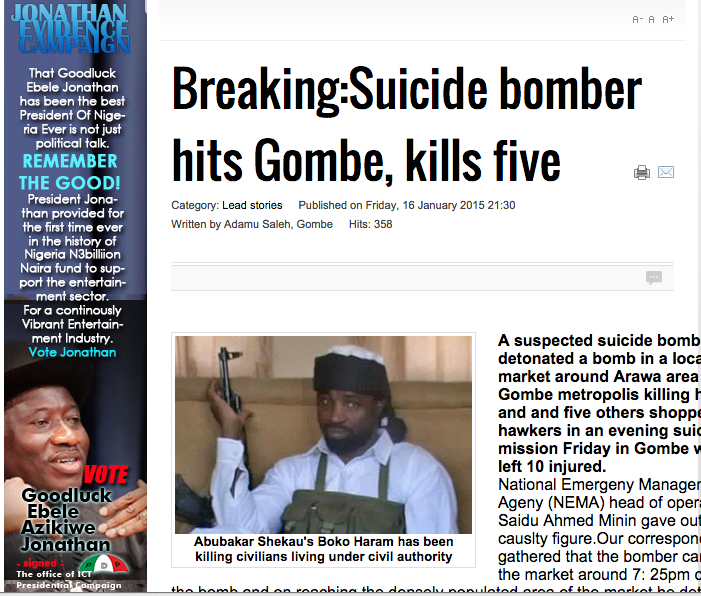
Screen Shot 2015-01-16 at 10.16.32 PMI’m not sure this photo needs any captioning. A screenshot I took featuring an article and a sidebar ad on 16 January 2015. A lot of  juxtapositions these days.

Here is a link to my blogpost with similar ironic political juxtapositions during the 2011 Nigerian elections.

My memories of Dan Ibro in Weekly Trust today

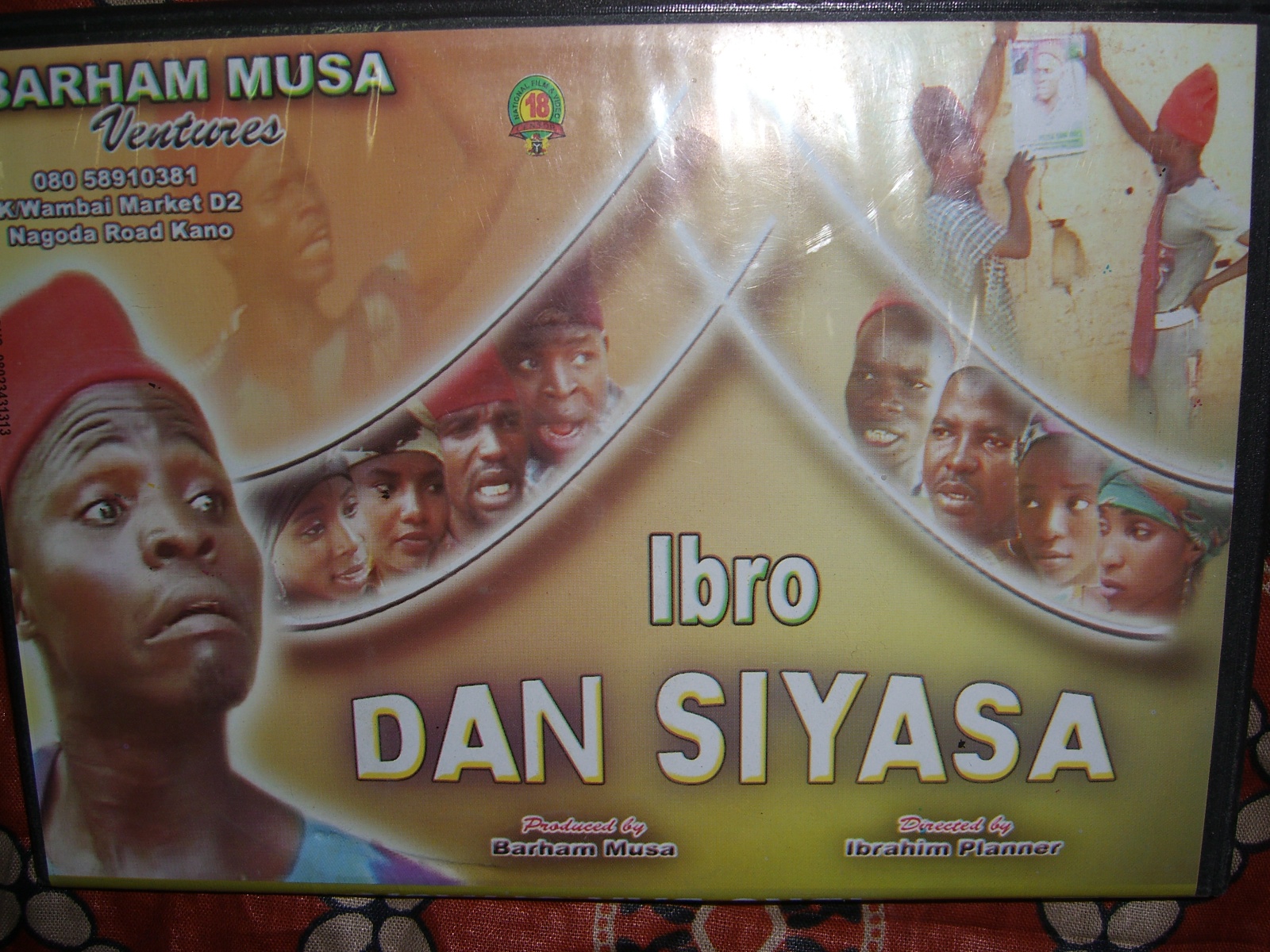
Ibro Dan Siyasa

I remember in the middle of the 2008 Jos crisis laughing alongside an audience of Christian refugees at Ibro Dan Siyasa

Last week I wrote up some of my memories of one of Kannywood’s biggest stars Rabilu Musa, more often known by his comedic alter-ego Dan Ibro. Musa passed away last week on 10 December 2014, due to complications related to kidney disease.  He had apparently struggled with the illness for some time. When he was jailed by the mobile court then attached to the Kano State Censorship Board (a kangaroo court he later mocked in Kotun Ibro), he spent most of his jail term in the hospital. (When Kwankwaso became governor in 2011, Rabilu Musa was also given a seat on the Kano State Censorship Board.)

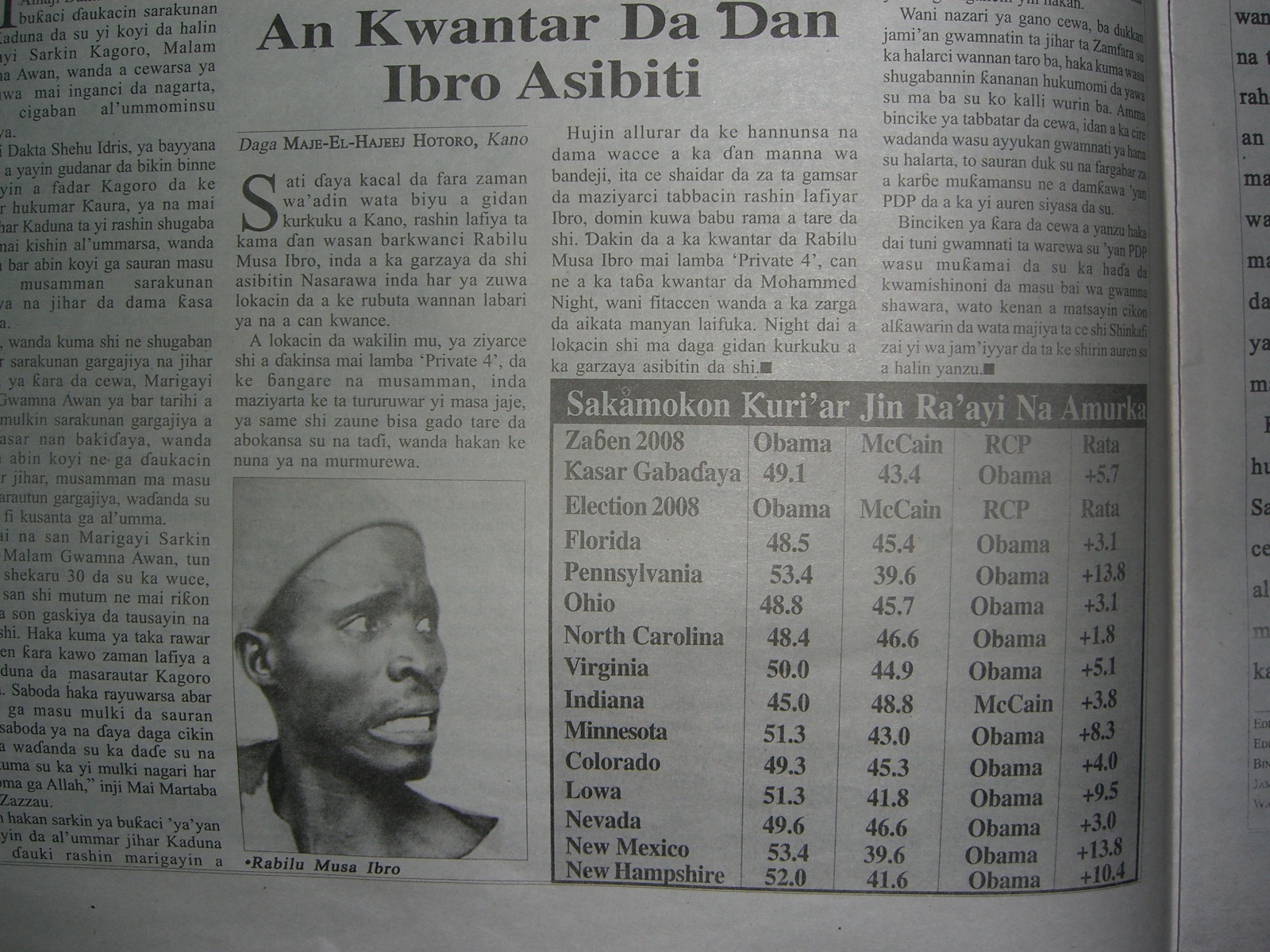
"An Kwantar da Ibro Asabiti" article published in Leadership Hausa, 17-23 October 2008

“An Kwantar da Ibro Asabiti” article published in Leadership Hausa, 17-23 October 2008

This week, my editor (who is still being kind to me despite my being MIA from my column) at Weekly Trust asked me if I would grant an interview about my memories of Dan Ibro, along the lines of the blog post. Once some time has passed, I’ll archive the whole interview on my blog, but for now you can read the interview on the Trust site here: “My Memories of Dan Ibro”

Ibro Dan Siyasa

Ibro Dan Siyasa

I will try to figure out how to upload the interview I did with him in April 2009, once I have access to good internet.

In the meantime, here are a few other Trust articles and tributes to the late comedian:

“Father of Late Comedy Star Dan Ibro Speaks… ‘Life will never be the same without Dan Ibro” by Ibrahim Musa Giginyu

“Tribute to an Unrivalled Arewa Comedy Icon” by Umar Rayyan

“Dan Ibro: Exit of Kannywood’s Comedy icon” by Ibrahim Musa Giginyu

“Popular Hausa Comedian Ibro Dies” by Ibrahim Musa Giginyu

Other articles include

Noorer’s “Social Media Reactions to Rabilu Musa Ibro’s Death” on Kannywoodscene

Umar IBN’s obituary  “Cikakken Tahirin Marigayi Rabilu Musa Dan Ibro” on Kannywood Exclusive.

Mohammad Lere’s article “Comedian ‘Dan Ibro’ Buried in Kano” in Premium Times

Awwal Ahmad Janyau’s “Rabilu Musa Dan Ibro Ya Rasu” in RFI

“Dan wasan Hausa, Rabilu Dan Ibro Ya Rasu” BBC

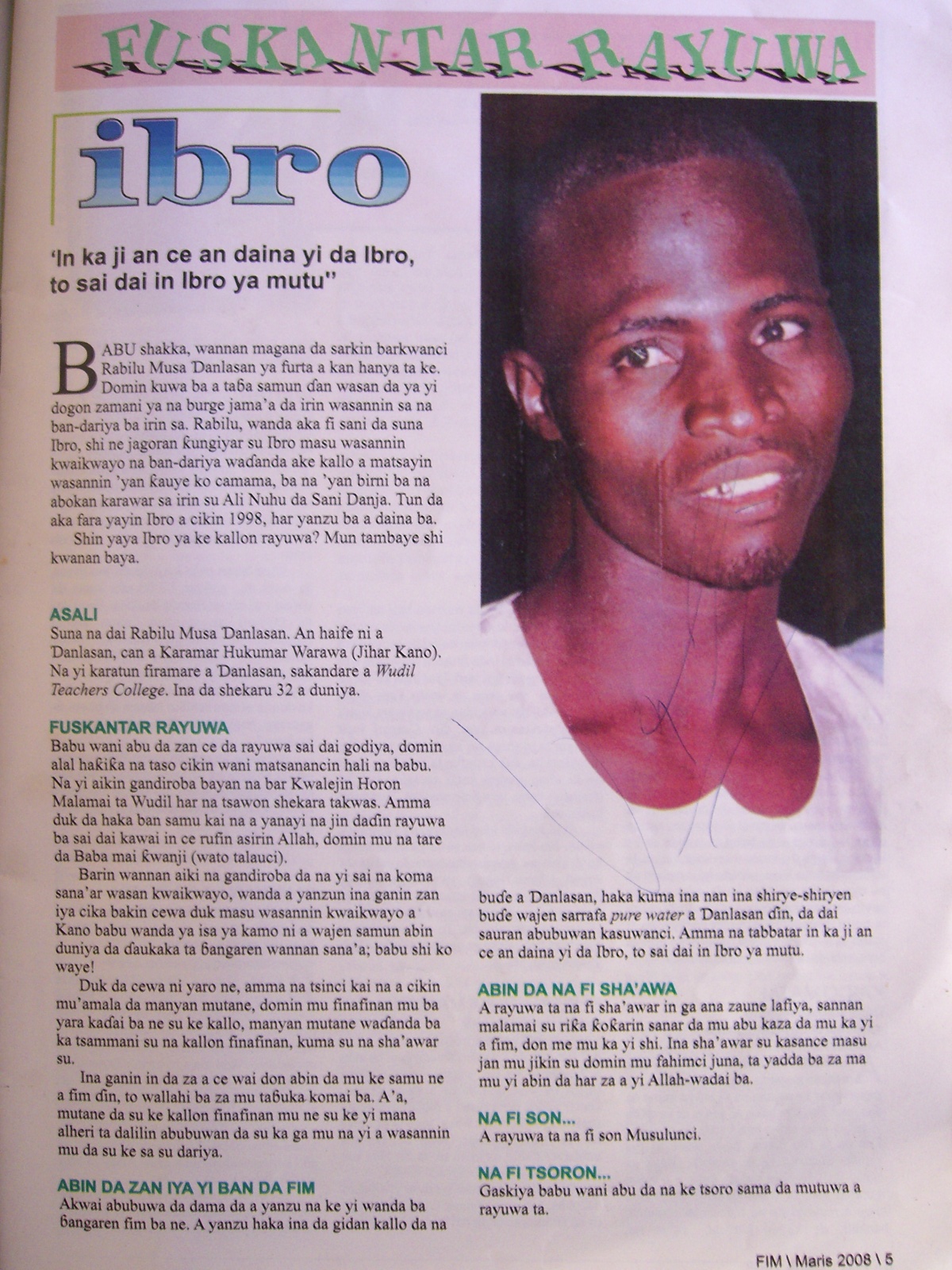
Finally, in an interview with FIM Magazine in March 2008, Rabilu Musa told them, “In ka ji an ce an daina yi da Ibro, to sai dai in Ibro ya mutu”/”If you hear that Ibro is no longer performing, it’s because Ibro is dead.”

Rest in peace, Rabilu Musa. May Ibro live on. Allah ya jikansa. Allah ya sa shi huta. Allah ya ba mu hakuri.

In ka ji an daina yi da Ibro, to sai dai in Ibro ya mutu" - Rabilu Musa

“If you hear that Ibro is no longer performing, it’s because Ibro is dead.” -Rabilu Musa, March 2008, Rest in peace, Ibro.

Remembering ‘Dan Ibro (tare da baturiyarsa) (Allah ya jikan ‘Dan Ibro)

This morning, I yielded to the temptation to go onto Facebook before starting my work.  I found waiting for me a private message from a friend telling me that Rabilu Musa aka ‘Dan Ibro, the most famous comedian and perhaps the most famous actor in the Hausa film industry, had just passed away.(BBC, Premium Times, RFI). He was only in his forties. Inna Lillahi wa inna ilaihi raji’un.

Dan Ibro praying (courtesy of Rabilu Musa DAN Ibro Facebook page)

It is a gutting loss to the industry and to millions of people all over northern Nigeria, who laughed at Ibro’s antics even as the bombs were exploding around them.

An explanation:

I’ve been gone from this blog since June, since even before then, really, as I tried to reduce distractions to a bare minimum while I pushed out the PhD. I kept up with the column at Weekly Trust until August. A week before my revisions were due, I desperately asked my editor for a month break, which he graciously granted me. I finished the PhD and then just kind of collapsed. I had been taking two days and an all nighter every week trying to write my weekly column. I had written throughout the last four years of my PhD programme, even through the defense. But with the kidnap of the Chibok girls and ever more atrocities coming out of the northeast, sometimes venturing further West, I felt like I couldn’t write about anything else. How can you write about novels and movies and walks in pretty American parks when ethnic cleansing is going on—when perhaps some of your readers have been killed in the violence? My one-month break turned into many months. I got busy applying for academic jobs and going to conferences and travelling back and forth to Nigeria. I pushed away thoughts of the column. I couldn’t handle the thought of having one more deadline every week or of having to write anything else while people were being murdered and bombs were going off.

Then ‘Dan Ibro died.

And I realized he made people laugh in the midst of all of these horrors (In October there was even a Ibro Likitan Ebola poster floating around on Twitter), and that perhaps it is this laughter, these stories, these songs, these dreams of ordinary people in ordinary and extraordinary times, that are what help us

Ibro Ebola Doctor (courtesy of Kannywood Exclusive TL: https://twitter.com/kannywoodex/status/504397310957457408 )

survive. We shouldn’t allow Boko Haram or any other threat to take laughter and story and song away from us. During the Jos crisis of 2008, dozens of people sought refuge in our house. One night, I brought out my vcd of Ibro Dan Siyasa [Ibro Politician], and everyone, all crammed into our parlour, sat there laughing. Christians in Jos laughing at the Muslim Ibro’s comedy, in the midst of a religious/ethnic/political crisis. I thought, then, that there is a bridge here, this Kannywood, this comedy, there’s something here that goes beyond the bitter statements I’d heard from Christian refugees throughout the crisis. The same people who had cursed “the Hausa” and cursed “the Muslims” were laughing at ‘Dan Ibro. His comedy was bigger than fear and hatred and politics.

So here are my own memories of Ibro.

Like any fan, I have watched dozens of his films—playing in the background on Africa Magic Hausa as I would write in my room or in the little kiosk where I bought yoghurt and bread when I lived in Kano. I’d watch short comedy sketches excerpted from his longer films that musicians and filmmakers would show me on their phones in studios. Sometimes I’d peek over the shoulders of strangers in taxis giggling at an Ibro sketch on their phone.

When a director and producer I did not know approached me on Zoo Road with the idea for Ibro Ya Auri Baturiya, I laughed and agreed without too much further thought. I liked the idea. I said I would do it, if I could get an interview with Ibro. The producer agreed.

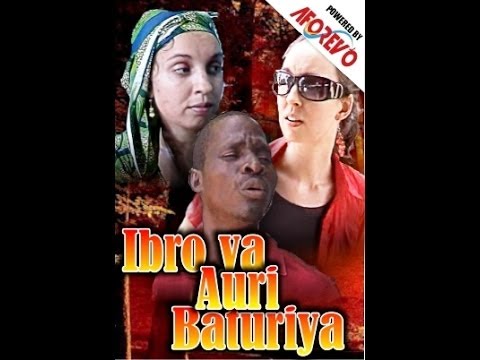
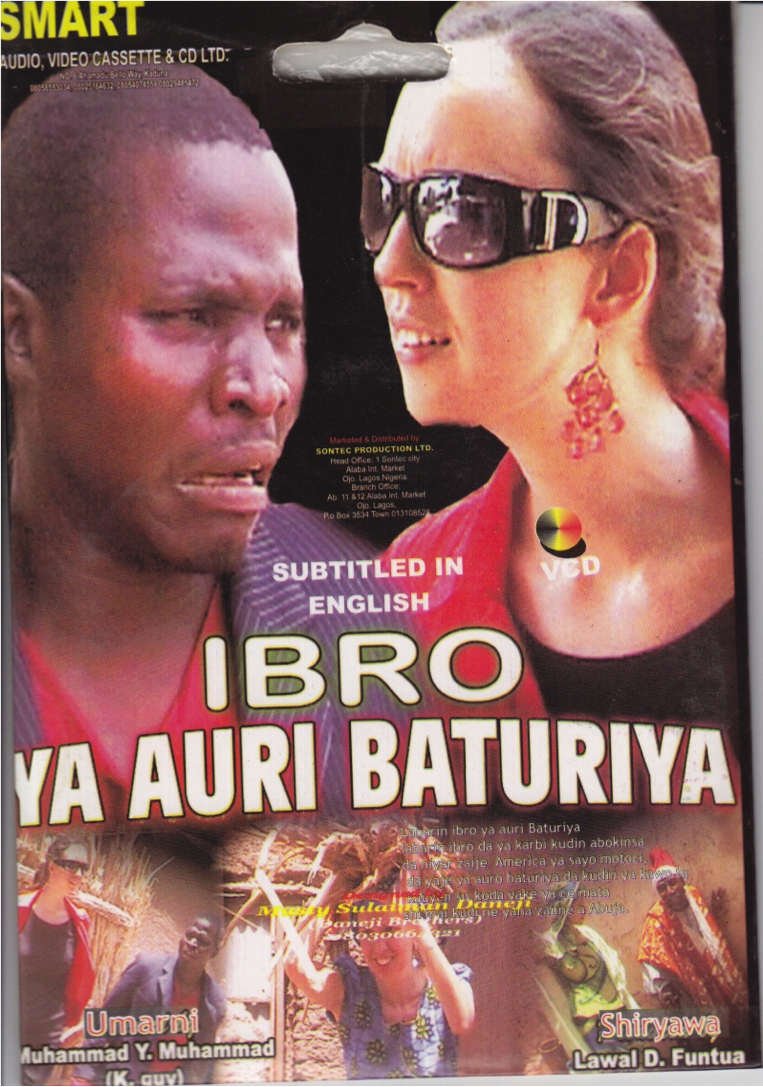
One of the vcd covers for Ibro Ya Auri Baturiya (more coming once I can find my hard copies in the various boxes where they are packed)

One of the vcd covers for Ibro Ya Auri Baturiya (more coming once I can find my hard copies in the various boxes where they are packed)

Ibro Ya Auri Baturiya was made in early 2009, in the midst of the Kano State Censorship crisis. Because of the crisis, we had to leave Kano to shoot the film. We met up with Rabilu Musa on the outskirts of Kano, and I rode in the back seat of his car as he drove towards Jigawa State. He was dressed in a normal white kaftan, and without the bright signature costume, the tall red cap or the comedian’s grin, he looked like an ordinary person—not one of Nigeria’s biggest stars. He was very quiet and did not say much as we drove. Even with all of my exposure to Kannywood, I remain bashful in the presence of fame. I hoped for an interview but didn’t quite know how to ask him. We stopped once on the side of the road, perhaps to buy snacks, and people passed without recognizing him until some of the children did a double take and then started chanting “Ibro, Ibro.”

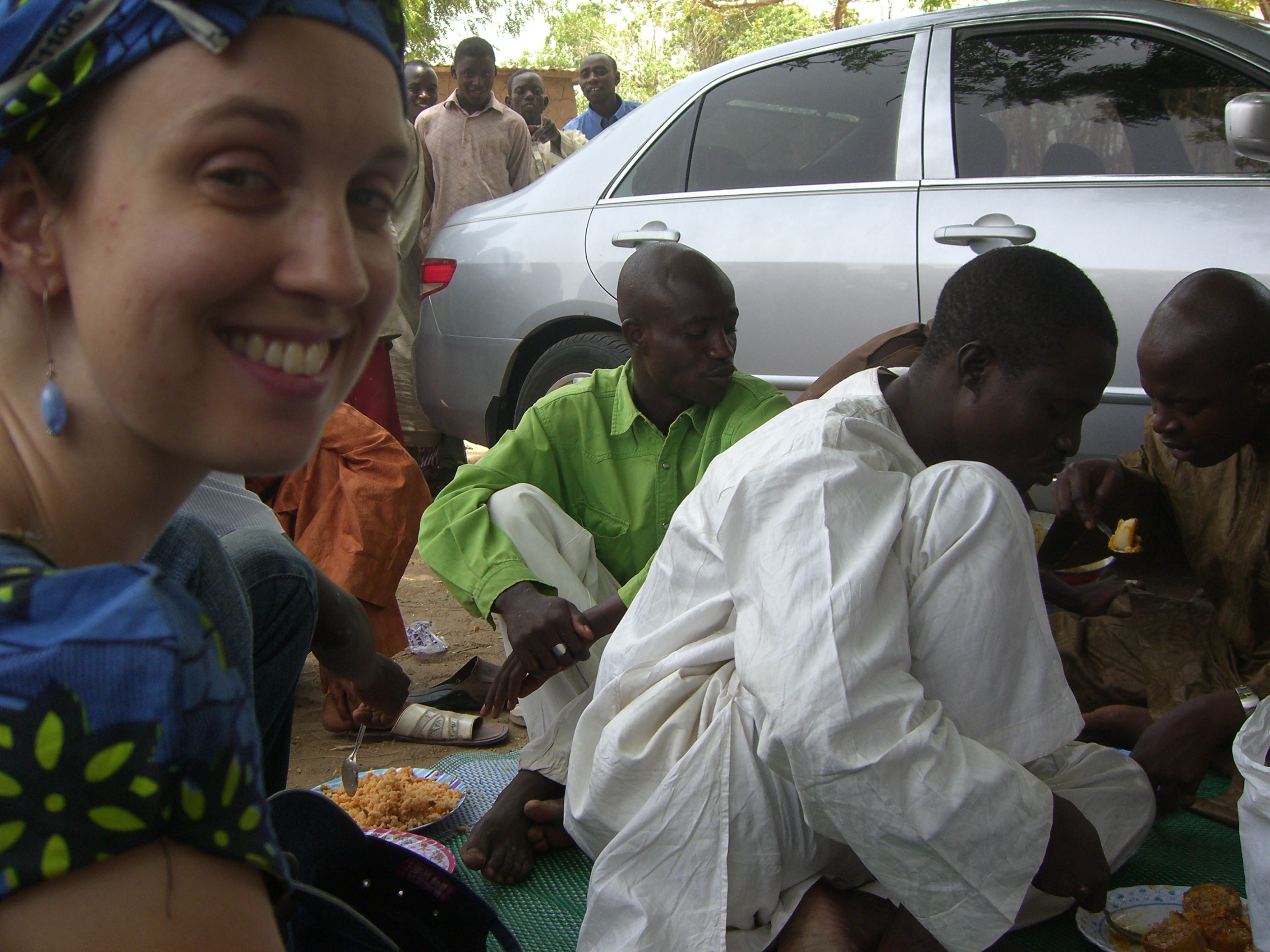
We arrived at a village a little bit outside of Dutse in Jigawa, and we ate lunch before starting to shoot. I was still too shy to talk to him, as you can see from the below photo of me grinning like an idiot while Ibro eats in the background. But the director fulfilled his part of the bargain, and we had a brief 6-7 minute interview. I tried to ask him about his ordeal the year before, at the hands of the Kano State Censorship Board. He didn’t want to talk about it. I got what I could. (I’ve transcribed the Hausa, though I haven’t yet translated it, and will post it later on this blog).

Eating on set of Ibro Ya Auri Baturiya. (Ibro in white). (Me, grinning like idiot)

Eating on set of Ibro Ya Auri Baturiya. (Ibro in white). (Me, grinning like idiot)

Then it was time to act. I was led to a small, borrowed room in someone’s compound and told to change into my “Western dress”. About a minute later, before I had a chance to smooth down my hair still flattened from my headtie, I was rushed out to do the first scene where I drag (my own) suitcase into the village with Ibro, asking him why we aren’t going to Abuja as he promised me. There was no script. At least none that I was given. The director gave us a minute of instruction (I was to speak in English at first and later in broken Hausa), and we were off. Ibro is a brilliant comedian and knew exactly what to do. I just tried to keep up.

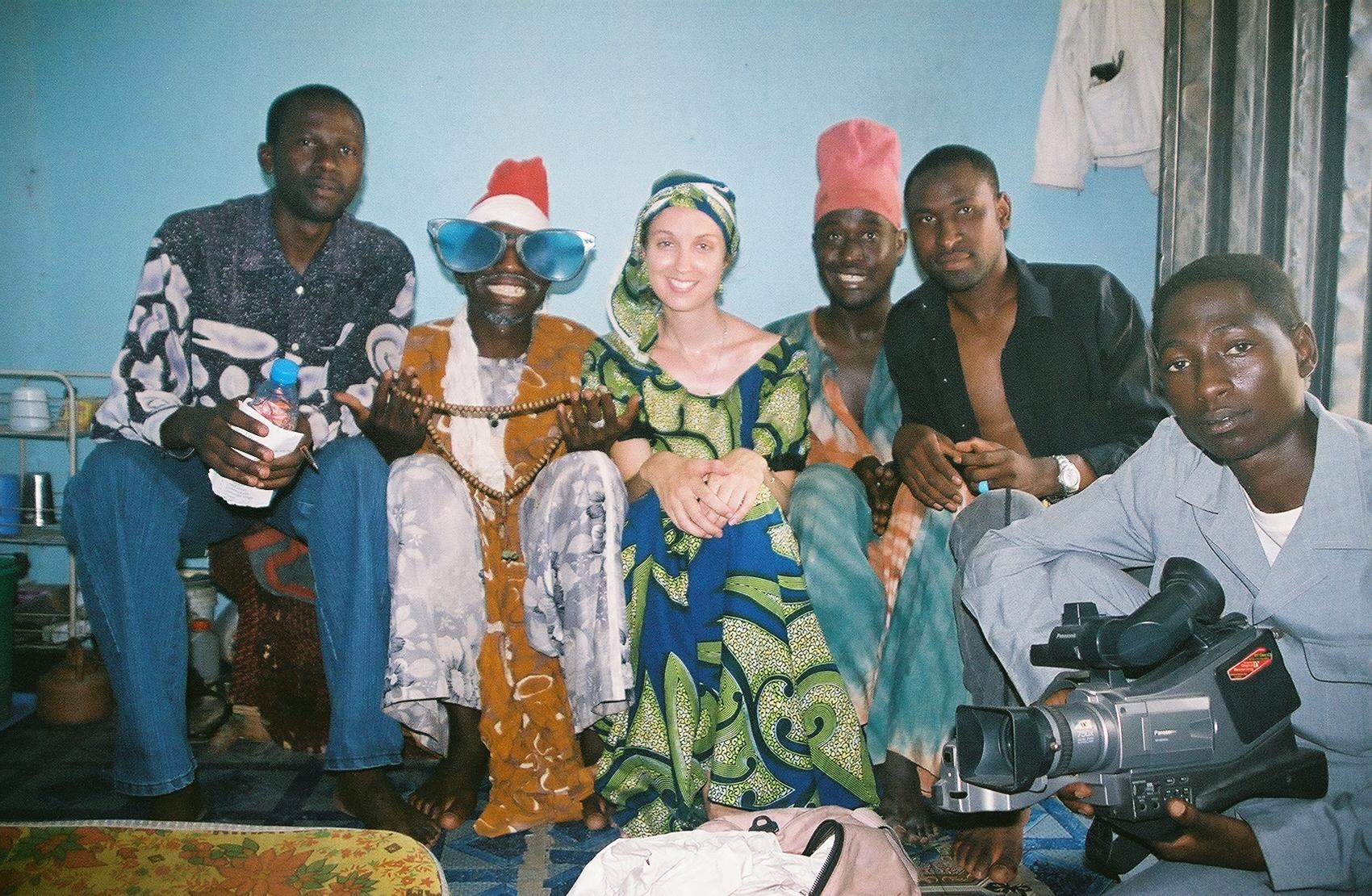
That day, Ibro had somewhere else to be. I completed my scenes with him, a few more were cut, perhaps, and he rushed off to his next film. We continued with Baba Ari, ‘Dan Auta, and the others at a more leisurely pace.

On set of Ibro Ya Auri Baturiya.  Left to right. Director Muhammad Y. Muhammad, Baba Ari, me, Dan Auta, Producer Lawal D. Funtua.

On set of Ibro Ya Auri Baturiya.
Left to right. Director Muhammad Y. Muhammad, Baba Ari, me, Dan Auta, Producer Lawal D. Funtua.

After production, I was embarrassed. I felt I had acted terribly. I felt like if produced differently it could have, perhaps, been funnier. I never mentioned the film on this blog and rarely elsewhere, because I didn’t want people to see me in it.

But on the streets, people would call out “matan Ibro,” “matan Ibro.” People would jokingly ask me how my husband Ibro was. And so it was that “matan Ibro” became part of my public persona, even though I was still too shy to talk to him.

The original vcd cover for Ibro Ya Auri Baturiya.

The original vcd cover for Ibro Ya Auri Baturiya.

Eventually, I was able to overcome my embarrassment enough to watch parts 1 through 3 of the Ibro Ya Auri Baturiya and to look at it with enough distance to include an analysis of it in my PhD dissertation. I realized that it didn’t matter how I acted. It wasn’t about me. The baturiya was just a symbol to be played with and mocked—some of the funniest scenes were discussions of the baturiya, where I did not appear but which were made possible by my token appearance elsewhere: the baturiyar kwantainer, Ibro could not pass off to his friend once I became a nuisance because he claimed he had gotten me from a container, which could have come from Togo or Benin, rather than America; the baturiya whom Ibro really “made suffer” as people on the street would laugh to me.

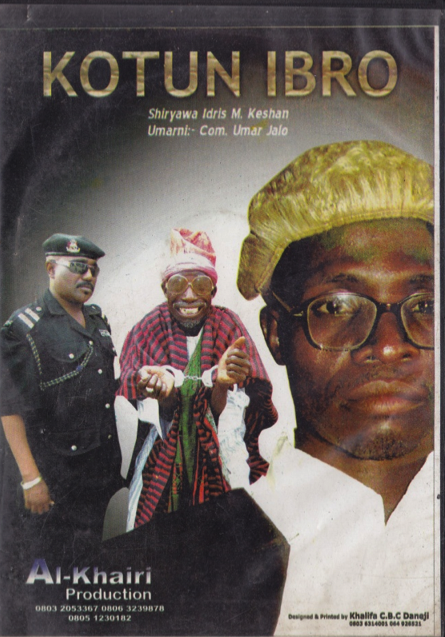
Ibro Ya Auri Baturiya was where I most connected with Rabilu Musa, but he had many more brilliant films. They weren’t usually polished, but they were usually hilarious and filled with sometimes biting political humour. The character of Ibro took on a life of his own. His voice often imitated by singers, including Sadi Sidi Sharifai, so that the character Ibro became disembodied from the actor himself. I mention him over 40 different times in my PhD thesis, and do an extended analysis of his film Kotun Ibro, a sly dig at the mobile court which persecuted so many filmmakers during the censorship crisis.

Ibro's film Kotun Ibro poked fun at the mobile court that had arrested him.

Ibro’s film Kotun Ibro poked fun at the mobile court that had arrested him.

Dan Ibro was an institution. He has become an era.

He will not act in any new films, but he will stay with us in a thousand different comedies. I heard his voice singing on the radio today, as a broadcaster mourned him. He brawls and weeps and shouts and complains and dances on a million different screens. We will keep laughing, even when, perhaps, we should be crying.

Allah ya jikansa, Allah ya sa shi huta. Yaba mu hakurin wannan babban rashi.

Postscript

As I wrote this today, I saw the news of another bomb in Kano at the Kwari cloth market. Allah ya kiyaye mu. What a horrible day Kano has had.

Sometimes it’s overwhelming to contemplate how many people from the Hausa film industry have died in the past few years. Here are my tributes to a few of them.

Actress Hauwa Ali Dodo (Biba Problem), who died 1 January 2009,

Director Zilkiflu Muhammed (Zik), who died 18 February 2010,

Actress Safiya Ahmed, who died on 26 February 2010,

Actress Amina Garba, who died on 21 November 2010,

Comedian and director Lawal Kaura, who died on 13 December 2011,

Actress Maryam Umar Aliyu, who died on 12 April 2011,

Director Muhammadu Balarabe Sango, who died on 1 December 2012

Introducing Dr. Carmen McCain

Dr. Carmen McCain (c) my brilliant brother Dan McCain

I have not posted on this blog since January. I think that is the longest I have ever neglected it. But it was for a good cause. It enabled me to hole up in Madison, Wisconsin, to focus and finish writing my PhD dissertation on Hausa literature and film, which I defended about a month ago. I am hoping to finish my revisions in a week or so, submit to the university, and move on to the next thing. I am looking forward to what life brings. Hopefully that will mean resuming more regular blogging. Thank you to all of you, who have supported me and encouraged me during this long, grueling, depressing, yet also sometimes exhilarating process. I wrote more detailed thanks in my column last month and still more in the acknowledgements page of my dissertation itself. I am placing a hold on proquest for two years, so as to better my chances of getting a book contract, but I would be happy to email it to anyone interested, once I have the final draft submitted to the university.

I will share more thoughts and photos as I have time. This may also be the last blog post I compose on my nearly 6 year old boxy red Dell, named Rudi. He has lived a good life but is now slowly dying. His sleek replacement is sitting in the next room  waiting for a data transfer… and a name.

My love to everyone.

-Dr. McCain  (probably the only time I will ever sign off that way on this blog, but it’s fun to celebrate)