Collected or Stolen? Sothebys set to auction a plundered Benin Mask on 17 February

Benin mask, likely of Queen Idia, set to be autioned at Sothebys (Photo Credit: Art Daily)

In a posting on facebook and his widely read Naijablog, Jeremy Weate brought my attention to the proposed auction at Sothebys of a 16th century ivory pendant Benin mask, looted during the “Punitive Expedition” by the British on Benin in 1897. The mask is thought to be a representation of Queen Idia of Benin. According to the Art Daily website, which describes the mask with a cool anthropological sort of detachment:

The mask and the five other Benin objects will be sold by the descendants of Lieutenant Colonel Sir Henry Lionel Gallwey […]who was appointed deputy commissioner and vice-consul in the newly established Oil Rivers Protectorate (later the Niger Coast Protectorate) in 1891. He remained in Nigeria until 1902 and participated in the British Government’s “Punitive Expedition” of 1897 against Benin City.

The mask is expected to sell for £3.5-4.5* million.

British soldiers of the “Punitive Expedition” of 1897 proudly pose with looted art (Photo Credit: ModernGhana.com)

There has been, as one might expect, much outrage in Nigeria and among Nigerian communities in the diaspora about the intended sale of stolen Benin treasures. An online petition begun on December 22 to “stop the sale of stolen 16th century Benin mask” has so far (as of the time that I am writing, still on December 22) garnered over 370 signatures. To add your name to the list, click here. If art looted from families during the Nazi era in Europe is being returned to the descendants of those from whom it was stolen, then there is no excuse not to return these valuable cultural artifacts back to the palace in Benin. The renewed anger over these stolen artworks reminds me of Wole Soyinka’s revelation in his memoir You Must Set Forth at Dawn of how he tried to “liberate” the Benin Mask used in replica as the symbol of FESTAC.

The most useful way to stay up-to-date on the progress of the campaign to have the mask returned to Nigeria is to check out the facebook page “Stop the Sale of Stolen 16th Century Benin Mask.” This page was only created today but already has a series of updates about contact with the Sotheby’s African Art department and other links on comparable art recovery projects.

UPDATE 26 December 2010. In an almost unbelievable but very encouraging testimony to the power of social media, it seems that Sotheby’s has bowed to pressure and has removed the mask from intended auction. You can see the list of announcements on the Sotheby’s website here and download the very terse note that says:

24TH December 2010

STATEMENT REGARDING CANCELLATION OF BENIN SALE

“The Benin Ivory Pendant Mask and other items consigned by the descendants of Lionel Galway which Sotheby’s had announced for auction in February 2011 have been withdrawn from sale at the request of the consignors.”

Sahara Reporters notes that:

The auction had spurred a widespread protest by Nigerians and other sympathetic groups organized by the UK-based Nigeria Liberty Forum   (NLF). Hundreds of protesters had contacted Sotheby’s in writing, through phone calls or by street protests to demand the cancellation of the sale and to push for the return of the mask to Nigeria.

[…]

The protest organizers encouraged Nigerians across the globe to contact Sotheby’s auctioneers by phone or e-mail. These tactics as well as threats of legal action forced Sotheby’s in London to initially put the sale on hold while seeking further information from the NLF. By Christmas Eve, the sale had been canceled and the announcement removed from Sotheby’s auction calendar.

The campaign marks the second time the NLF would conduct a successful “telephone campaign” to stop high-profile acts of violations of public interests. The group’s first major campaign was to mobilize Nigerians to bombard a Heathrow Hotel with phone calls to drive away Nigeria’s former Attorney General, Michael Aondoakaa, who had sneaked into London to sabotage the trial of associates of former Governor James Ibori. Mr. Aondoakaa was forced to flee the hotel as Nigerians all over the world made more than 1,500 calls to his hotel in less than one hour.

Mr. Ogundamisi told SaharaReporters that the NLF was monitoring other artifacts purloined from Nigeria by British colonial officials and held in different parts of the world. “We will not rest until these cultural assets are returned to their original owners in Nigeria,” he said.

To read the full statement from Kayode Ogundamisi, convener of Nigeria Liberty Forum, see this note on the facebook group “Stop the Sale of Stolen 16th Century Benin Mask”

UPDATE: 23 December 2010:

When you google “Benin Mask Sotheby’s” you find half sites that are advertising the sale of the mask and half sites that are protesting the sale. The Antiques Trade Gazette is a good representative of the sort of patronizing tone taken when discussing African art in the final paragraph of its article about the sale of the piece:

It is unusual for material of this type to be sold by Sotheby’s in London (typically tribal art is sold in Paris), but, according to the auctioneers, the consignor specifically requested its sale in the UK.

Art historian S. Okwunodu Ogbechie points out the double standards applied by museums and institutions like Sothebys, who seem to apply different standards for ownership to African works than they do to artworks from other parts of the world:

Some commentators have suggested that Africans should try to buy back their stolen artworks when these come to public auction. I consider such suggestions preposterous since it allows the vandals who plundered Africa to benefit from their plunder twice over. When Britain and other colonial powers pay restitution to Africa for the rape of the continent,then I will entertain such suggestions. In the absence of any real compensation for centuries of plunder and genocide against Africans, raising this issue at all is clearly a racist form of responsibility avoidance.

All across the world today, many stolen artworks are being repatriated to their countries of origins. No one is asking the cultural owners of these artworks to pay for the privilege of retrieving their ancestors’ properties. Therefore, the relevant issue is whether Africans have any legal rights to their lives, natural and cultural resources. At what point does the brazen dispossession of Africa become a significant political, economic and moral issue? The Sotheby’s sale is part of a broad disregard for the very real impact of dispossession on the reality and fortunes of black Africans today. There is no justice here and it does not appear that black Africans or their descendants will be afforded any kind of legal justice in the prevailing context of white Western power. And yes, this is clearly a racial issue. Zahi Hawass has by and large stopped Western institutions from brazenly trafficking in Egyptian artifacts. He continues to negotiate the return of large numbers of looted Egyptian artworks back to Egypt. Most of these artworks were removed from Egypt more than 250 years ago. Italy has repatriated artworks to Libya. Western museums have repatriated artworks to South Africa. But so far, all requests for repatriation or reparation by black Africans have been dismissed without hearing. This is not surprising: African Americans have so far only received an apology for their centuries –long enslavement and, through their overwhelming imprisonment, they continue to fatten the coffers of modern-day slaveholders who run various prisons in the USA. There has never been any Western country held accountable for their actions in Africa, not even Belgium that oversaw the genocide of close to 10 million Congolese between 1880 and 1920. Sotheby’s multi-million dollar sale of stolen Benin artwork would seem insignificant within such a list of atrocities against Africa but make no mistake, it is part of the same current of morally and ethically dubious actions unfolding without any regard at all for African concerns.

It is therefore time for all Africans who have the resources to contribute to a massive effort to bring the global legal system to bear on these institutions who traffic in stolen African cultural patrimony. There are already precedents: the Holocaust reparation legal challenge is a clear precedence; so is the Native American Graves Repatriation and Protection Act. The issue of African cultural patrimony is an urgent human rights issue. Africans deserve equal access to and equal share of the economic value of artworks created by their ancestors. More importantly, they deserve to have a say in what happens to these artworks in the contemporary era. These artworks arrived in the West on a boat of plunder and bloodshed. Uncountable numbers of African lives were destroyed in the avaricious pursuit of colonization by Western powers. There needs to be an accounting for this history. Western institutions like Sotheby’s that broker the sale of these artworks should also cease and desist. They may not be legally liable for their actions today, but they will be legally liable at some time in the future.

Other excellent commentary is going on at the following blogs:

Jeremy Weate’s Naijablog: “Selling What was Stolen.” 22 December 2010

S. Okwunodu Ogbechie’s AACHRONYM: “Sotheby’s is Trafficking in Stolen Benin Artworks.” 23 December 2010.

MyWeku: “Help Stop the auction of Stolen 16th century Benin Mask.” 23 December 2010

Kwame Opoku’s essay “They are Selling Queen Mother Idia Mask and We are All Quiet” on the Facebook group Stop the Sale of Stolen 16th Century Benin Mask. 23 December 2010.

Katrin Schulze’s Contemporary Arts in Northern Nigeria: “A Quick Interim Report on the Upcoming Sale of Benin Artifacts at Sothebys” and “Update: A Quick Interim Report on the Upcoming Sale of Benin Artifacts at Sothebys” 23 December 2010.

Chika Okeke-Agulu’s Ofodunka: “Sale of stolen Benin ivory mask by Sotheby’s.” 23 December 2010

For more information about the Punitive Expedition and the looting of Benin art, see these articles:

2003 Guardian article “Spoils of War” by Jonathan Jones.

ModernGhana.com compilation of articles from 2008: the Vanguard’s “BNC gives FG 21-day ultimatum to render account on Benin artifacts” by Simon Ebegbulem, and the Guardian’s “Benin rulers renew campaign for artifact’s retrieval in US” by Tajudeen Sowole.

Website featuring Peju Layiwola’s 2010 traveling exhibition “Benin1897.com: Art and the Restitution Question.”

2010 Next article “Revisiting the 1897 destruction of Benin” by Akintayo Abodunrin.

In response to Adaobi Tricia Nwaubani’s “In Africa, the Laureate’s Curse” an op-ed piece in today’s New York Times

Adaobi Tricia Nwaubani (c) Sunmi Smart-Cole via African-Writing Online

When I first began to read Adaobi Tricia Nwaubani’s op-ed piece “In Africa, the Laureate’s Curse,” published in on 12 December 2010 in the New York Times, I thought I would enjoy the piece. [If you have trouble finding the full text of the article without signing into the New York Times site, you can find it copied over onto the USA/Africa Dialogues blog and now also on the NEXT website.] She argues that it may be a blessing that Kenyan writer Ngugi wa Thiong’o did not win a Nobel Prize this year, reasoning that such a prize would encourage young African writers to aim to be the “next Ngugi.” New African writers should pursue their own style, Nwaubani contends, rather than slavishly imitating the elders of African literature.  Although it does not necessarily follow that honouring a writer for a lifetime of work must necessarily create slavish imitations, I am sympathetic to arguments about pursuing new styles and themes, especially coming from a new Nigerian author who in I Do Not Come to You by Chance has given us one of the freshest and funniest novels I’ve read in years. Nwaubani has been the Nigerian author you are most likely to hear me recommending as a good read this year.

However, my first eyebrow began to rise when I read her statement. “Ngugi, Achebe and Soyinka are certainly masters, but of an earnest and sober style.” This is a fair generalization. A Grain of Wheat, Arrow of God, and The Interpreters do make for studies in high seriousness. But has Nwaubani read the complete works of each of these authors? Sure, Ngugi’s English language work does tend to be quite sober and earnest, as do Achebe’s early novels. But Ngugi’s satirical fable Devil on the Cross(translated from Gikuyu) is one of the most simultaneously hilarious and ideological works of African literature I’ve read–and much of its richness, I think, comes from it’s original composition in Gikuyu. Soyinka’s fiction is, granted, famously obtuse, but performances of the Brother Jero plays are some of the funniest and most thought-provoking things my family has seen on stage. Achebe has similar humorous moments in Anthills of the Savannah.

Even if I were inclined to agree with her in general about the serious nature of the “old masters,” I nearly fell out of my chair when I read this statement:

“Many fans have extolled his brave decision to write in his mother tongue, Kikuyu, instead of English. If he truly desires a Nobel, I can’t help but wish him one. But I shudder to imagine how many African writers would be inspired by the prize to copy him. Instead of acclaimed Nigerian writers, we would have acclaimed Igbo, Yoruba and Hausa writers. We suffer enough from tribal differences already. This is not the kind of variety we need.”

I don’t greatly care if Ngugi wa Thiong’o wins the Nobel or not. I think it would be good prestige for African literature around the globe, and I think he certainly deserves it. Ngugi’s Devil on the Cross almost always makes my “favourite books” list, and I would be delighted if he received the Nobel in the future. But were I trying to make a point about the blessings of Ngugi not receiving the prize this year, as Nwaubani does, my argument would be that the value of Ngugi’s work and of other African literature does not depend on the judgment of some prize committee in Scandanavia, which has made quite conservative selections in the past, but rather on the importance it holds first in the eyes of its “home” audience in Africa.

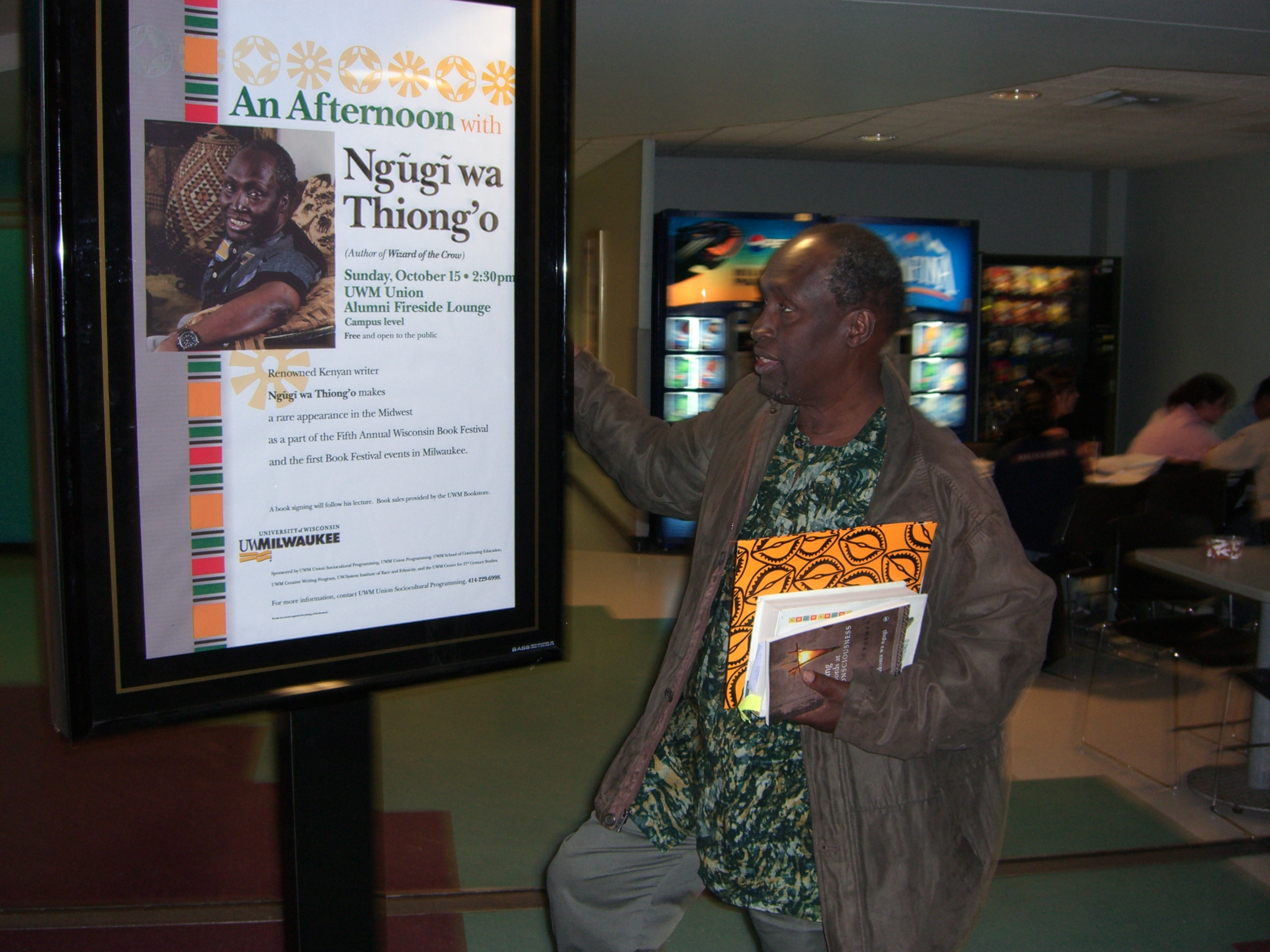
Ngugi wa Thiong'o, Milwaukee, Wisconsin, 15 October 2006 (c) CM

Ngugi wa Thiong’o, Milwaukee, Wisconsin, 15 October 2006 (c) CM

I was, to put it bluntly, horrified by the assumptions with which Nwaubani draws her over-easy conclusions in this short piece. Whether or not Ngugi ever wins the prize, I wish there would be many more African writers who would copy, not him, or his style, but his commitment to writing in the language he grew up speaking. Why is great literature in Igbo, Yoruba, or Hausa (or Tiv, Itsikeri, or Nupe) a shudder-worthy accomplishment? Nwaubani seems to be implying that the mere fact that people speak and laugh and love and dare even to write in different languages is furthering “tribal differences”  She says “This is not the variety we need.” On the contrary, I would argue this is exactly the variety we need.

Of course, we also need translation. Translation, as I have heard Professor Ngugi say on multiple occasions, is the only equal relationship between languages. Why should we not translate works of Hausa, Yoruba, and Igbo into English or even into each other, in the same way that Norwegian or Japanese (smaller languages than many African languages) works are translated into other languages? Why is “the Nigerian reader,” by default, defined as an English speaker. This sort of thinking merely furthers the distinction between the elite and the masses in Nigeria. To my mind, it is not African language literature that furthers divisions between Nigerian peoples, but rather this sort of thinking that sees African languages the enemy rather than a source of creativity and celebration–promoting monolingualism in English rather than the multilingualism that has long been a strength of the continent.

Why is there a dearth of reading culture of African literature in Nigeria? Much of it probably is that there is not enough of the funny, light-reading novels like Nwaubani’s available. But much of it may also have to do  with how “reading culture” in the Nigerian context is almost always defined as reading culture in English. Does Nwaubani know that there is a flourishing market of Hausa language literature in Northern Nigeria that crosses borders into Niger, Cameroon, Ghana, and even further flung places like Saudi Arabia and Malaysia where there are Hausa speakers? Does she know that one of the richest sources of women’s writing and women’s voices in Nigeria is being written in Hausa, where hundreds of well-known and beloved female authors write about love, marriage and their everyday experiences, or that Hausa novelists have long dealt with the national experience of being Nigerian? The bestselling Hausa novel, thus far, In da So da Kauna self-published in two parts in 1991 and 1992 by Ado Ahmad Gidan Dabino sold over 100,000 copies (200,000 if you count both parts), which although hardly a New York Times bestseller is a good selling book even for Western publishers like Penguin or Random House. Is that literature (and what I hear is also a rather flourishing Yoruba literary scene) doomed to be trampled and denounced by Nigerian intellectuals and English-language writers because it is not written in the “language of unity,” which because of the history of colonialism happens to be English? Is it doomed to be trampled and denounced because, since no one has translated it, it has not been read by those large corporate publishers in America and the UK, who have made the careers of so many recent Nigerian authors writing in English?

I intend no disrespect for African literature in English here. It has its beauties and its advantages, such as a more immediate global and, yes, national audience. But we NEED literature in African languages because embedded within their etymology is history and a rich cultural heritage that we will lose if they die. These languages should be given the chance to develop same way that English language literature has developed, through literature. And this English language literature would never have developed had not rebels like Chaucer or Shakespeare insisted in writing in the vernacular rather than the more elite Latin that was the universal language of the educated elite in Europe at that time. We need such literature in the same way that we need literature in Danish, Mandarin, or Tamil. We need such literature because it is often in that literature you can capture exactly the kind of light-hearted banter, the vast reading audience, and the stories of ordinary working class Nigerians that Nwaubani is seeking. Perhaps, more people across the country would read if more Nigerian language literature were translated. Rather than calling for the death of African language literature, I would rather call for the investment in scholarship in and publication of this literature and the commitment of writers willing to translate it. Maybe then, Nwaubani will recognize her fellow “literary groundbreakers,” not in the old sober masters of the English language, but in those of her contemporaries who capture millions of readers in the language they speak every day.

UPDATE 19 December 2010. Since my response to Nwaubani’s article shortly after I read it last Sunday, a number of brilliant responses from African writers and intellectuals have popped up around the internet. Here are some of them:

“In Africa, The Laureate’s Curse” by Chielozona Eze on Africa Literature News and Reviews, December 12

“Not so, Adaobi” by Chuma Nwokolo on AfricanWriting.com, on December 12

“The Laureates Curse? I think not” on Kinna Reads, December 14

“The Nobel and Ngugi’s Cause–a short response to Tricia Adaobi’s article, In Africa the Laureate’s Curse” by Nana Fredua-Agyeman on ImageNations, December 14

“Why Nwaubani was Wrong” on Nigerians Talk, on December 15

“Nwaubani, Ngugi, and the Nobel” on Molara Wood’s Wordsbody, December 18

And for a piece arguing the opposite of what Nwaubani wrote, see Zoe Norridge’s piece in the Guardian, “Why Ngugi wa Thiong’o should have won the Nobel Prize for Literature.”

[UPDATE 13 February 2011. I am currently uploading photos and links to some my column in the Weekly Trust. I used this essay, slightly edited, as one of my columns on 18 December 2011: “Regarding Adaobi Tricia Nwaubani’s ‘In Africa, the Laureate’s Curse.’” To read the piece in the original version, click on the photo below which will take you to a photo large enough to read.

Happy Islamic New Year 1432!!!


An old woman prepares to pray (c) Carmen McCain

Happy New Year to all of my Muslim friends in commemorating the 1432nd year since the Prophet’s Hijra. Allah ya ba da zaman lafiya.

Welcoming us in (c) Carmen McCain

Iyan-Tama Multimedia Awards


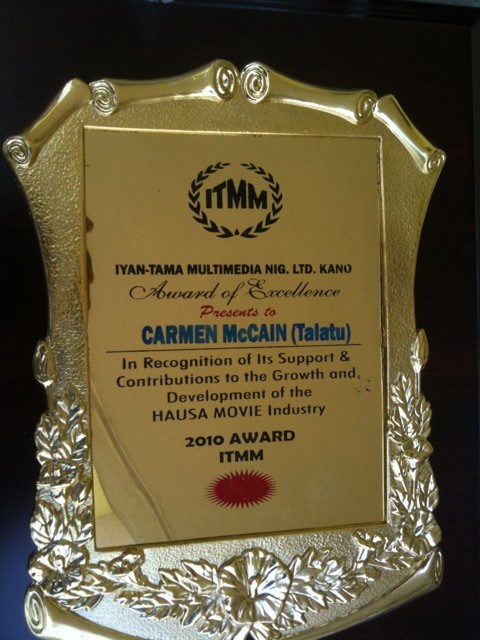
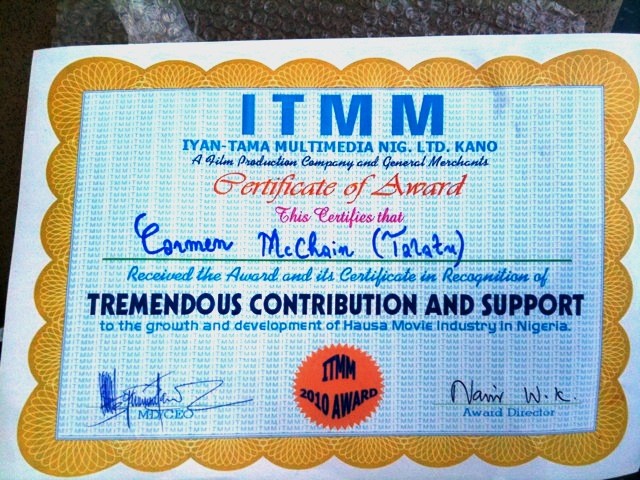
photoI was very humbled and honoured last week, 25 October 2010, to be honoured along with many other journalists and media houses with an Iyan-Tama Multimedia Award in Recognition of Support and Contribution to the Growth and Development of the Hausa Film Industry. I was also very grateful to Professor Abdalla Uba Adamu who collected the plaque and certificate for me, in my absence, and sent me photos on his phone. I hated to miss the event, but I was glad to hear about it from so many friends who had also received the award. Kannywood Online, who also received the award, also has their plaque and certificate on display at their site.

photo (1)


Leadership of 1 December 2010 gives a report of the event (I’ve inserted links to the blogs and websites of the awardees where available, so you can check out their work for yourself):

CHIOMA RITA ODILI, who was at the event writes:Iyan-Tama Multimedia is one of the oldest film production outfits in the sprawling Hausa film industry largely based in Kano , known as Kannywood. It was established 13 years ago and through its usually qualitative and meaningful productions as well as innovative stands, has contributed immensely to the growth of the industry till date.

It is therefore with great jubilation that Iyan-Tama Multimedia called on all and sundry to witness its 13th anniversary as well as to celebrate 20 years of the existence of the film industry. The event, which took place at Mambayya House in the heart of Kano , was attended by eminent personalities including traditional leaders, members of the diplomatic corps, journalists and filmmakers.

Several awards were presented in different categories to corporate bodies, diplomatic missions, media houses and individuals who contributed in various respect to the development of Kannywood in its two decades of existence.  Those who were presented with merit awards, at the well-attended ceremony, include the two titles of LEADERSHIP Newspapers Group; LEADERSHIP and LEADERSHIP HAUSA.

Editorial director of LEADERSHIP and publisher of FIM Magazine, Malam Ibrahim Sheme was among those honoured under the ‘Dignitaries’ category alongside others including former Kano State governor, Engineer Rabiu Musa Kwankwaso, Professors Isa Odidi and Abdalla Uba Adamu [see also his blog -CM], Hajiya Laila Dogon Yaro, Ms Carmen McCain, among others.

Other staff of LEADERSHIP who were presented with certificates of merit in recognition of their contribution included Al-amin Ciroma, Nasir S Gwangwazo, Abdulaziz Abdulaziz and Maje Elhajeej. In this category, several journalists from various media houses were also conferred with the merit award including Rukayya Y Aliyu (Sunday Trust), Bashir Yahuza (Aminya), Nasir Salisu Zango (Freedom Radio) and Sani Maikatanga (former editor of FIM magazine), and host of others.

Moreover, 19 other media organizations including foreign radio stations, TV stations, newspapers and a magazine also received awards at the colourful event. Those who were honoured in this category include Freedom Radio, Gamji TV, Desert Herald, Almizan and Hausa services of BBC, VOA, Radio Germany and Radio France International.

Similarly, the embassies of United States and France were also awarded for their support to the development of Kannywood through cultural diplomacy. Moreover, Non-governmental Organisations (NGOs), including the Nigeria Union of Journalists (NUJ), Nigeria Bar Association (NBA), Security Justice and Growth (SJG), as well as the Society for Family Health (SFH), were also among the recipients.

Professor Abdalla Uba Adamu gave an address on the occasion:

In his address, the keynote speaker, Professor Abdalla Uba Adamu who traced the development of Kannywood, vis-à-vis the Iyan-Tama Multimedia, said Kannywood came into being exactly 20 years ago with the release of Turmin Danya as the first Hausa video film. He pointed out that at the time of establishment of Kannywood, there was no similar industry in the whole of Africa, including the now bustling Nollywood.

According to the academic, Iyan-Tama Multimedia Limited has played key roles and contributed immensely in the 20th years of its existence. Notable contributions of the company to the development of Hausa filmmaking is its procurement of modern equipment to boost the level of quality of the movies. Prof Abdalla recalled that Iyan-Tama Multimedia was the first to acquire a PSR-220 which enabled introduction of song scenes in the movies with the recording of “Badakala”, a song which featured in a movie of the same title.

He said, other achievements recorded by Iyan-Tama Multimedia include; the publication of the, now rested, entertainment magazine, Tauraruwa, production of several meaningful films that appeal to all categories of viewers, the first company to stop using songs in Hausa movies despite the obvious appeal. The company, according to the don, was also the first to be sponsored by diplomatic initiative (Tsintsiya, 2008) and the first Kannywood film production company to have its film premiered at the Toronto International Film Festival. It is also the company with the highest number of awards in its kitty in the whole of the industry.

Iyan-Tama’s film Tsintsiya on sale at Nollywood shop Africa Movie Place in Brooklyn, New York, November 2010 (c) CM

Readers may remember that the director, producer, and actor Alhaji Hamisu Lamido Iyan-Tama has recently been cleared of all charges, after a drawn out series of court cases filed against him by the Kano State Censorship Board and Iyan-Tama’s own countersuits against the board, following Iyan-Tama’s imprisonment for three months after a trial with a judge later found to be “incompetent” by the Kano State Attourney General. The award ceremony is a particularly poignant way to celebrate the ending of the legal woes of Iyan-Tama Multimedia.

Allah Ya Jikan Jarumar Kannywood, Hajiya Amina Garba

Inna Lillahi Wa’inna Ilaihir Raji’un.

Hajiya Amina Garba

I signed onto Facebook tonight to the upsetting news of the passing away yesterday (21 November 201o, Sunday) of Hajiya Amina Garba, one of the most recognizable faces in Kannywood. Hajiya Amina has played hundreds of roles over the years, most often as a mother. She died three weeks after her wedding, after a short illness. Allah ya jikanta. Allah ya sa ta huta. Allah ya ba mu hakuri.

I do not have any of the details yet, but will post them as they become available. Kannywood Online has also posted a brief line on her death.

A photo uploaded to Facebook by Ibrahim Alfa Ahmad of VOA

[UPDATE 9:06pm. For more background on Hajiya Amina’s life and career, see a recent interview published by People’s Daily Online on November 6, 2010, an interview on page 22 of the October 2004 Cross-Border Diaries, and also a 2007 interview in French with Afriquechos Magazine. Hajiya Amina, also known as Mama Dumba, first became involved in acting, as a young widow, in the early 1980s in the CTV television drama “Farin Wata.” She also worked as a nurse.]

[Update 23 November 2010, Abdulaziz A. Abdulaziz of Leadership has more details in his piece: “Ace Hausa Actress, Amina Garba, Dies at 52”]

If any of those of you who worked with her or knew her would like to share memories or stories about her for inclusion in my column this week, please share in the comments section or send me an email at carmenmccain [at] yahoo.com.

UPDATE 24 December 2010

Copied below is the article I published in honour of Hajiya Amina Garba on 27 November 2010, the week following her death. As I was out of the country at the time, I had to rely on email and facebook to gather tributes and memories. Unfortunately, that ended up meaning I had a pretty serious gender imbalance in what was published, but I still thought the memories shared by these directors, producers, actors, and musicians were quite poignant. Beneath the article, I have copied the full original messages in Hausa that were sent to me by Kannywood stakeholders in response to my call for written memories about Hajiya Amina.  I have also included a couple of tributes from people who responded after my submission deadline and I wasn’t able to include in the publication. To read the article, just click on this link to the soft version on the Weekly Trust site or on the photo, and it will redirect you to a large readable version hosted on my flickr site.

Abba El Mustapha, Producer, Actor: salam, innalillahi wa inna ilaihirrajiun. haj. amina has passed away but her memories will never fade. a woman of honest, integrity, charismatic n always down 2 all. a mother to all that we shall always cherish her kind gesture n modesty. may her gentle soul rest in perfect peace.

Ali Nuhu, Director, Producer, Actor: Zan fara da cewa Allah ya jikanta ya gafarce ta. Ta kasance Uwa ga dukkanmu don kullum tana cikin bada shawara ta gari garemu. Allah ya bamu hakuri da danganar rashin ta.

Auwal Muhammed Danlarabawa, Producer/Director: Amina garba dai ni a sani na da ita gaskiya tana da kirki matuka don nayi aikin fina finai na da ita kamar su LIKAI, DA BARIMA DA TSUMIN DAGE KAFFARA da sauransu, Sannan a mu’amalar mu da ita a harkar film gaskiya naji dadi don bata karya alkawari a duk aikin da muka yi da ita, Sannan kuma Amina Garba tana da kokari wajen cewar anyi abin da ya kawo ta wajen aikin film, Sannan bata son tashin hankali, Sannan tana da son mutane sosai a duk lokacin da aka hadu ada ita don masoya ko masu kallaon fina finanta, Sannan abin da bazan manta dashi ba shine lokacin da matata taje wajen awon ciki a asibitin da take aiki ta amshe ta hannu biyu biyu cikin nishadi,na biyu kuma ranar bithday din yar gidan mansura isah da akayi nan ma ta rike matata har aka tashi suna ta hira da ita har sukayi hotuna ,wannan kadan daga cikin abinda nasani kenan akan rayuwar Amina Garba Allah yaji kanta ameen

Balaraba Ramat Yakubu, Writer, Producer: Allah ya jikan ta kuma ya gafarta mata amin. Hajiya Amina mutuniyar kirki ce, kuma mai so jama’a, kuma mai son yara ce, kuma tana da alheri. Allah ya jikan ta. Wannan shine abin da zan iya gaya miki akan wannan mata

Lawal Kaura, Director, Producer, Actor:  Abin da na sani a halayen ta ni a kashin kaina sune, mama dumba mace ce mai hakuri da kamun kai da kuma kawaici, dan zai wahala ka ji wasu munanan kalmomi sun futo daga bakin ta, bugu da kari kuma ta dauki kanta tamkar uwar kowa a industry idan taga mutun yana aikata ba daidai ba ita sai ta kira shi tai masa fada. Haka yasa wallahi idan location da ita za kaga ya zama mai tsabta, dan han na taba ji wani shakiyi yana cewa shi yana kunyar idon mama dumba dan haka ko maganar banza baya iyawa. Allah ya gafarta mata ya jikan ta ya kuma kyautata tamu in tazo.

Masaud Kanoriders, hiphop artist: GASKIYA AMINA GARBA MACE CE MAI KAMAR MAZA,MUTUNCI,ALKHAIRI,SANIN DARAJAR MUTANE,SANIN YA KAMATA DA SANIN DARAJAR MUTANE A RAYUWATA AMINA GARBA TAYI MIN ABUBAWA NA MUTUNCI WANDA BAZAN IYA NA BAYYANA SU BA SAI DAI KAWAI NA FADI KADAI KAFI RASUWAR TA AKWAI LOKACIN DA MUNJE LOCATION NA FIM DIN PRODUCER NA MAI SUNA KARO DA KARO AKA KAWO ABINCI SAI YA KARE NI BAN SAMU WALLAHI NATA TA DAUKA TA BANI KUMA BAZAN MANTA BA MUNYI WANI FIM NA MUTANEN TOGO DA MUKA SAKATA TAYI MANA WASU SCENE ANAN MA AMINA GARBA BATA ANSHI KUDIN MU SABODA TAGA CEWA A LOKACIN MUNA CIKIN MATSALAN KUDI HAR MA TA KAIMU GIDAN MUKA KARASA WASU SCENE A CAN SAKAMAKON RASHIN LOKACIN ABU NA KARSHE DA ZAN CE SHI ALLAH UBANGIJI YA GAFARTA MATA MUKUMA IDAN TAMU TAZO ALLAH YASA MU CIKI DA KYAU DA IMANI (AMEEN ) DAGA MASUD KANORAIDERS

Muhammad B Sango II, director: Talatu,Amina Garba ta fara harkar fim tun daga gidan Talabijin inda ta ke yin wasan kwaikwayo kuma a nan ne aka fara saninta.Ta bayar da gudummawa sosai wajen cin nasarar wasan kwaikwayo a talabijin domin a lokacin sune ‘yammata. A lokacin da aka fara Fina-finan Hausa a kaset kuwa,su ne iyaye mata kuma a nan mata yi fice sosai musamman a wajen fitowa a matsayin matar Attajiri ko ita kanta Attajira. Ta kan fito kuma a matsayin talaka, amma duk rawar (role) da ta taka yana dacewa da ita sosai saboda kwarewarta. Babban abin kirkin da ta kan yiwa masu shirya fim(Furodusa) shi ne ta kan bayar da gidanta na Kofar Kabuga domin lokeshin (location) domin saukaka musu kuma ta bayar da kayan sawarta (costumes) a yi amfani da su. Kuma ya na cikin tarihi (on record) cewar tana daya daga cikin mata manya wadanda su ke ajiye ‘yam mata ‘yan fim a gidajensu su na kula da su kuma ta hannunta ta aurar da fitacciyar jarumar fim din (Ki yarda da ni) Fati wacce  har yanzu ta na gidan mijinta, Alhamdu lillahi. Amina ta na da son jama’a da barkwanci a gida ko a lokeshan shi ya sa ta ke da tagomashi a tsakanin jama’a a waje da cikin industry. Kadan kenan daga abin da zan iya fada miki Talatu. Na gode.

Nasiru Bappah Muhammad, Director: Nagode da sakon ta’aziya, kuma kin kyau da za ki yi tribute to Amina Garba. Ni mun yi aiki da ita sosai amma abin da zan iya fada miki shine tana da wasa da dariya da jama’a, kuma tana da kyauta. Komai ta saya on location, she shared with other people. She had so much self respect, and didn’t like indiscipline, that’s why she commanded so much respect within and even without the industry.

Shaban Ty, Producer, Actor: Nasanta tare da mahaifiyata tun kafin na shigo hausa fim industry,tanada farin jini wurin yanwasa,hakuri da sanin yakamata.bazan manta shooting dina na fimdin matar manya ba, inda tazo location ta biya kudin drop na mota mukayi shooting muka gama tace shaba ka rike kudinka kai karamin producer ne.ALLAH YAJI KANTA DA RAHAMASA.

To read other tributes I’ve written for Hausa actors and filmmakers gone before their time, see my posts on

Actress Hauwa Ali Dodo, who died 1 January 2010,

Director Zilkiflu Muhammed (Zik), who died 18 February 2010,

Actress Safiya Ahmed, who died on 26 February 2010,

Comedian and director Lawal Kaura, who died on 13 December 2011,

Actress Maryam Umar Aliyu, who died on 12 April 2011,

Director Muhammadu Balarabe Sango, who died on 1 December 2012

Sazzy’s lyrics and an article “In Memory of Sazzy: the music lives on”

I’m sorry I’m only just getting to this, but here is the column I wrote in commemoration of the rising star Sazzy (Osaze Omonbude), who died too soon at age 26. You can read the article at Weekly Trust online, or you can read the hard copy here by clicking on the photo, which will take you to a large copy of the article as published with photos etc. The acknowledgements were left out of the published version, but I’d like to thank Alkassim Abdulkadir, the Coordinator of Guild of Artists and Poets, for gathering and writing the section on GAP, including the comments from Yoye and Lindsey. The photos should also be credited to Korex Calibur of Intersection Media.

While I was writing this, I listened to as many of Sazzy’s songs as possible. I thought the best way to commemorate his life would be to quote his own words, and although a lot of those quotes ended up getting cut out of the final version of the article,  I thought I’d share the transcripts I made of the lyrics of at least three of his songs here.

The first one I’ll post here is the first Sazzy song I ever heard. When our mutual friend Korex posted the link to Sazzy’s music video “Doubt,” on Facebook, I spent about two hours pressing replay. The self-reflexive pidgen, the electronic electric guitar, the voice, and overall production was like no other Nigerian music I’d heard before.

Lyrics to “Doubt”:

Verse 1

Shey na me be dis or be na someone else?

Shey na me dey hear, or someone else is there?

Shey na me dey talk, or someone else dey yarn?

Shey na me dey work for here?

Shey na me dey sing or someone else dey sing?

Shey na me compose, or someone get de beat?

Shey na me dey rise, or someone’s raft discreet (CHECK)

Shey na me get this song….

Chorus:

I don dey doubt myself again, oh X 3

I don dey doubt, I don dey doubt

Verse 2

Shey I get talent, or I be just copycat?

Shey I get the skill, or I scramble like rat?

Make I come to know, or make I drop am flat?

Make I stop to chase this dream.

Shey my voice is good, or is it really bad?

Shey my style is cool, or is it really sad?

I get confidence, or shey na me dey dance?

Shey na me get this song.

Chorus:

I don dey doubt myself again oh X3

I don dey doubt, I don dey doubt

I don dey doubt myself again oh X3

I don dey doubt, I don dey doubt

Verse 3

I don really understand

Wetin dey worry me today oh

I don’t know but what I know is that

Tomorrow go be a better day.

Revised Chorus

I no go doubt myself again oh X3

I no go doubt, I no go doubt X 4

I no go doubt, doubt, doubt,

[skatting]

My next obsession was with his perfect techno breakup song “Anymore,” which you can listen to on his Myspace playlist.

Lyrics to Anymore

Verse 1

Baby, if

You ever know

The things I do

Just for you

You love me right

You treat me good

With all your heart

you say I’m cool

But if instead

you treat me wrong

You treat me bad,

black and blue

The sea is red,

my heart is far

You say it mean and that ain’t true

CHORUS:

Is it because I’m foolish in love

Is it because I’m stupid and blind

Tears from my eyes, and it feels so wrong

Baby, I can’t do this anymore

I can’t hold, I can’t hold, I can’t hold

(Doodoodoo)

This anymore

I can’t hold, I can’t hold, I can’t hold

(Doodoodoo)

This anymore

….

(Doodoodoo)

This anymore

….

(Doodoodoo)

This anymore

Verse 2

I’m back again

To the song

To my self [?]

I’m back to you

Back to my phone

To your name

To your love

Which —[?]

But it’s all a pain

You’ve made your plans

I have no name,

Nothing for you

And I’m so ashamed

We could have been

something more

something more than you…

CHORUS:

Is it because I’m foolish in love

Is it because I’m stupid and blind

Tears from my eyes, and it feels so wrong

Baby I can’t do this anymore.

I can’t hold, I can’t hold, I can’t hold

(Doodoodoo)

This anymore

I can’t hold, I can’t hold, I can’t hold

(Doodoodoo)

This anymore

….

(Doodoodoo)

This anymore X6

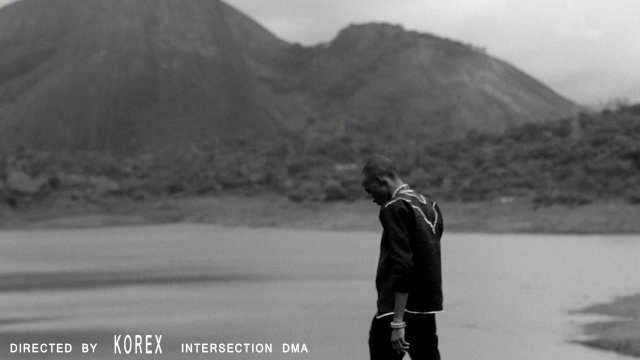
Here is his striking final piece, a music video of his hit song “Mr. Chairman,” briefly featuring Supreme Solar. His friend and creative collaborator Korex Calibur directed and edited the music video, which was finished after Sazzy’s death. The end result is very powerful. You can feel the tense energy coiled like a spring in Sazzy. He did not live long, but he seems to have crammed his short life full of music and friendship. In the increasingly rapid editing towards the end of the piece, you can also sense the grief and passion with which Korex edited this final music video.

Mr. C

Aha aha oh

Uh huh, oho (….) [skatting]

Verse 1

I’m the realest, I’m the coolest, I’m the newest, I’m the (best)

I’m the freshest, I’m the cutest of the chain

I’m the (nicest)

Ima  king, Ima prince, Ima man

Ima (nigga)

You should know that I’m a (killa)

Run them over like a (trailer)

Ima note, Ima chord, I’m the keys

Ima (south)

Ima script, I’m a play, I’m a show (Entertainer)

Number 1, number 2, number 3 (….) (ten)

I’m all aboard, do you understand?

CHORUS: If you see me outside, oh

Just call me Mr. Chairman, Mr. Chairman, Mr. Chairman, Mr. Chairman

Verse 2

I’m a singer, I’m a rapper, producer (extraordinaire)

I’m the bass, I’m the drums, I’m the snare, Ima (shaker)

I’m your sister, I’m your brother, I’m your mother, I’m your (father)

I’m your friend, I’m your (lover),

I’m your wife…

Ima seargent, Mr captain, Ima colonel general

Ima bullet, Ima gun, Ima tank, Ima (sub)

I’m the shit, I’m the piss, I’m your scent, I’m your (body)

I’m all aboard, do you understand?

CHORUS: If you see me outside oh

Just call me Mr. Chairman, Mr. Chairman, Mr. Chairman, Mr. Chairman,

Verse 3

I will like to suggest now, make you start to dey feel this

….

I said I would like to suggest now, make you start to dey feel this

Then feel me

CHORUS: If you see me outside oh

Just call me Mr. Chairman, Mr. Chairman, Mr. Chairman, Mr. Chairman X2

Just call me, Just call me, Mr. C, this star, […]

Finally, after his death, Sazzy’s friends, Uche the African Rockstar, Yoye, Lindsey, 5 Mics, Bugzy, and Snappy put together a tribute piece, “Yesterday, which can be listened to at NotJustOk.com.

“YesterDay”

Sazzy, always on the beat. (Not Just Ok.com)

Peace, man, ….

Chorus: Seems like yesterday I just got news you went away, but there aint no way you’ll fade away. To me, I remember how we used to be. X2

I used to think you have all the time in the world.

I feel so sorry for your girl

because she was your African Queen.

You made it in this African scene.

Oh, why?

We can’t begin to ask all these questions.

I never had a chance for me to mention

the kind of real person that you are.

No doubt that you were meant to be a star.

We’re gonna keep connecting wherever you are.

And even though you’re gone, you will never be far.

Oh Sazzy, why sazzy? I know your family, because I’m your family.

And the Almighty God has put you down to rest.

Until it is my time, I will keep you in my chest.

No matter what they say, to me, you are the best.

To me, you are the best.

CHORUS X2

You were a close friend, but now you’re so far away.

My heart bleeds, shedding tears, I kneel down and pray.

I pray the Lord your soul to keep

At heavens gate, I pray God gives you the key

We ask for his blessing, but what’s better than this?

Leaving this cruel world full of envy and greed

I shed a tear on my rhyme book

You know me Stay Positive C, the cup is half full

You always knew the answers

And if you were here

I would have asked you

Because in this wrong man, I see no good

Sazzy, you were so good.

Producer Extraordinaire

Mr. C, I salute

Never overrated, maybe underpaid

You were a trend-setter, man, you paved the way

Now much has changed, still trying to take your place,

But you were real to Death…..

CHORUS X2

Ok, it was like a joke when Gang hit me with the news

For DJ Atta said it too, and it hit me like the blues.

— tears over the phone, hearing my brother cry

Give me some broken bones

You invited me to your house, I couldn’t find my way there

Now I’m at your house, and damn you aint here

My conscious killing me. I should have been here more often.

Now the Ray Bans couldn’t stop the chairs from dropping

You kept fighting this sickness. I know you’re resting now

No more hospitals and drugs, just angels in gowns.

This boss ain’t enough to express how I feel

Sazzy, Mr. Chairman, God bless ….

CHORUS X2

Yeah, everybody put your lighters on

As we say farewell to an icon

Damn, but your music still lives on

We feel your presence in our hearts

Even though you’re gone

Yeah, I wish I never had to write this verse

I wish I never had to say “Sazzy, rest in peace”

Cuz you were loved by the streets

Forever in our hearts, Sazzy,

Rest in Peace

..

Well, well, …..

Whhhhy? Why?

Sazzy, (boom) Everybody feel your pain

But one day, we …

But one day, we wan make Zion…

CHORUS X2

Yo, Sazzy, we’re gonna miss you

I got all a your friends to come and talk to you

Because even though you’re gone, they’re gonna be talkin to you

Representing you

You’re the gospel, put it down.

Lindsey’s singing on the hook

And 5 Mics is doing it too.

Yo, Yoye, I know you’re feeling it, dog

Yo Bugzy, what’s up man, yo Snappy

Everybody’s in the crew man, we’re all gonna miss you,

We’re all gonna miss you, yeah

Because I’m the African Rockstar,

It’s because of you

And everytime I’m doing, we doing it for you

We’re never gonna forget you

Everybody awaits you.

Yehaw

Everything, It seems like yesterday

Whoohhi

It all seems like yesterday, ya’ll

I can’t say no more, man,

Just keep resting, dog,

You still live in our hearts

Yo, peace.

“Questioning Love” –my second installment in my column

Here is the second week of my column, published on page 29 of Weekly Trust. The title I submitted was “Questioning Love,” which I prefer a bit more than “Questioning Love of the Hausa kind” because part of my point was that love stories universally often pose questions to the larger society. I briefly discuss Shakespeare’s play Romeo and Juliet in its Baz Luhrman incarnation, and then move on to a discussion of Hausa love films, focusing on the film Balaraba, directed by Aminu Saira, screenplay by Nasir Gwangwazo, and starring Sadiya Gyale, Adam Zango, and Baballe Hayatu. To read the article on the Weekly Trust site, click on this link. To read the article in it’s original version, click on the photo. Your cursor should show the sign of a magnifying glass. Click on the photo again and it will expand to a large readable version. Let me know if you have any problems reading. To watch the trailer for Balaraba, scroll down below the photo, or click here.

Update 26 Jun 2012: Here is a trailer for Balaraba:

Music is who he was: Rest in peace, Sazzy


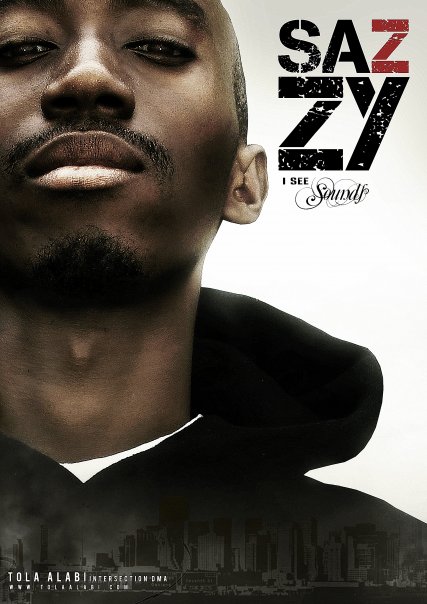
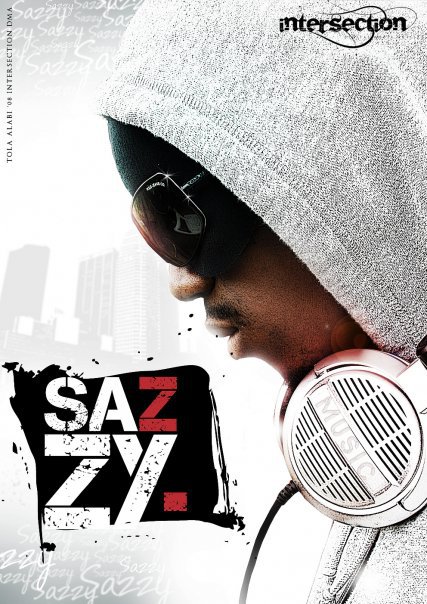
Sazzy (c) Intersection


I’m not sure where I first heard Abuja based producer Sazzy’s (Osaze Omonbude) music. I imagine it was when Korex of Intersection Media posted a link on Facebook to his music video “Doubt,” an addictive angst-filled track, with the cry of “I no go doubt myself again, oh” in the chorus. His techno track “Anymore” is equally angst-filled and danceable. I was hooked.

On his Facebook page, he described his sounds as

‘’indie-afro-hop done by aliens trying to be human’’. He also has no limitations on genres. “If it sounds good, I’ll do it”. […] “I just want everybody to grow with me day by day as I take over the world”.

So, when not long after, Sazzy sent me a friend request on facebook, maybe because I had been posting the video all over my wall, I responded:

July 17 at 2:31am
thanks for the friend invite. i’ve had your song “doubt” on a constant replay loop for the last 2 hours. you’ve got mad talent. take care.

He responded with gracious words (and a little advertisement):

Sazzy Omonbude July 17 at 2:41am Report
Thanks for accepting. Wow! thanks a lot, really great to hear that. Really appreciated.
I got a new international dance single. Will love to give you the link, so here it is
http://www.youtube.com/watch?v=RH_yYH-JmhoAnd pls dont be a stranger. 

Sazzy

The track he sent was perhaps not quite as contemplative as the others, but it was definitely danceable.

So this past Saturday morning when I signed into facebook and started seeing status updates from Abuja-based friends, saying “Sazzy, rest in peace,” it shook me. It was shattering news. I didn’t know him. We exchanged those messages and may have exchanged a couple of lines of Facebook chat, I can’t remember now. But I had gone to his page only a few days before to wish him a cheery “Happy Birthday.” I had listened to his tracks again. I hadn’t known him in person but I had known his friends, I had known his music. What does one do, what does one feel, when a facebook friend dies, someone at this level of acquaintance, new to history, whom you may have never met but whose updates you regularly see and who may have also seen your updates?

On his myspace page, he looked forward to the future:

”I really do believe with GOD, Hard work, Patience and Persistence you can achieve anything in life and I do hope all my aspirations and dreams shall come to pass. This is just the beginning for me, loads more is yet to come, music is about to change”.

And as a young talent gone too soon, his death is reminiscent of the death of rising star Dagrin only half a year ago. Now, Sazzy’s last update on Facebook seems a sad foreshadowing:

Sazzy Omonbude Hey thanx for all d birthday wishes….bin a bit ill bt thanx all d same

He had just turned 26. He had sickle cell. And he made mad good music.


Sazzy (c) Intersection


Yet, his “beginning” has become his legacy. The internet is chock full of his traces. He left behind a dance track list on his myspace page and reverbnation page (he’s currently listed as #5 on the Abuja charts), a youtube page with two videos, a twitter page full of banter, a facebook fan page that is slowly filling up with tributes, and one mix album “The Take Over,” for sale online, with some of the most promising new Nigerian artists, including Sazzy’s “Mr Chairman.”

A whole flurry of other blogs and new have written obituaries and tributes to him.  Olamilde Entertainment gives a short biography taken from his myspace page:

Sazzy born Osaze Omonbude in Nigeria, Oct. 15 1984; he had a good client and fan base in his country. His intention was to his wings internationally. As a child, he grew up listening to mostly international acts like The fugees, Notorious B.I.G, Jay-Z, Nas, Madonna, Shade, Fela and loads more. Since then he has always had a dream to sing and produce internationally, “let everybody here what I have to say’’. With a strong love for Good Music in any genre and a free mind in creativity, Sazzy was the type of act music needed. ”I really do believe with GOD, Hard work, Patience and Persistence you can achieve anything in life and I do hope all my aspirations and dreams shall come to pass. This is just the beginning for me, loads more is yet to come, music is about to change”.

Among the other sites to cover his untimely passing are modernghana.com,nigerianfilms.com, Linda Ikeji’s blogCampus HeatNigerian Entertainment Today, Abujacity.comLast Plane to Lagos, Bella Naija, and 360 Nobs. Not Just Ok, posted a tribute song by his Sazzy’s friends Uche the African Rockstar, Yoye, Lindsey, 5 Mics, Bugzy, Snappy. [UPDATE 5 November 2010: You can read the article about Sazzy I published in last week’s Weekly Trust here]

[Update 30 October 2010. Yesterday, Sazzy’s  friend Korex Calibur, whom he worked with on music videos, posted Sazzy’s final music video, a brilliant piece, which makes you realize just how much we are going to miss him….

On his myspace page, Sazzy writes,

”Every time I write or produce a song, I think outside the box and do not get caught up in music of the day or time. I make music straight from the heart. Music is who you are, I can’t be somebody else.”

And if music is who Sazzy was, he’s left a large part of himself behind in this world to comfort those who loved him.

Respect, Mr. Chairman. We will miss you!

Iyan Tama reaches settlement with Director General of the Kano State Censorship Board

In breaking news, the Hausa director and former gubernatorial candidate, Hamisu Lamido Iyan Tama has dropped his lawsuit for defamation against Abubakar Rabo Abdulkarim, the Director General of the Kano State Censorship Board in exchange for the board’s dropping of charges against him in a case that has dragged on for almost two years.

Iyan Tama at court in Kaduna, July 2010. (c) Carmen McCain

Iyan Tama called me this afternoon to make sure I had read today’s article by Ruqayyah Yusuf Aliyu in the Sunday Trust, “My stay in prison was a blessing -Iyantama,” and he wanted me to be sure that I pointed out that although he had been asked about being “convicted months in prison” that he had never been actually convicted. Although the mobile court magistrate judge Mukhtar Ahmad had sentenced him to three months in prison and Iyan Tama had served that time, he had appealed the conviction and, although delayed multiple times, the appeal was heard and upheld. The attorney general of Kano state, according to Leadership reporter Abdulaziz A. Abdulaziz:

said the trial was “improper”, “incomplete”, a “mistake” and requires retrial before a more “competent magistrate”.

“I am not in support of the conviction in this trial”, said the attorney-general, “It is obvious that the trial was not completed before judgement was delivered but there and then the presiding magistrate went ahead and delivered a judgement”, he added.

The judge called for a retrial. Again according to Abdulaziz A. Abdulaziz in Leadership (unfortunately Leadership has taken down the links to its archives, but I have it quoted here on my blog). Iyan Tama went to a Kaduna appeal court to appeal the retrial, since he had already served three months in prison, and there had been multiple delays. The case was still in court until apparently this week when he reached a settlement with the Kano State Censorship Board, during a hearing for his lawsuit against the Director General of the Kano State Censorship Board, Abubakar Rabo Abdulakarim, for alleged defamation during an interview with DITV in Kano, in which Rabo apparently claimed Iyan Tama had not registered his company with the appropriate bodies. According to Abdulrahmane Tonga reporting for Leadership,

The DG was dragged before the court by Iyan-Tama, who alleged that he had defamed his character in a television interview he granted DITV Kaduna earlier this year, when he allegedly stated that Iyan-Tama Multimedia was not formally registered as a moviemaking business enterprise.

Tonga continues with details of the continued court case, including that Rabo, who had previously refused court summons to lawsuits in Kaduna, finally showed up:

The court had sat twice without Rabo, before it subpoenaed him to appear in person after a request from the plaintiff’s counsel, Barrister Muhammad Sani Katu of solicitors Mamman Nasir and Co.

Rabo, who appeared to be limping yesterday, arrived the court at 9:05 a.m. in a Toyota bus belonging to the Kano State Ministry of Justice. He was accompanied by two state counsel, Rabi Waya and Sanusi Ma’aji, as well as the chairman of the censorship board, Malam Rabi’u.

He had never answered a court’s summons in the many legal cases filed against him by various movie practitioners in Kano and Kaduna during the past three years since he was appointed by Governor Shekarau to sanitise the film industry.

For more details of the “hot words” exchanged between the lawyers of the two parties, read the rest of Tonga’s article.

Iyan-Tama with Kano State lawyer Barrister Rabi Suleiman Waya, and Iyan-Tama's lawyer Barrister Sani Muhammad Katu outside of a Kaduna court, July 2010(c)Carmen McCain

According to the interview with Ruqayyah Yusuf Aliyu in today’s Sunday Trust, Iyan Tama said that

The resolution was reached as a result of consultations between my lawyers and that of Rabo where some terms were agreed upon. After we filed the case before a Kaduna High court over alleged defamation, claiming N10 million damages and Rabo failed to appear during the first two sittings saying his security needed to be guaranteed, my lawyer prayed to the court that it was important the defendant appeared and the court granted the plea by way of ordering that Rabo appeared while it guaranteed his security. […] My lawyer insisted that if I will have to withdraw the case, the censorship board will also have to withdraw its case against me which has been pending for quite a while at a Kano magistrate court.

According to Iyan Tama, the terms of settlement were as follows:

The first was that my company, Iyantama Multimedia was registered as a business name [… with] a certificate of registration KN/0010927 dated the 16th day of December 1997. The second term was that the defendant’s statement that led to the suit was based on a search report made at the corporate Affairs Commission for a limited liability company, and thirdly, that the parties in the suit have in pursuance of the pre-trial conference conducted on the 28th day of September, 2010 resolved to terminate the suit and the criminal case pending before Chief Magistrate Court 7, Nomans Land between the Kano State Censorship Board and Iyantama with case number KA/CMC/28/08.

Iyan Tama says that he didn’t “get anything as compensation” except for the public acknowledgment that he

was not operating illegally. I am happy that the world now knows that Iyantama has been operating legally since inception in 1997.

Hausa filmmaker and politician Hamisu Lamido Iyan Tama (photo courtesy of Iyan Tama)

Iyan Tama also talked extensively on the events leading to his imprisonment and his experiences in prison.

Being a filmmaker, I was amazed by every single little thing and therefore made friends with other inmates. I was more like a journalist in prison; I carried out series of interviews with the inmates from which I was able to gather dozens of ideas from which I am currently working to put into films. […] That is why I said being in prison has turned out to be a blessing to me and I never regretted it.

I was not able to find a link to the Sunday Trust article online, but I have scanned in a photo of the article on flickr. If you click on the photo below, it will take you to a version large enough to read onscreen.

"My stay in prison was a blessing--Iyantama" interview with Ruqayyah Yusuf Aliyu in the Sunday Trust, 17 October 2010


The Iyan Tama case has been one of the ones I have followed most closely on this blog, since he was imprisoned at the end of December 2008. For a list of articles and posts I have written related to the case, see the following links:

On the Current Censorship Crisis in Kano, Nigeria, 13 January 2009

Kano State High Court Justice Postpones Iyan-Tama’s Appeal, 22 January 2009

2:15am Raid on Iyan-Tama’s Family, 23 January 2009

Iyan Tama’s case “not listed,” 26 January 2009

Triumph/Trust Editorial Convergences (a piece that looks at editorials written about Iyan Tama that claim that his company was not registered with CAC), 29 January 2009

The Mysterious Asabe Murtala/Mukhtar Writes Again (more on the editorial convergences), 10 February 2009

Interview with Alhaji Abubakar Rabo Abdulkarim, Director General of the Kano State Censorship Board (in which he discusses the Iyan Tama case), 13 February 2009

Interview with Dr. Ahmad Sarari, Vice President of MOPPAN and brother of Iyan-Tama,  16 February 2009

Award Winning Film Lands Director in Jail, 16 February 2009, IPS News

Update on the Iyan Tama Case: Bail Hearing Set for 5 March, 19 February 2009

Updates on the Iyan Tama Case and other articles on the crisis in Kannywood, 14 March 2009

Iyan Tama granted Bail, the judge calls for a new trial, 17 March 2009

The Latest on the Iyan Tama Case from the Nigerian News Service, plus new fees from the National Film and Video Censor’s Board, 2 October 2009

FIM Magazine Editor Arrested on the Accusation of Abubakar Rabo Abdulkarim, DG of the Kano State Censor’s Board, 4 July 2010

Kaduna State Filmmakers Association take Kano State Police, Court, and DG of Kano Censor’s Board to court of breach of “fundamental Human Rights,” 21 July 2010

Iyan Tama Takes Rabo to court over defamation, and other lawsuits, 18 August 2010

My new column in Weekly Trust. First installment.

A few months ago, the editor of Weekly Trust, offered me a column in the paper, and my first piece came out this past Saturday on page 31. In my column-writing rookieness, I had misunderstood the word count he had quoted me, so, once I saw it published, I was awe-inspired by my editor’s skill in cutting down a piece that had been twice the length, while still keeping most of the flow. However, I decided that since I do have this blog, I would post the longer version of the piece here, which allows for more details and context, and where I can post a few more photos to illustrate the content. I’ve gone ahead and taken a few of the suggested cuts, so this is a hybrid between what I submitted and what was published. The photos and the column title “My Thoughts Exactly” that appeared in the Weekly Trust were also the editors choice….  I copy a photo of the column as printed here (if you click on the photo, it will take you to a link with a larger version that you can read), and the original non-cut piece below. [UPDATE: 21 October 2010: The soft copy is also available on the Trust website now]

I’d love your feedback on the column and suggestions for future subjects.

Enjoy


"Why the beginning is the best place to start" Weekly Trust, page 31. Carmen McCain's first column


I begin this column with a slight sense of trepidation. I am an American, venturing to write a weekly column about my interaction with contemporary popular arts in Nigeria, focusing on Hausa film, music, and literature. “What does an American have to say about Nigerian, and particularly Hausa, art that is worth reading?” you may ask.  So in this first piece, let me give you a background on myself and why I am so passionate about the arts in Northern Nigeria. I hope that you will come back next week for more.


Gidan Dabino Publishers, August 2005 (c) Carmen McCain


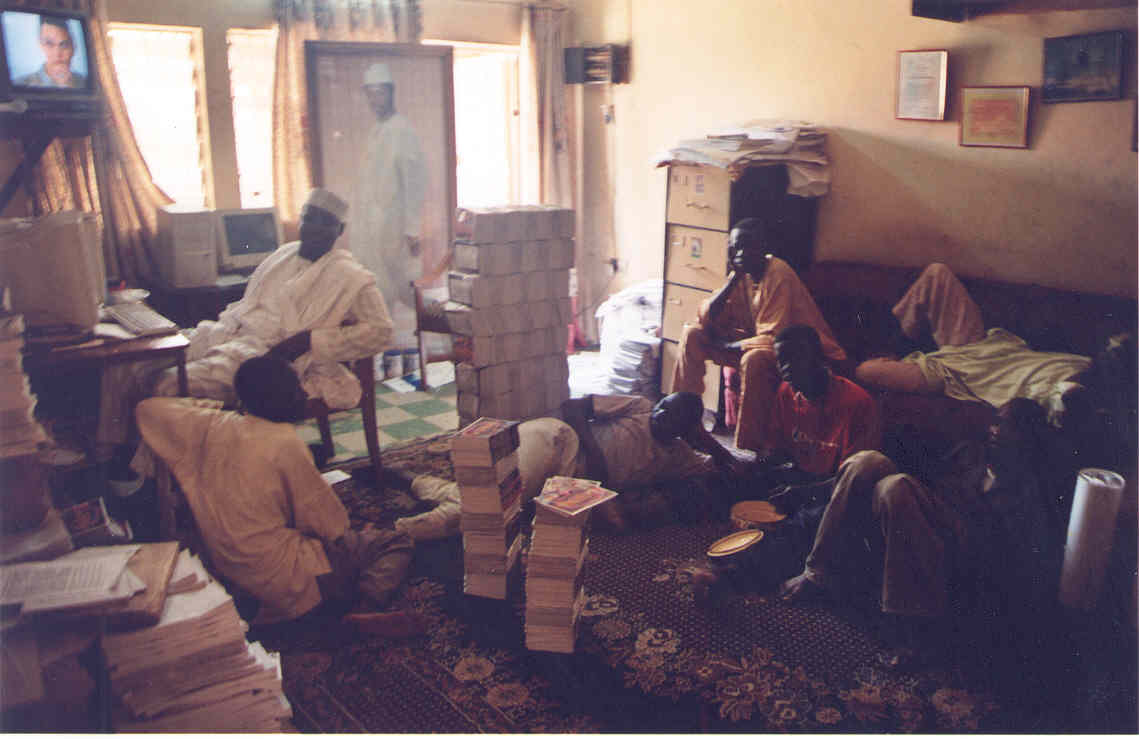
My first trip to Kano as an adult was in 2005. I had just spent nearly three months in Sokoto learning Hausa, as a part of a requirement for my U.S. based PhD programme in African Languages and Literature. A large part of that study had been reading Hausa novels and watching Hausa films, and I was newly starstruck by my meeting with Hausa novelists and filmmakers. My formal education, thus far, had been in literature, a BA in English and postgraduate work in African literature. Ever since my undergraduate days studying the Romantic movement of 19th century England, the Beat movement of 20th century America, and others, I had been fascinated by these intense creative historical movements, where writers and artists and philosophers and political activists work together and influence each other.  That August, when I first heard filmmakers in intense debate at the Centre for Hausa Cultural Studies on Zoo Road or sat with Hausa writers at the office of Gidan Dabino Publishing Company and listened to them discuss the massive numbers of novels they were selling, I felt a sense of déjà vu . This was one of those rich historical arts moments I had always wanted to be a part of—and it was here in Hausa in Northern Nigeria, a place I had often heard disparaged as being full of illiterates and extremists.  I knew then I had to come back. I wanted to study this movement so that other people outside the Hausa speaking world would know of it; I wanted to combat stereotypes about the Hausa speaking north; but mostly I just wanted to come back and be a part of the creative energy.

I had first come to Nigeria as a child in 1988 accompanying my parents.  My father was a dreamer, and one of his dreams was to take his children to live in a place where they would be able to see beyond the privilege, materialism, and self-centredness of American life. When we first went to Port Harcourt on the invitation of a university, my parents told us we would be in Nigeria for four years. Four years turned into twenty-two and counting. After three years in Port Harcourt, our family moved to Jos in 1991, where my father became a professor in the Religious Studies Department at the University of Jos. My parents have lived in Jos ever since.

Our parents encouraged us to venture into Nigerian life beyond our international school bubble. My brother Dan, as young as he was, co-hosted a Rock and Roll show on 95.5 FM, Jos, with DBMC, the Rocking MC, foreshadowing his work in entertainment as a filmmaker. My sister Laura, once she was in high school, volunteered at Evangel Hospital, anticipating her career as a medical doctor. I was shyer, preferring to spend all my time reading fantasy and science fiction novels, daydreaming, or writing in my journal.

During one school break, my father signed up all of us children to take a two month Hausa course, where we learned the basic Hausa of greetings and market language. But, as a teenager immersed in my own world, I wasn’t interested. I was convinced, from my struggles with Spanish at school,  that I couldn’t learn another language, and I didn’t see the need. We didn’t need Hausa at school. We wouldn’t need it in America, where I was going. It was interesting but not worth pouring my life into.

When I returned to the U.S. for university, I studied English literature and creative writing. I hung out with groups of writers and poets and became co-editor of my college literary magazine. I wanted to be a part of one of those significant historical moments I was studying. I wanted to write something people would read after I died. I planned to stay in the U.S. then. I imagined myself in the forests of New Hampshire or the craggy coasts of Maine, sitting in a bay window watching the snow fall and penning my poetry. But when following my graduation, I moved to New York City with my best friend from Nigeria and worked as an editor at a small children’s book publisher, my longing began to turn back towards Nigeria. Hosting old school friends, whenever they came through New York, I realized how much of Nigeria I had missed as a child, living as I had in the world of fiction and the protected atmosphere of an international school. As much as I loved New York and loved the masses of people from all over the world who co-exist in the city, I craved for Nigeria. I wanted to find out if I could belong there—me this white American girl, who had many homes but not a single one I felt I could commit to.

So in September 2001 just as the towers came down in New York and the fires raged across Jos, I returned on a Fulbright scholarship to Jos. I spent the next two years doing a little research, a little writing, a little teaching, a little editing. I sang in the community choir, took French classes at the Alliance Francaise and studied Hausa with a series of tutors. I discovered on a one month trip to Lomé, Togo, to improve my French, that I wasn’t bad at learning languages; I just needed to live in a place to be able to speak. I became involved with the small but thriving Jos branch of Association of Nigerian Authors and determined to go back to school and do a PhD on contemporary Nigerian writing.

When I began the MA to PhD programme in the Department of African Languages and Literature at the University of Wisconsin, Madison, I discovered that proficiency in an African language was a  requirement of the program. And


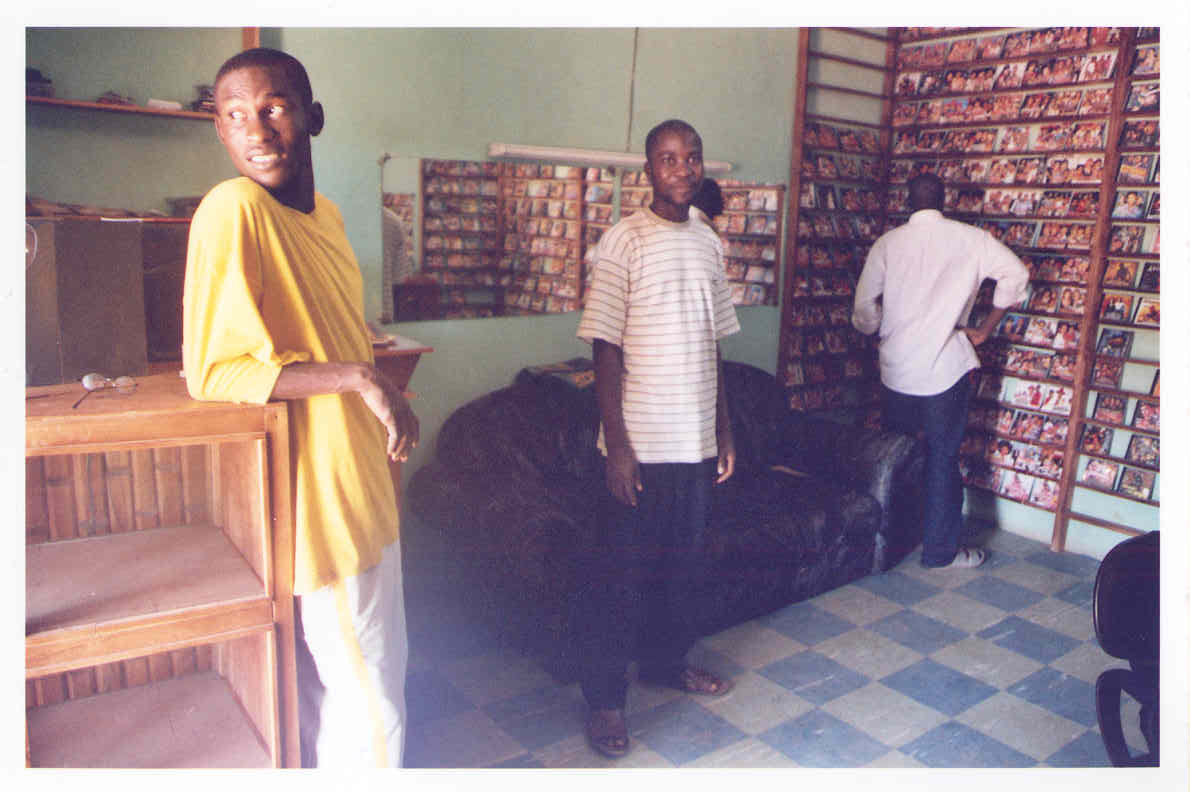
The film club in Sokoto I frequented and where I first became interested in Hausa films (c) Carmen McCain


that’s how I found myself in Sokoto in 2005 on language study, in Kano in 2006 for pre-dissertation research on Hausa novels and films, and finally back in Kano in 2008 for dissertation research on Hausa popular arts. I have been here ever since.

When I returned to Kano in 2008, the Kannywood I had caught a glimpse of in 2005 and 2006 was gone. In 2007, a private cell phone video of a Hausa actress with a non-film industry lover had been leaked and had become the hottest viral video in Kano. Although it was a private video of an indiscrete act between individuals, the entire Hausa film industry took the heat.  A new head of the Kano State Censorship Board, Abubakar Rabo Abdulkarim, was appointed; the film industry was suspended for nearly a year; and actor and musician Adam A. Zango was imprisoned for releasing his music video album without passing it through the board. I arrived back in Kano eager to re-enter the world of film, but everything had changed.   Gone were the cheerful song and dance sequences shot guerilla style on the side of the road in Farm Centre. Gone was the jolly confusion of four films at a time on location at Fine Time Park and Restaurant.


On the set of Albashi 3 in the Fine Time Park and Restaurant, July 2006. There were about four other films being shot there that day. (c)Carmen McCain


Gone were the gala shows in open air theatres near Marhaba cinema. Gone was the anticipation that you might see filmmakers at any time, shooting on the side of the road. The industry seemed more spread out and scattered than I remembered. Films seemed to have become darker and more interior.

Although I had been on quite a few locations in 2006, on my return to Kano in 2008, I spent nearly a year without visiting a single set. Filmmakers were leaving the state now, to Jigawa, to Kaduna, to Katsina, to Zaria. I was being hosted by the Department of Mass Communications at Bayero University and teaching a class. I didn’t have as much freedom to go out of state to film locations, so instead I began to hang out in the studios, where editors cut together movies and singers taped jingles, recorded their albums, and sang the songs that punctuate


Golden Goose Studio: Ibrahim Chairman, Aisha Golden Goose, and Osama bin Music (c)Carmen McCain


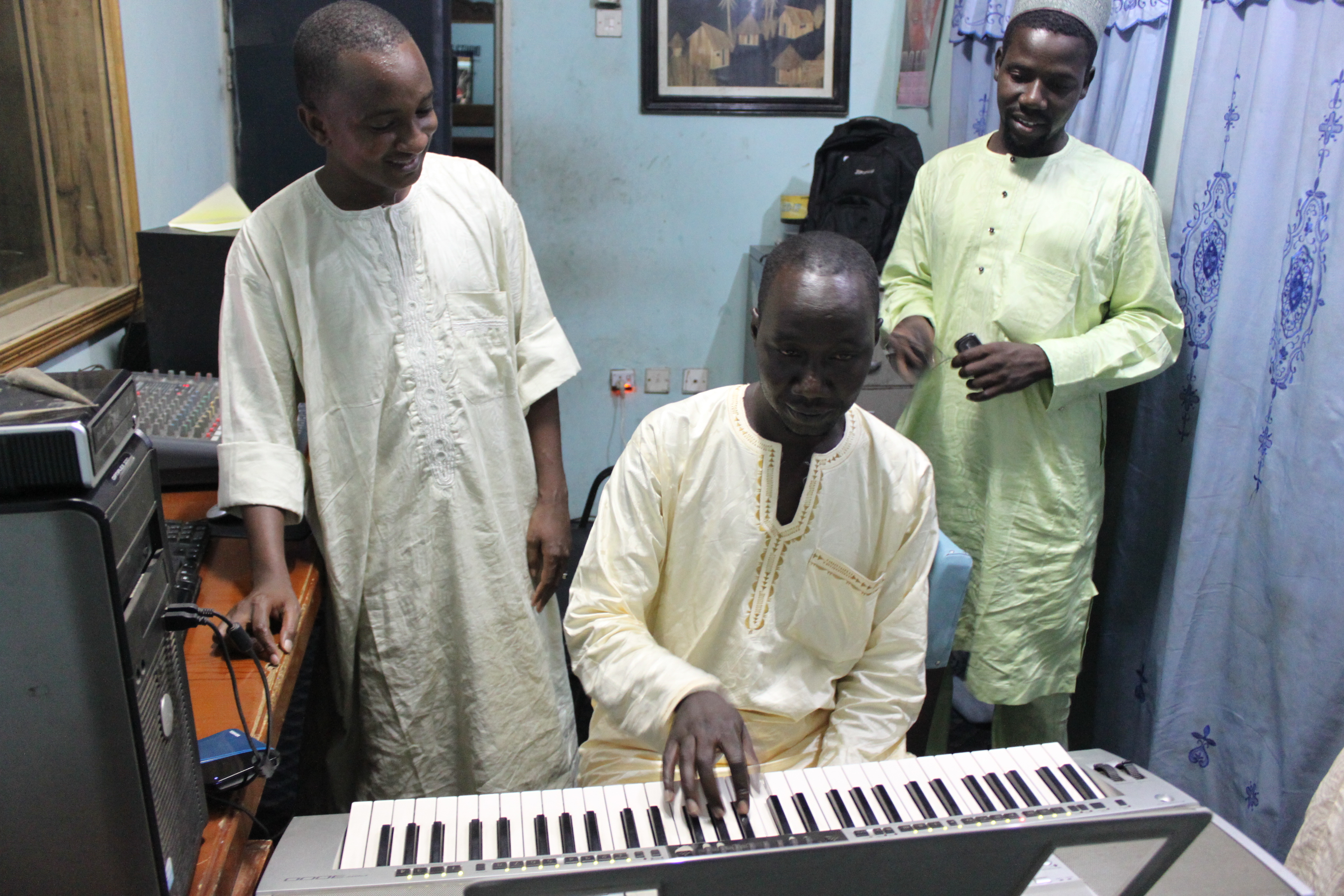
the films.  My main hang out was at Golden Goose Studio on Zoo Road, managed by the Hausa rapper Ziriums, with assistance of his brother Osama bin Music. There I grew to know the Hausa novelist and screenwriter Nazir Adam Salih, editors Sulaiman Abubakar, Yakubu, and Mohammad Abdullahi , musicians DJ Yaks, Alfazazi, Pastor Dan, Suhaima YK and Aisha; the writer, producer and director Baba Ali Yakasai, and young Ya’u, the orphan who had begged on the streets before becoming a studio hand and being sponsored to go back to school by the studio.


Filmmaker Baba Ali Yakasai and Writer Nazir Adam Salih at Golden Goose Studio (c)Carmen McCain


Large numbers of artists trooped through the studio on a weekly basis, overseeing films as they were edited, or voicing radio programmes and songs in the studio.

It was at Golden Goose that I began to think and dream in Hausa, and it was there that I began to learn much of what I know about the Hausa film industry. It was at Golden Goose that I fasted for Ramadan for the first time and broke fast with young filmmakers and musicians who would contribute chopped pineapple and watermelon, bags of kosai,  bowls of koko, and newspaper wraps full of suya. When the iftar call to prayer came at sunset, and they had prayed, we would descend on the food. It would be gone within minutes. We would sit for hours laughing, planning film


Me with singer Suhaima YK


scripts, having long conversations on religion and politics and film and culture.  It was here I finally felt I had found the home in Nigeria I had been seeking for so long.

That year, as my research became personal, my first infatuation for Hausa popular culture turned into a fierce love for the young people who work through the night editing and writing and singing, making a living for themselves through


Musician Ziriums, Writer Nazir Adam Salih, and Director Falalu Dorayi making music in Golden Goose Studio, (c)Carmen McCain


their creativity. And as I read newspapers and email listserves and heard discussions on the radio about films, I was disturbed by the disparities between the public discourse I heard about filmmakers, in which they were often characterized as immoral layabouts just in it for the fast money, spoiling society with shoddy films and music, and what I was seeing and hearing from the filmmakers themselves. They spoke passionately and with nuance about the films they were eager to make, the research they had done on new equipment. I would hear hours of conversation on the aesthetic and narrative features of the Lost and Prison Break series or Indian films, fervant discussions on social inequalities, the hypocrisies of the elite, and a desire to expose and correct ills in society.  They frequently attempted to convert me from Christianity to Islam.

In October 2008, a few months after I began to hang out at Golden Goose, the popular comedian Ibro and his colleague Lawal Kaura were arrested and imprisoned for two months after a quick trial at a mobile court attached to the Kano Censor’s Board with no lawyer present. They were accused of having not registered a company they claimed did not exist.  At the end of December 2009, pioneering Hausa filmmaker Hamisu Lamido Iyan Tama was imprisoned for three months on accusations that he had not censored his award-winning film Tsintsiya with the Kano Censor’s Board even though he had stated on the radio that the film  was not for sale in Kano. But these were only the big names. Hundreds of other film industry workers were also being regularly detained and fined for obscure offenses.


Sulaiman Mpeg behind bars at KSCB mobile court


In February 2009, my friend Sulaiman, the editor I had gotten to know at Golden Goose, was arrested on accusations that the studio he was now working in was not registered with the censor’s board.  Sulaiman’s employer came to the police station bringing the papers showing the studio was registered, although it had recently moved locations, but the police insisted that Sulaiman would spend the night in jail before being taken before a judge. The conflicts have continued into 2010, most recently in a series of legal altercations between the Kaduna filmmaker’s association and the director general of the Kano Censors board, which have included Kano police travelling to Kaduna to arrest the editor of Fim Magazine, Aliyu Gora.


Editor of Fim Magazine Aliyu Gora II and filmmaker Iyan Tama at court in Kaduna. Both were imprisoned in Goron Dutse Prison in Kano on accusations of the Kano State Censor's Board (c)Carmen McCain


Because there seemed to be so little widely available news coverage of these events, I began a blog to document alleged abuses as well as to provide a forum where I could post photos, interviews and reports of interactions I had with artists and writers.  I hope this column can extend the work I first began on my blog, and plan to focus mainly on Hausa popular culture and my experience of it, though I may occasionally branch into other Naija related subjects.

Although my first encounter with Nigeria began  twenty-two years ago and although I feel that I have found my family and kindred spirits here, I remain conscious of the fact that I am a foreigner. There will be places in Nigeria where I will always remain an outsider, and people to whom my opinions will always be tinged with the ignorance of the stranger. That said, I hope that my readers will take my contributions in the spirit in which they are given: the love of a foster child for her adopted country. I hope I may contribute in freshness of perspective what I lack in full understanding, and that as I write, I will transfer some of the excitement and love I have for these creative entrepreneurs  to my readers. I welcome your feedback.