Author Archives: carmenmccain

Remembering ‘Dan Ibro (tare da baturiyarsa) (Allah ya jikan ‘Dan Ibro)

This morning, I yielded to the temptation to go onto Facebook before starting my work.  I found waiting for me a private message from a friend telling me that Rabilu Musa aka ‘Dan Ibro, the most famous comedian and perhaps the most famous actor in the Hausa film industry, had just passed away.(BBC, Premium Times, RFI). He was only in his forties. Inna Lillahi wa inna ilaihi raji’un.

Dan Ibro praying (courtesy of Rabilu Musa DAN Ibro Facebook page)

It is a gutting loss to the industry and to millions of people all over northern Nigeria, who laughed at Ibro’s antics even as the bombs were exploding around them.

An explanation:

I’ve been gone from this blog since June, since even before then, really, as I tried to reduce distractions to a bare minimum while I pushed out the PhD. I kept up with the column at Weekly Trust until August. A week before my revisions were due, I desperately asked my editor for a month break, which he graciously granted me. I finished the PhD and then just kind of collapsed. I had been taking two days and an all nighter every week trying to write my weekly column. I had written throughout the last four years of my PhD programme, even through the defense. But with the kidnap of the Chibok girls and ever more atrocities coming out of the northeast, sometimes venturing further West, I felt like I couldn’t write about anything else. How can you write about novels and movies and walks in pretty American parks when ethnic cleansing is going on—when perhaps some of your readers have been killed in the violence? My one-month break turned into many months. I got busy applying for academic jobs and going to conferences and travelling back and forth to Nigeria. I pushed away thoughts of the column. I couldn’t handle the thought of having one more deadline every week or of having to write anything else while people were being murdered and bombs were going off.

Then ‘Dan Ibro died.

And I realized he made people laugh in the midst of all of these horrors (In October there was even a Ibro Likitan Ebola poster floating around on Twitter), and that perhaps it is this laughter, these stories, these songs, these dreams of ordinary people in ordinary and extraordinary times, that are what help us

Ibro Ebola Doctor (courtesy of Kannywood Exclusive TL: https://twitter.com/kannywoodex/status/504397310957457408 )

survive. We shouldn’t allow Boko Haram or any other threat to take laughter and story and song away from us. During the Jos crisis of 2008, dozens of people sought refuge in our house. One night, I brought out my vcd of Ibro Dan Siyasa [Ibro Politician], and everyone, all crammed into our parlour, sat there laughing. Christians in Jos laughing at the Muslim Ibro’s comedy, in the midst of a religious/ethnic/political crisis. I thought, then, that there is a bridge here, this Kannywood, this comedy, there’s something here that goes beyond the bitter statements I’d heard from Christian refugees throughout the crisis. The same people who had cursed “the Hausa” and cursed “the Muslims” were laughing at ‘Dan Ibro. His comedy was bigger than fear and hatred and politics.

So here are my own memories of Ibro.

Like any fan, I have watched dozens of his films—playing in the background on Africa Magic Hausa as I would write in my room or in the little kiosk where I bought yoghurt and bread when I lived in Kano. I’d watch short comedy sketches excerpted from his longer films that musicians and filmmakers would show me on their phones in studios. Sometimes I’d peek over the shoulders of strangers in taxis giggling at an Ibro sketch on their phone.

When a director and producer I did not know approached me on Zoo Road with the idea for Ibro Ya Auri Baturiya, I laughed and agreed without too much further thought. I liked the idea. I said I would do it, if I could get an interview with Ibro. The producer agreed.
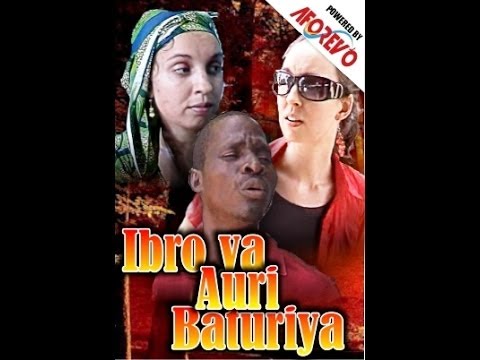
One of the vcd covers for Ibro Ya Auri Baturiya (more coming once I can find my hard copies in the various boxes where they are packed)

One of the vcd covers for Ibro Ya Auri Baturiya (more coming once I can find my hard copies in the various boxes where they are packed)

Ibro Ya Auri Baturiya was made in early 2009, in the midst of the Kano State Censorship crisis. Because of the crisis, we had to leave Kano to shoot the film. We met up with Rabilu Musa on the outskirts of Kano, and I rode in the back seat of his car as he drove towards Jigawa State. He was dressed in a normal white kaftan, and without the bright signature costume, the tall red cap or the comedian’s grin, he looked like an ordinary person—not one of Nigeria’s biggest stars. He was very quiet and did not say much as we drove. Even with all of my exposure to Kannywood, I remain bashful in the presence of fame. I hoped for an interview but didn’t quite know how to ask him. We stopped once on the side of the road, perhaps to buy snacks, and people passed without recognizing him until some of the children did a double take and then started chanting “Ibro, Ibro.”

We arrived at a village a little bit outside of Dutse in Jigawa, and we ate lunch before starting to shoot. I was still too shy to talk to him, as you can see from the below photo of me grinning like an idiot while Ibro eats in the background. But the director fulfilled his part of the bargain, and we had a brief 6-7 minute interview. I tried to ask him about his ordeal the year before, at the hands of the Kano State Censorship Board. He didn’t want to talk about it. I got what I could. (I’ve transcribed the Hausa, though I haven’t yet translated it, and will post it later on this blog).
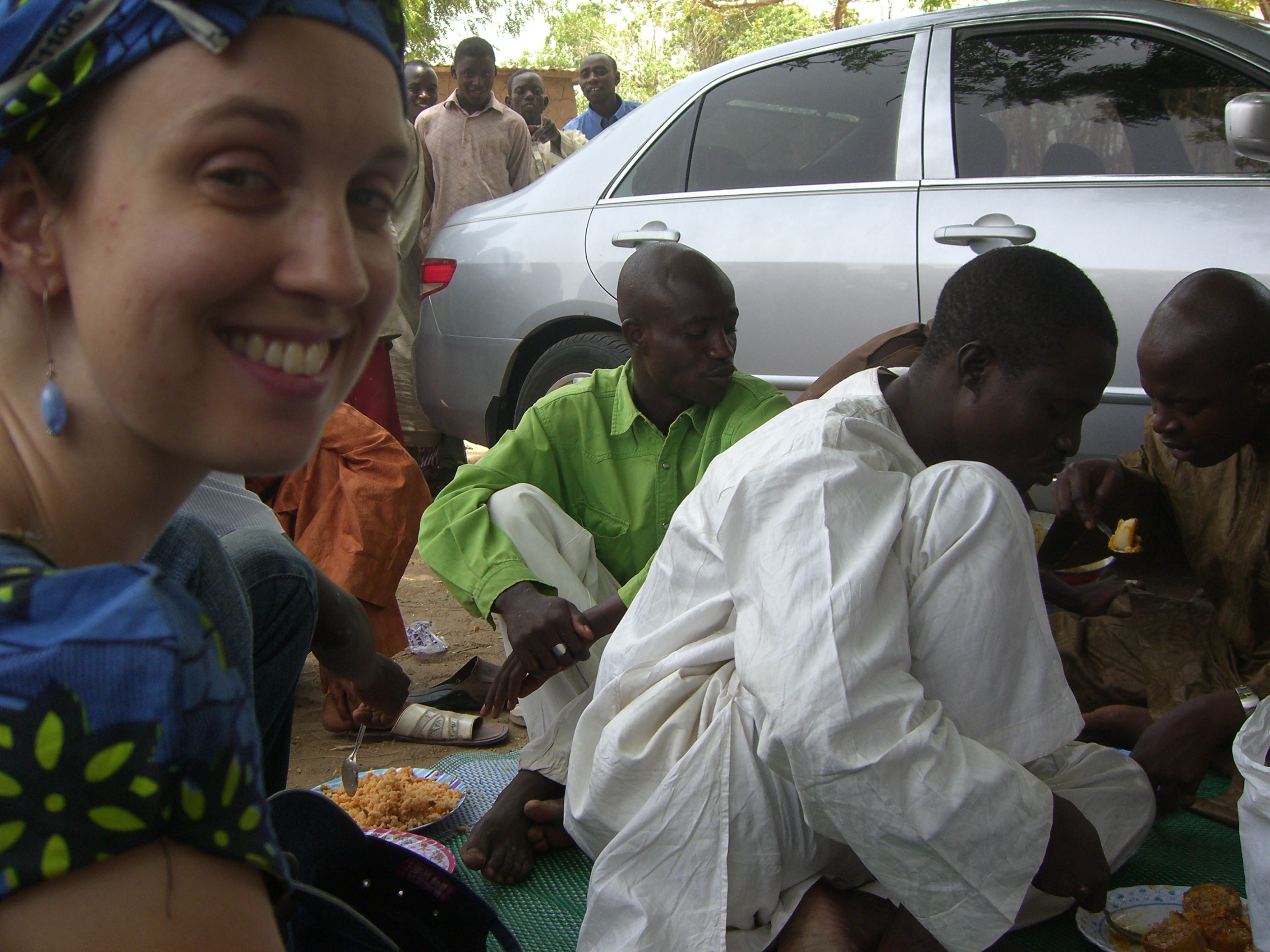
Eating on set of Ibro Ya Auri Baturiya. (Ibro in white). (Me, grinning like idiot)

Eating on set of Ibro Ya Auri Baturiya. (Ibro in white). (Me, grinning like idiot)

Then it was time to act. I was led to a small, borrowed room in someone’s compound and told to change into my “Western dress”. About a minute later, before I had a chance to smooth down my hair still flattened from my headtie, I was rushed out to do the first scene where I drag (my own) suitcase into the village with Ibro, asking him why we aren’t going to Abuja as he promised me. There was no script. At least none that I was given. The director gave us a minute of instruction (I was to speak in English at first and later in broken Hausa), and we were off. Ibro is a brilliant comedian and knew exactly what to do. I just tried to keep up.

That day, Ibro had somewhere else to be. I completed my scenes with him, a few more were cut, perhaps, and he rushed off to his next film. We continued with Baba Ari, ‘Dan Auta, and the others at a more leisurely pace.
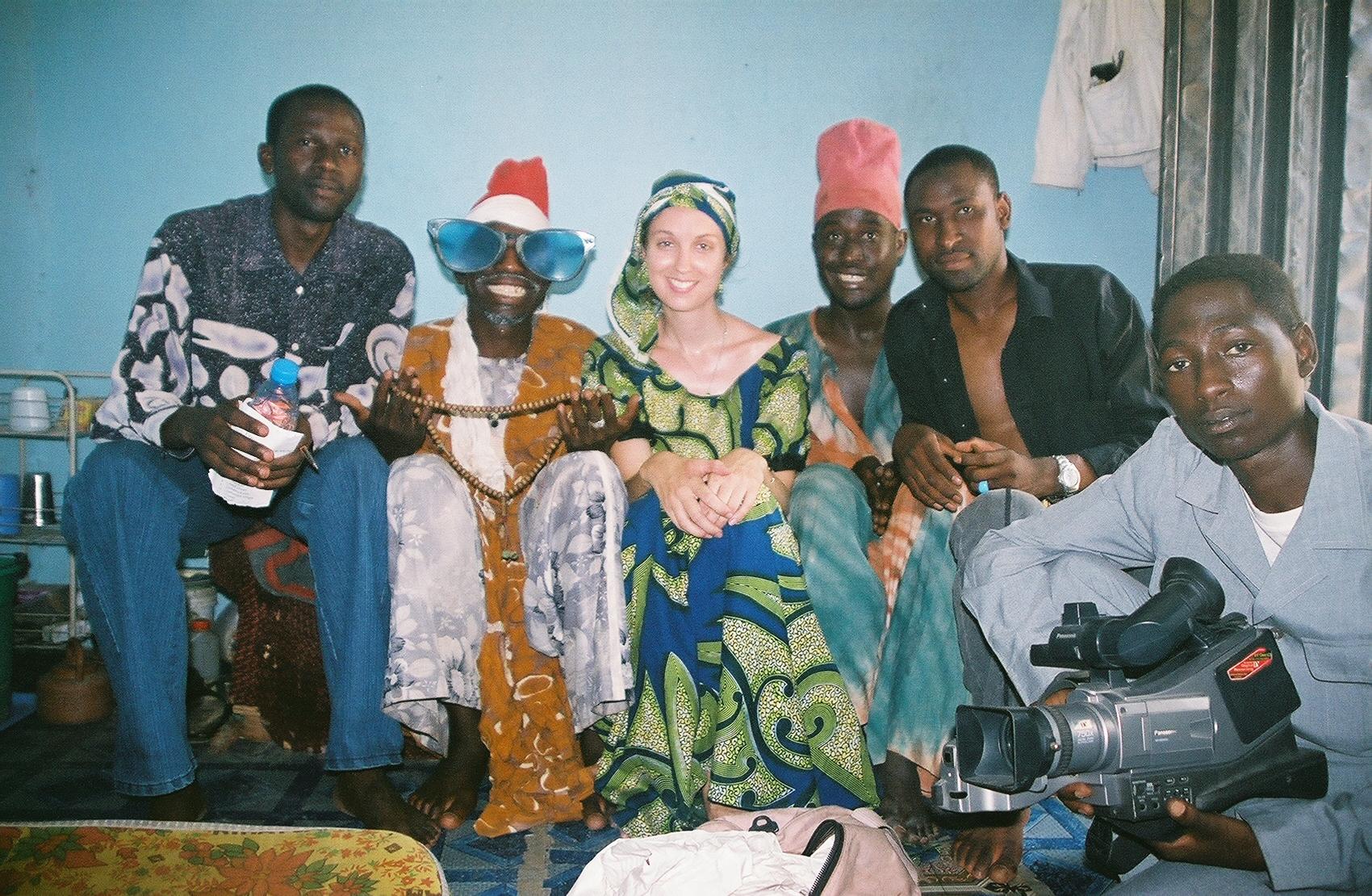
On set of Ibro Ya Auri Baturiya.  Left to right. Director Muhammad Y. Muhammad, Baba Ari, me, Dan Auta, Producer Lawal D. Funtua.

On set of Ibro Ya Auri Baturiya.
Left to right. Director Muhammad Y. Muhammad, Baba Ari, me, Dan Auta, Producer Lawal D. Funtua.

After production, I was embarrassed. I felt I had acted terribly. I felt like if produced differently it could have, perhaps, been funnier. I never mentioned the film on this blog and rarely elsewhere, because I didn’t want people to see me in it.

But on the streets, people would call out “matan Ibro,” “matan Ibro.” People would jokingly ask me how my husband Ibro was. And so it was that “matan Ibro” became part of my public persona, even though I was still too shy to talk to him.
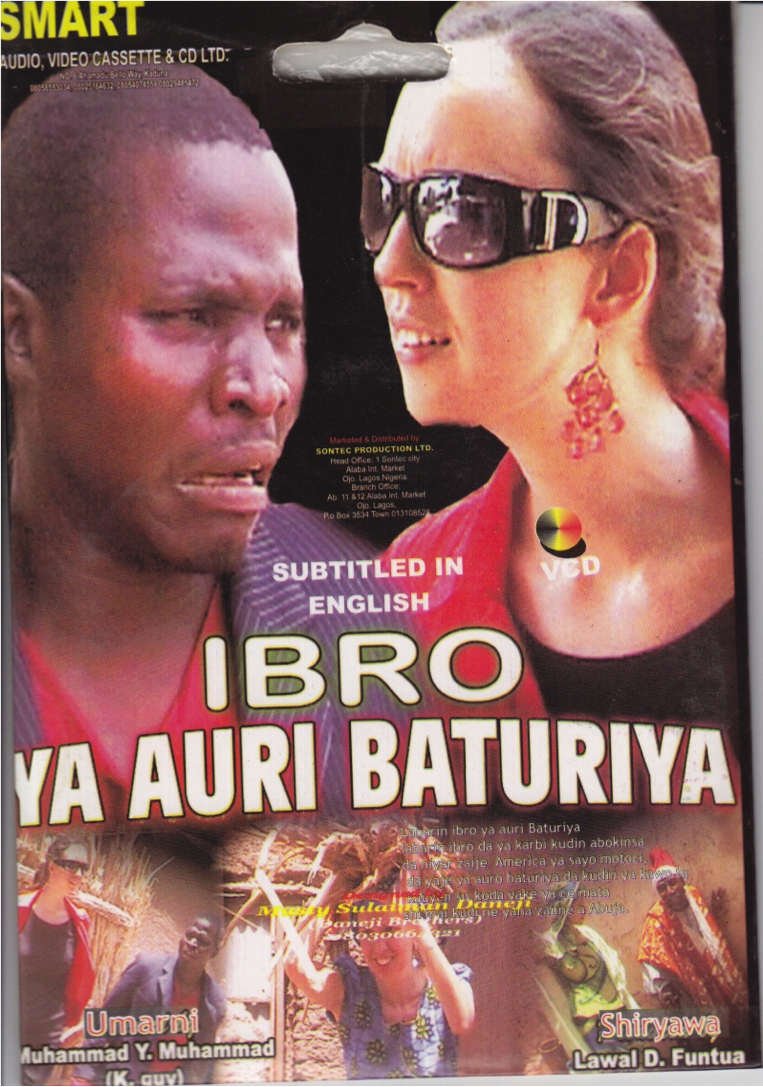
The original vcd cover for Ibro Ya Auri Baturiya.

The original vcd cover for Ibro Ya Auri Baturiya.

Eventually, I was able to overcome my embarrassment enough to watch parts 1 through 3 of the Ibro Ya Auri Baturiya and to look at it with enough distance to include an analysis of it in my PhD dissertation. I realized that it didn’t matter how I acted. It wasn’t about me. The baturiya was just a symbol to be played with and mocked—some of the funniest scenes were discussions of the baturiya, where I did not appear but which were made possible by my token appearance elsewhere: the baturiyar kwantainer, Ibro could not pass off to his friend once I became a nuisance because he claimed he had gotten me from a container, which could have come from Togo or Benin, rather than America; the baturiya whom Ibro really “made suffer” as people on the street would laugh to me.

Ibro Ya Auri Baturiya was where I most connected with Rabilu Musa, but he had many more brilliant films. They weren’t usually polished, but they were usually hilarious and filled with sometimes biting political humour. The character of Ibro took on a life of his own. His voice often imitated by singers, including Sadi Sidi Sharifai, so that the character Ibro became disembodied from the actor himself. I mention him over 40 different times in my PhD thesis, and do an extended analysis of his film Kotun Ibro, a sly dig at the mobile court which persecuted so many filmmakers during the censorship crisis.
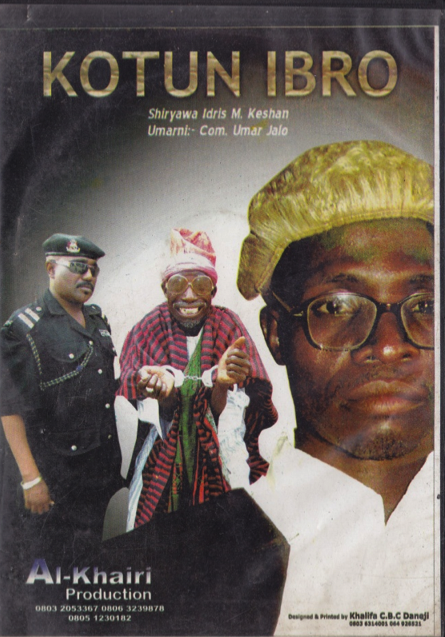
Ibro's film Kotun Ibro poked fun at the mobile court that had arrested him.

Ibro’s film Kotun Ibro poked fun at the mobile court that had arrested him.

Dan Ibro was an institution. He has become an era.

He will not act in any new films, but he will stay with us in a thousand different comedies. I heard his voice singing on the radio today, as a broadcaster mourned him. He brawls and weeps and shouts and complains and dances on a million different screens. We will keep laughing, even when, perhaps, we should be crying.

Allah ya jikansa, Allah ya sa shi huta. Yaba mu hakurin wannan babban rashi.

Postscript

As I wrote this today, I saw the news of another bomb in Kano at the Kwari cloth market. Allah ya kiyaye mu. What a horrible day Kano has had.

Sometimes it’s overwhelming to contemplate how many people from the Hausa film industry have died in the past few years. Here are my tributes to a few of them.

Actress Hauwa Ali Dodo (Biba Problem), who died 1 January 2009,

Director Zilkiflu Muhammed (Zik), who died 18 February 2010,

Actress Safiya Ahmed, who died on 26 February 2010,

Actress Amina Garba, who died on 21 November 2010,

Comedian and director Lawal Kaura, who died on 13 December 2011,

Actress Maryam Umar Aliyu, who died on 12 April 2011,

Director Muhammadu Balarabe Sango, who died on 1 December 2012

Introducing Dr. Carmen McCain

Dr. Carmen McCain (c) my brilliant brother Dan McCain

I have not posted on this blog since January. I think that is the longest I have ever neglected it. But it was for a good cause. It enabled me to hole up in Madison, Wisconsin, to focus and finish writing my PhD dissertation on Hausa literature and film, which I defended about a month ago. I am hoping to finish my revisions in a week or so, submit to the university, and move on to the next thing. I am looking forward to what life brings. Hopefully that will mean resuming more regular blogging. Thank you to all of you, who have supported me and encouraged me during this long, grueling, depressing, yet also sometimes exhilarating process. I wrote more detailed thanks in my column last month and still more in the acknowledgements page of my dissertation itself. I am placing a hold on proquest for two years, so as to better my chances of getting a book contract, but I would be happy to email it to anyone interested, once I have the final draft submitted to the university.

I will share more thoughts and photos as I have time. This may also be the last blog post I compose on my nearly 6 year old boxy red Dell, named Rudi. He has lived a good life but is now slowly dying. His sleek replacement is sitting in the next room  waiting for a data transfer… and a name.

My love to everyone.

-Dr. McCain  (probably the only time I will ever sign off that way on this blog, but it’s fun to celebrate)

Writing Companions

“La Danse” (second version, 1909-1910) by Henri Matisse, Photo Credit: Wikipedia

When I was a teenager and I still had an already old fashioned record player, one of my favourite albums from my parents record collection was a record of Ravel’s “Bolero.” The cover was the second version of Matisse’s painting “La Danse.” (I would love to take credit for my great knowledge of art, but I actually found it by first googling “Ravel’s Bolero record” and then “red men dancing impressionist.” It’s amazing what google can do.) The painting and the music melded, and I remember lying on my bed, eyes closed, floating on the sinuous threads of the ballet, as the shiny black record undulated under the needle. The music starts out softly with a single flute and snare drum and then a clarinet, so softly (pianissimo I whisper) you can hardly hear it, and as each instrument takes up the Bolero theme, the orchestra grows louder and more rowdy until it finally ends with a tumbling crash.  

I would play it as I daydreamed and as I read and as I wrote little stories that I never finished. It is sensual music that pulls at your body so that you have to follow its rhythms, follow Matisse’s red dancers even if you are lying down.

I think this is the same record. Photo courtesy of Positive Feedback Online, Issue 14.


Sensual. It is a word that comes to me every time I hear Ravel, as does my old Jos room, with its fluttering blue curtains, and yellow record player on the floor, the shimmer of the large flat disc as it spun. A dizzying array of senses: circling vinyl, circling red nudes, circling bolero theme, whirl of instruments.

I have recently discovered Spotify (unfortunately not available in Nigeria), with its endless fields of free music. I write best when I am listening to rhythmic, wordless music, so Ravel’s Bolero is at the top of my “writing music” playlist, followed by a whole lot of Bach. I sway. I type. The orchestra circles and crescendos, trumpets blasting and drums marching.  I still get chills.

Outside the windows tonight, there is a mist that shines red in the security lights. The polar vortex with its arctic temperatures has given way to the more gentle Atlanta winter, and the rain comes and goes, tapping against the wood walls. The mist and the rain make me feel safe, provide a companionable solitude. I try to write but I think more of process than content, of memories rather than analysis, round and round with the clarinet.

I am alone tonight, but for two little writing companions, insects that look like knight’s shields, with a delicate inlay of filigreed gold, painted with tiny spots of red and brown. They explore my charge cords and my wallet and patter along the top of my screen with stalk legs, extending their patterned wings out from under their shields to whir away when I startle them. I wonder where they come from, these little beings, in all this cold. I think–I should write about these creatures, but I keep pushing the urge away–attempting to work on a chapter about censorship–until the music and the rain and the living things overcome me and I run through the cold corridors of the house to find my camera and wish as I hold my kit lens close, “Oh, if only I had a macro.”

(c) CM

(c) CM

(c) CM

(c) CM

Escape (c) CM

The Polar Vortex welcomes America into the Arctic Circle

Guess what this image is.

What is this?

What is this?

I arrived in America just in time to enjoy the coldest winter in almost half a century in some places (Reuters says Atlanta is having the coldest weather it has had for 44 years). Even in Florida, one of America’s sunniest southernmost states, as I left my sister’s house yesterday, her poor hibiscus bushes looked shriveled and sad, flowers translucent with cold, which at some points of the night got down to the teens Fahrenheit (around -7 Celsius). Still in Florida, we passed a fountain that had frozen over while the water was running, looking like something out of the The Lion, the Witch, and the Wardrobe film, rather than Florida. Arriving in the Atlanta area where my grandmother lives , we were welcomed with the news that the pipes were frozen. Fortunately, there was still a trickle of water coming out in the kitchen sink and the front bathroom, but the hot water heaters were not working, and the back bathroom was completely frozen up.

We put our bucket bath skills to work, my dad and I going outside to draw water in a small bucket from a creek that runs close by and heating water for dishes on the stove. However, we realized how helpless most of us living in America when faced with power or water outages as compared to Nigerians. First, we just aren’t used to such things and don’t have battery back-up systems or generators for power, or even proper-sized buckets or cisterns for collecting and storing water. Moral of the story being, great infrastructure is great, but it does sometimes leave people a little too comfortable, unable to cope in emergencies. Second, the weather is just so much harsher–North America is not a terribly friendly continent to live on without having a solid house and heat–, so that when such shortages happen, people suffer more in the short term, although the expectation is generally that things will soon be better. I imagine futuristic scenarios where America’s economy continues to spiral downwards into another Great Depression, combined with climate change, and people are left without electricity and water again for long periods of time. In such a scenario, poor people in Africa are much better off than poor people in northern countries, as this exciting new Kenyan science fiction series, Usoni, imagines. (Africa is the only place in the world where the sun still shines, prompting reverse immigration southward). And speaking of science fiction, check out these photos from Chicago!

Fortunately, the power stayed on in my grandmother’s house, though she said she had heard on the radio that it went off in some parts of Atlanta and there have been outages across the continent. According to The Independent, a power outage in Newfoundland Canada “left 90,000 homes without electricity” on Sunday. Imagine being without electricity or heat in temperatures of 20 below… And people have died, especially the homeless. CBC reports that at least 21 people have reportedly died during this freeze.

The most dramatic thing that happened in my grandmother’s house was the toilet freezing and a little flood when the pipes warmed up this afternoon. But fortunately my uncle is a brilliant plumber, so the problem has been solved for now.

Ice in the toilet-for web

ice in the toilet.

When I posted the status update “ice in the toilet” earlier on Facebook, my friend Richard Ali thought I was making some sort of existential statement about America. While it does make make a startlingly original poetic metaphor, this time the ice was literal. As Richard put it a “double entendre” from Nature.

In the meantime, I am hoping that the temperatures warm up before I head to Madison, WI, next week. Please help  me pray…. 

Transitions: Life changes and this blog’s 2013 in review

Happy New Year 2014

A lot has changed in my life since my last post, over a month ago. When I posted, I had just had a great writing day. I was about to submit a chapter. I was “raring to go” on the next chapter. I could see in my mind, the rest of the dissertation unfolding, almost effortlessly.  I felt like it was almost already written. It was a blessing, that day of writing.

The day before my grandmother in the American state of Louisiana had an accident. She ran off the road into a tree. We heard that she was awake when she was admitted into the hospital. I don’t think I realized how serious it was. I’m glad I got a lot of work done that day because by Friday, I was packing up my little house where I had written much of my dissertation in order to fly back to the U.S. for a funeral that we knew would be soon. Initially, we had reserved tickets on Saturday, which we held off on buying because we heard she was getting better. She passed away on Monday, and my parents and I flew to Lagos the next day (almost late because I was still trying to pack and organize the materials I was leaving behind. I am very grateful to a few kind friends who came over to help me and who are still helping me scan a box of magazines and other materials I couldn’t travel with). From Lagos, we flew overnight to Atlanta, and by Wednesday morning Eastern Time, we were in a rental car driving to Louisiana for the funeral. Perhaps I will write another post on the funeral and a longer post on my remarkable grandmother. But for now, here are two of the columns I wrote during that time: “A Death at Christmas-time,” and “Home for Christmas?” (and a third rather random piece from last week as America begins to eat my brain cells, “When the lights go out in America and other thoughts on the last day of 2013” .)

I have spent a few weeks with my sister in Florida, trying to continue writing in her quiet, peaceful house. It has been surprisingly cold here in one of America’s southern-most states, but nothing to complain about these days. I am nearly in tears every time I hear dramatic sub-zero weather forecasts further north and face thoughts of returning to scenes like this (Photos I took in Madison, WI in the winter of 2007).

hard beauty

hard beauty. Flowers of metal and ice. (c) CM

CIMG3144

Fangs of ice (c) CM

CIMG3145

Welcome to Wisconsin. Have a seat. Make yourself at home. (c) CM

CIMG3149

And yet there is life, shed of its green, waiting for the earth to tilt and the sun draw near once again. (c) CM

CIMG3499

And winter too has its beauty. (c) CM

CIMG3497

It’s hard to be bitter looking at these photos again. These crystal patterns sculpted by Winter herself (c) CM

CIMG3498

Her gift to those who stay inside the glass, to those who do not defy her. (c) CM

Yes, I posted too many frost pictures. Let me know which one you like the best.

I think of the homeless at times like this. And I hope that churches and mosques and synagogues and other community centres are opening their arms. I read from Facebook friends in Madison that the Salvation Army and public libraries are opening, and that some organizations are paying for hotel rooms.

I wonder how homelessness can be possible, how the homeless survive winter after winter in these deadly days in this part of the planet that is habitable only by those who can afford four walls and heat?

In the meantime, WordPress has cheered me up with their neat little end of the year report. I have been a little obsessed with SEO [the acronym for site optimization, though I can’t remember what the “E” stands for (UPDATE: Actually, as my friend Nwunye reminded me, its “Search Engine Optmization”… duh)] this year when my site hits dramatically and unexplainably decreased in November by around 70%, but as of December they have sprung back up to normal. That makes me happy. Here is the report WordPress sent me for 2013. Even with my November dip, 2013 still seems to have outranked 2012 by about 10,000 hits:


Here’s an excerpt:

The Louvre Museum has 8.5 million visitors per year. This blog was viewed about 190,000 times in 2013. If it were an exhibit at the Louvre Museum, it would take about 8 days for that many people to see it.

Click here to see the complete report.

Africa Ukoh’s brilliant play 54 Silhouettes Takes on Hollywood in Jos and Abuja (and Photos of the Premiere Performance in Jos)

publicity poster used by permission of Africa Ukoh

Africa Ukoh’s brilliant play 54 Silhouettes is ongoing right now in Abuja at the French Institut in Wuse II, off Aminu Kano Crescent (Beside Mr. Biggs) and it will also be performed tomorrow, Friday same place. The pre-show activities start at 6pm and the play itself at 7pm. The tickets are N2000.

I am sadly late with this post. I was going to do it this morning latest so as to have it in time for the performance tonight, but I was having such a good dissertation writing day that I figured that the dissertation took precedence over the blog. (It was a really, really good writing day. It helps that it was just rewriting a piece that has already been published…) Then when I finally got on, my Glo internet has been atrocious and is refusing to upload my photos of the premiere performance [update: they finally uploaded] or even keep a steady connection to WordPress, so my apologies. (Come back for the photos, which will hopefully upload sometime before next week… 😛 It has currently been trying to upload one photo for over an hour)

Anyway, I was honoured to be able to attend the premiere stage performance of Africa Ukoh‘s play 54 Silhouettes in Jos on 16 November 2013. The play, which won the Stratford East/30 Nigeria House Award also won first runner up in the BBC African Performance Prize and was performed for radio on BBC, which you can listen to here. I thought the stage performance was even better than the radio performance. I liked the character interpretation better in the stage performance, perhaps because the playwright Africa Ukoh himself was directing it. (And I must admit that Chimezie’s accent in the radio performance kind of irritated me…. I thought Promise Ebichi, who played Chimezie in the stage performance, was much better.) I had gone because I saw that the performance was about a Nigerian actor trying to make it in Hollywood, and I am (and have been for years) obsessed with metafiction, that is self-reflexive fiction that is in someway about the creative process. I am so delighted that my random interest in the theme (well… not completely random, because I have been working all week on a “metafiction” chapter in my dissertation) landed me at the premiere stage performance of a really fantastic play.

I reviewed the play for my column in Weekly Trust, which you can read by following this link. I generally archive my reviews on this blog, but recently my blog traffic has dropped dramatically, by around 70%, and I think the google-bots are penalizing me for “scraping content.” Unfortunately, there is no way for me to let google know that I am the copyright owner of this content and that when I archive my articles on my blog, I improve it with links and photos. It’s very frustrating, especially when blogs, which clearly steal almost all of their content are on the first search page–where my blog used to be. (This has made me aware that the Internet is a whole lot less “free” and “fair” than I used to think it was.) Nevertheless, as I am trying to get back on google’s good side, check out my review on the Weekly Trust site. [Update: 4 November 2015, I have archived it on my site here since the Daily Trust site has cut off the first paragraph.] Africa Ukoh has also copied it over onto his Art Theatre blog. He has also put up a post with a lot of positive audience reactions from the Jos performance. Please note that the posters I use in this piece are promotional photos taken by Victor Audu for publicity purposes. (They are therefore used here under fair use laws.)

The play revolves around 5 characters:

Publicity photo by Victor Audu, used by permission of Africa Ukoh

(c) Victor Audu, used by permission of Africa Ukoh

The principled Victor Chimezie, a Nigerian actor played by Promise Ebichi. Chimezie has played Elesin in Wole Soyinka’s Death and the King’s Horseman

(c) Victor Audu, used by permission of Africa Ukoh

and is looking for a break in Hollywood. But all he seems to get are racist roles like “Monkey Man” found by his agent,

Sonny Chuks (Obasi Williams), who has hustled his way into the big league and is cashing in on a favour a big-time producer owes him to get Chimezie a role in a film about Africa, written by

Larry Singer (Idris Sagir), a well meaning Hollywood hack who has directed

(c) Victor Audu, used by permission of Africa Ukoh

Wole Soyinka’s Death and the King’s Horseman, but whose own representations of Africa include ““voodoo priests, a wrestling match with a lion, cannibalism, and half-naked dancing women” all in one film. Nevertheless, despite his obliviousness, he is a much nicer guy than

(c) Victor Audu used by permission of Africa Ukoh

The Big Time Hollywood Producer Howard Flynn, played with zest by Africa Ukoh himself, who drops racist slurs like they’re hot. This cigar-smoking Hollywood icon doesn’t care about pronouncing Chimezie’s name correctly. He could be “Chimpanzee” for all he cares. Chimezie irritates the hell out of him, in fact. He is too noble. He doesn’t get excited enough when Flynn announces that Denzel Washington has agreed to play the lead in the film and he is too “fluent.” All Howard Flynn really wants is for Chimezie to act like

Tobi , the Brighton born actor of Nigerian ancestry, who does a mean generic

(c) Victor Audu, used by permission of Africa Ukoh

African Accent, though he cannot or will not correctly pronounce Chimezie’s name. He only keeps his real name “Kayode Adetoba” because “the sheer oddity of it gets me attention and makes me stand out.” Tobi also becomes more and more incensed at Chimezie’s challenge to his acting skills. Playing a deep-voiced warlord with a name of ambiguous origin who says things like “You are an African. There is beastliness in your blood, and I shall unleash it” is fine by him, as long as he maintains his career as Hollywood’s token African.

As you can see from these brief character sketches, the play is filled with biting dialogue that satirizes Hollywood representations of Africa. It slyly mocks everything from the generic African accents, to the focus on the suffering of white characters in Africa (in this case a saintly Irish priest about to be murdered by a child soldier), to the violence of “African” characters set in Nigeria with no precise identifying name, history, or location, to the casting of “Hollywood” actors in Nigerian roles, that is remniscent of the whole brouhaha surrounding the casting of Thandie Newton as Olanna in the recent film adaptation of Chimamanda Ngozi Adichie’s bestselling novel Half of a Yellow Sun.

The only thing that was missing was Nollywood, and as I said in my review, I imagine a “a ‘Part 2,’ where Chimezie resurrects in Nollywood, moving beyond anxieties about Hollywood to tell stories his own way.”

If you are in Abuja tomorrow, go see it. The play is supposed to come back to Jos sometime in January. I’ll update this blog when I find out the date, but it is definitely worth it. In the meantime follow Africa Ukoh’s Art Theatre blog for updates.

Stay tuned also for my own photos of the premiere performance whenever in the next century they upload.

[Update. Now that I’ve been able to upload my own photos, scroll below to see a few of them:]

Chimezie and Chuks open the play (c) Carmen McCain

The scriptwriter Larry is quite smitten by Chimezie (c) Carmen McCain

Things get tense when the generic African actor Tobi arrives. (c) Carmen McCain

And things get even tenser when hotshot Hollywood producer Howard Flynn demands Chimezie act like Tobi. (c) Carmen McCain

There is a Hollywood sized gulf between what Howard Flynn and Larry envision and what Chimezie wants to perform (c) Carmen McCain

Tobi and Chimezie are initially civil. (c) Carmen McCain

But become more heated as Tobi accuses Chimezie of attacking his acting ability. (c) Carmen McCain

More heated. (c) Carmen McCain

And still more heated. (c) Carmen McCain

Things become even more interesting when they begin filming (c) Carmen McCain

And they get guns for props. (c) Carmen McCain

Tobi gets mad again. (c) Carmen McCain

(c) Carmen McCain

Yeah, so there’s more to the play than Tobi brawling, but I like action shots. (c) Carmen McCain

One more action shot. (c) Carmen McCain

Chimezie waxes philosophical on how troubled he is by the role he is being asked to play. (c) Carmen McCain

And draws the audience into his dilemma. (c) Carmen McCain

He finally explains to Larry why he cannot perform the role as written. (c) Carmen McCain

Playwright and director Africa Ukoh who also plays the racist producer Howard Flynn watches the actors in two different levels of production. It was a brilliant play. Congratulations, (c) Carmen

Kannywood Award 2013

[UPDATE 24 November 2013: SCROLL DOWN FOR THE WINNERS OF THE 2013 KANNYWOOD AWARD]
[Update 4 December 2013, here are a few more links to articles about the Kannywood Award night.
My article “Kannywood Awards Seek Uplift and Unity,” in which I muse over Kannywood history and interview two of the organizers, Hamisu Lamido Iyantama and Ismail Afakallah.
Ibrahim Giginyu’s “Day Kannywood Stars United For Awards.
And a really scoopy, detailed description of the event by Ibrahim Umar Bello on Kannywood scene, “MTN Kannywood Awards: A Night to Remember.
Continue to scroll down to see the winners and read my original blog post.]
I recently received an invitation to the Kannywood Award 2013, which begins at 8pm tomorrow, 23 November 2013 in Kano. Unfortunately, I probably won’t be able to make it, but I thought it was worth blogging about the event and the nominations ahead of time. One of the brains behind the award is filmmaker Hamisu Lamido Iyantama (who suffered a great deal at the hands of the Kano State Censorship Board) from 2008-2010, and whom I have blogged about a lot in the past. Although Iyantama gave out some “Iyan-Tama Multimedia Awards” in 2010, this year in Kano is the first edition of the “Kannywood Award.”
I will try to update this post with the winners after this weekend. [UPDATE 24 November 2013, for a list of the winners, see Kannywood Scene’s list. If you scroll down, I will note the winner next to each nomination] In the meantime, scroll below for the list of nominations.
The Invitation in part reads:
INVITATION – KANNYWOOD AWARD 2013
KANNYWOOD AWARD 2013 is the first edition for “Arewa” music and movie industry (Kannywood) and is the largest gathering of Kannywood artistes, Technical crew, relevant individuals and groups. This is a must attend event for anyone with responsibility in the entertainment industry. Attending this event is an excellent opportunity to promote Face of Kannywood.
The “Paradigm Uplift and Unity” refers to a movement which seeks not only to implement and achieve this Kannywood Award show, but to advance Arewa cultural heritage by introducing innovative methodology, new thinking and changing the perception of existing outlook of Kannywood image.
The event will feature gathering of Kannywood artistes, technical crew, who is who, yellow carpet, banquet, stage show and jamboree of special guests.
The event is scheduled take place on 23rd NOV. 2013 […]
In view of this and regarding your passion and contribution to the growth of the industry, we write to invite you to grace with your presence the occasion as Special Guest .
The event is supported by MTN Nigeria.
Thank you very for your usual understanding and cooperation .
Kind regards
Hamisu Lamido Iyantama
Chairman Organizing/Security Committee.

The Nominations, which I got from the organizers of the awards, are as follows. [UPDATE: I have filled in the winners with help from Kannywood Scene: Kannywood Scene also lists a few awards that were not on the original list: Zahraddeen Sani won the Best Supporting Actor for his performance in Fulani;  Sani Danja recieved an Icon of Entertainment Award; Falalu Dorayi won the Golden Jury Award; and Alhaji Sani Zamfara and Rabi’u Haruna Al-Rahuz won an award for Best Marketers. Unfortunately, the Kannywood Scene list left off a few of the awards that were on the original nomination list. I have also heard from other sources that (my former student!) Nomiis Gee won the award for Best Hausa Hiphop Rapper,  Sadiq Salihu Abubakar won Kannywood’s Best R&B Artiste, Jos-based director and producer Sani Mu’azu won a lifetime achievement award, alongside Ibrahim Mandawari, Audu Kano Karkuzu, Samanja, and Hamisu Lamido Iyantama. Thanks to Masaud KanoRiders for a lot of this information.

1. BEST ACTOR LEAD

Karen Bana Adamu A. Zango

‘Yan Uwan Juna Sadik Sani Sadik

Daga Allah ne Sani Musa Danja

Matan Gidan Ali Nuhu [Winner]

2. BEST ACTRESS

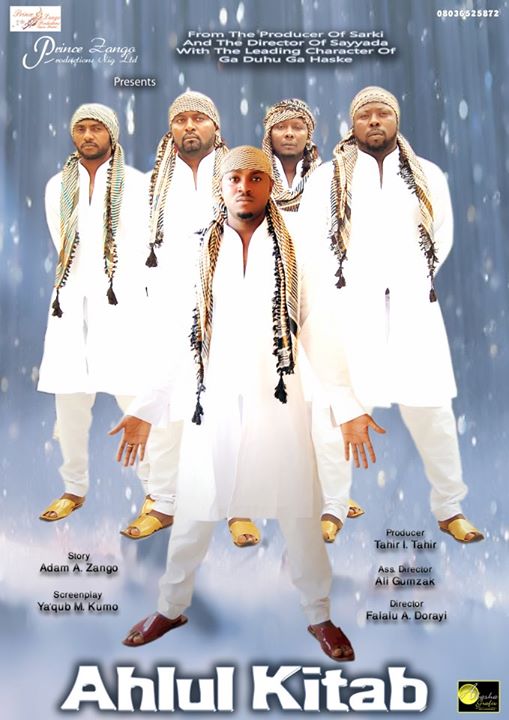
Ahlal Kitab Nafisa Abdullahi [Winner]

Jarumin Maza Fati Ladan

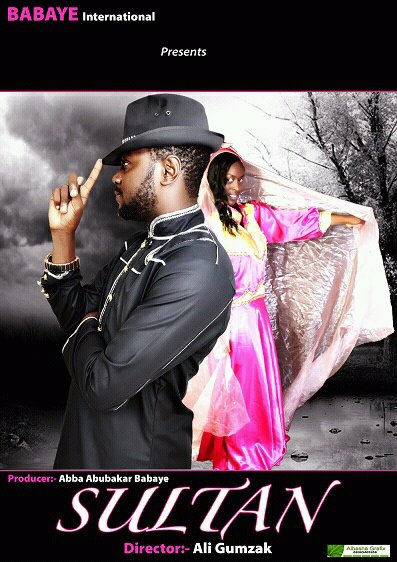
Sultan Maryam Gidado

Matan Gida Halima Atete

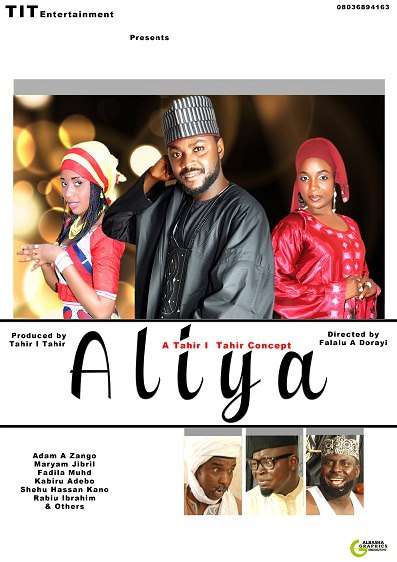
3. BEST ACTOR COMIC Aliya

Kicimilli Ado Isa

Suwaga Aminu Shariff

Aliya Rabi’u Ibrahim Daushe [WINNER]

Oga Abuja Rabilu Musa

4. BEST SOUND

Aliya Munnir Zango, Ibrahim Sodangi

Jarumin Maza Kabiru A Zango

Yankin Imani Rabi’u Manra

Ta’addanci Ibrahim Sodangi

5. COSTUME

Yankin Imani Auwalu DG/Ibrahim IBB

Wani Gari Aminu One Eye [WINNER]

Fulani Sadiqu Artist

Jarumin Maza Abdul’aziz Dan Small

6. BEST PICTURE

Hubbi Ali Nuhu

Wani Gari Yassin Auwal [WINNER]

Jarumin Maza Kamal S. Alkali

Ta’addanci Sadik N. Mafia

7. CINEMATOGRAPHY

Ta’addanci Danlami Ali/ Isma’il M Isma’il

Karen Bana Auwalu Ali Jos/ Isma’il M Isma’il

Kece Buri na Dan Juma Dunje

Izinah Sadik N. Mafia

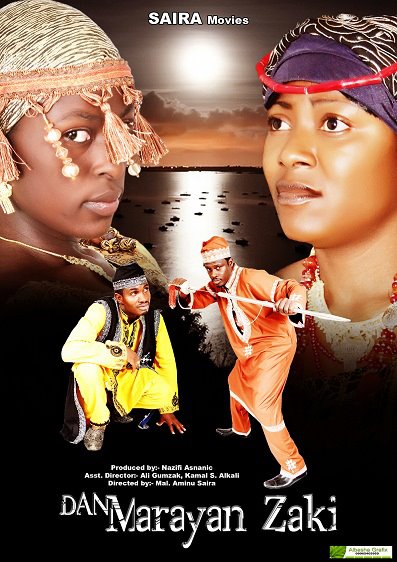
Dan Marayan Zaki

8. BEST ACTOR VILLAIN ROLE

Dan Marayan Zaki Sadiq Ahmad

Jarumin Maza Tanimu Akawu [WINNER]

Sultan Maryam Gidado

Uwar Miji Hajara Usman

Wata Hudu Shu’aibu Lawal Kumurci

‘Yan Uwan Juna Sadiq Sani Sadiq

9. EDITOR

Karen Bana Sanusi Dan Yaro

Ta’addanci Saddam A Koli/Adam A Zango [WINNER]

‘Yan Uwan Juna Suleiman Abubakar/ Nura Abubakar/ Ubaidu Yusif

Ahlal Kitab Suleiman Abubakar/ Kabiru Ali

10. DIRECTOR

Wata Hudu Aminu Saira [WINNER]

‘Yan uwan Juna Mansoor Sadiq/ Ali Nuhu

Karen Bana Falalu A Dorayi

Ta’adanci Sadiq M Mafia

11. SCREENPLAY

Karen Bana Nazir Adam Salihi

‘Yan uwan Juna Auwalu Y Abdullahi/Mujaheed M Gombe/ Badaru Bala

Jarumin Maza Kamal S Alkali

Daga Allah ne Yakubu M. Kumo [WINNER]

12. SET DESIGNAhlul Kitab

Ahlal Kitab Tahir I Tahir

Dan Marayan Zaki Faruk Sayyadi Garba [WINNER]

Wani Gari Habibu Haruna

Yankin Imani Bala Usher

13. SOUND TRACK

Wani Gari Nazir M Ahmed [WINNER]

Suwaga Abdulbasi Abdulmumin

Karen Bana Ibrahim Sodangi

Namiji Duniya Auwal Flash

14. SUPPORTING ACTRESS

Ahlal Kitab Nafisa Abdullahi

Lamiraj Rahama Hassan

Suwaga Ladidi Abdullahi (Tubless)

Kicimilli Ladi Muhammed (Mutu Ka Raba) [Winner]

(Update 24 November 2013. On the list of nominations the organizers of the award provided me before the event, there was no “Best Supporting Actor category,” but that must have been an oversite. According to Kannywood Scene, Zahraddeen Sani won the Best Supporting Actor award for his performance in Fulani.)

15. NEW COMING ACTRESS

Uwar Miji Zainab Yunusa OdarikoSultan-dir Ali Gumzak

Matan Gida Aisha Aliyu (Tsamiya) [WINNER]

Sultan Maryam Gidado

Hubbi Fadila Muhammed

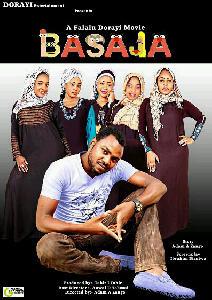
Basaja Shamsiyya Isah

Matan Gida Fati Washa

16. VISUAL EFFECT

Ta’addanci

Daga Allah ne  Aminu Musa Dan Jalo [WINNER]

17. BEST KID ACTOR

Sultan Sayyada M Adam [WINNER]

Akan Ido na Ahmad Ali Nuhu

18. BEST ORIGINAL STORY

Uwar Miji Zainab Inusa Odariko

Daga Allah ne Iliyasu Abdulmumini Tantiri [WINNER]

Wani Gari Yassen Auwal

Basaja Adam A Zango

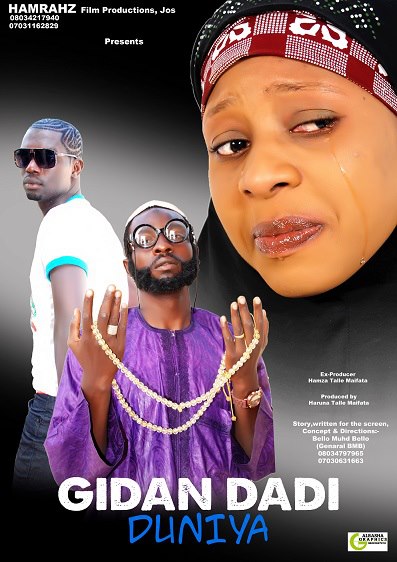
19. NEW COMING ACTORGidan Dadi Duniya 2

Gidan Dadi Duniya Hamza Talle Maifata

Salma Ramadan Both

Gidan Dadi Duniya Adamu Ishere [WINNER]

MUSIC

BEST MUSIC

1. Basaja Adam A. Zango [WINNER]

2. Data Hudu Rabi’u Baffa

3. Jarumin Maza Rabi’u Dalle

4. Izinah Sadi Sidi

BEST LYRICS

1. Wani Gari Naziru Ahmad

2. Daga Allah ne Sadi Sidi Sharifai [WINNER]

3. Hubbi Nura M. Inuwa

4. Wata Hudu Nazifi Asnanic

BEST BACKGROUND SINGER MALE

1. Gani Gaka Yakubu Muhammad [WINNER]

2. Wata Hudu Nazifi Asnanic

3. Daga Allah ne Sadi Sidi

4. Basaja Hussaini A. Hussaini

BEST BACKGROUND SINGER FEMALEbasaja

1. Basaja Jamila Kofar Waika

2. Wata Hudu Zuwaira Isma’il [WINNER]

3. ‘Yan uwan Juna Maryam Muhammad

4. Gani Gaka Jamila A. Sadin

BEST FILM

TA’ADDANCI

YAN’UWAN JUNA

BASAJA

WANI GARI [WINNER]

Award-winning documentary Daughters of the Niger Delta screens at upcoming film festivals (plus my review)

Publicity photo courtesy of MIND

A few months ago, I got an email from the NGO MIND (Media Information Narrative Development) associated with the NGO Cordaid asking me if I would be willing to review a documentary The Daughters of the Niger Delta. Not knowing what to expect from a documentary made by an NGO, I was a little reluctant to promise to review it, but I told them to send it to me, and I’d see what I thought. When I watched it, I was blown away. It is an important documentary made by nine woman that tells the story of the Niger Delta (and directed by Ilse van Lamoen-Isoun) as seen through the eyes of the women Hannah, Rebecca, and Naomi. Since I first published my review in Weekly Trust

courtesy of The Daughters of the Niger Delta public Facebook page

on 3 August 2013, which I’ve copied below, it has won awards at two film festivals, the Best Documentary Award at the Abuja International Film Festival and the Best Documentary award at the LA Femme International Film Festival, and has been screened at nine other film festivals, including the United Nations Association Film Festival, The Kansas International Film Festival.

The film will be showing today, 11 November 2013, 2-3pm, and on Friday 15

courtesy of the Eko International Film Festival

November, 1-2pm, at the Africa International Film Festival in Calabar. The venue is Filmhouse Cinema, Tinapa Resort, Calabar, Cross River State, Nigeria.

It will also show at the Eko International Film Festival in Lagos on Friday, 22 November.

It has also received several other rave reviews:

Hauwa Imam’s “Daughters of the Niger Delta” in The Nation on 31 July 2013 and the Weekly Trust on 17 September 2013.

My “The Daughters of the Niger Delta Speak Out Through Film” in the Weekly Trust on 3 August 2013.

Sa’adatu Shuaibu’s “Humanizing Poverty: the Daughters of the Niger Delta” in Leadership on 14 September 2013.

Gimba Kakanda’s “The Blues of the Southern Women” for Blueprint, Sahara Reporters, Premium Times etc on 8 November 2013.

You can read a 13 October 2013 interview with the director Ilse Van Lamoen-Isoun in the Sunday Trust, and watch her TV interview with Kansas City Live, and watch a trailer copied below:

And finally, here is the review I wrote in full. To read it on the Weekly Trust site, click here.

The Daughters of the Niger Delta speak out through film

Category: My thoughts exactly
Published on Saturday, 03 August 2013 06:00
Written by Carmen McCain

 “You suppress all my strategies / You oppress, oh every part of me / What you don’t know, you’re a victim too, Mr. Jailer,” croons musician Asa in her song “Jailor.”

The song can be read as addressing many forms of oppression, but it is used over images of a Niger Delta riverside in the 2012 documentary film Daughters of the Niger Delta to comment specifically on what Molara Ogundipe-Leslie, following Mao-Tse Tung, calls the “mountains” on the African woman’s back. In “African Women, Culture and Another Development,” Ogundipe-Leslie identifies six mountains, which include “oppression from outside”; patriarchal “traditional structures” that devalue women’s work and seek to control her own body; “her own backwardness,” which includes poverty and ignorance; men, who refuse to give up their privileges; and finally race and a woman’s own self-defeating internalization of patriarchal ideologies.

Many of these forms of oppression and structural inequalities become evident in the testimonies of women featured in the documentary Daughters of the Niger Delta (55 mins) made by 9 women from the Niger Delta trained by the Abuja-based NGO Media Information Narrative Development (MIND), directed by Ilse van Lamoen-Isoun  and sponsored by the German Embassy.  The documentary seeks to challenge disparities in media coverage. While the oil spill off the Gulf of Mexico in 2010 was the focus of the global media, there has been far less attention to the much greater oil damage in the Niger Delta region. Even recent accidents, such as the December 2011 off-coast Shell Bonga oil spill or the January 2012 Chevron gas explosion in Finuwa, Bayelsa, barely made a blip on the international news radar. Similarly, as the voiceover at the beginning of the film points out, headlines about the Niger Delta often focus on oil output, kidnappings and violence in the resource-rich Niger Delta.  However, in fact, as we learn by the end of the documentary, the maternal mortality rate in the Niger Delta is the second highest in the world and 65,000 children under the age of five die each year in the region due to lack of adequate health care and related issues such as pollution and nutrition. These numbers far outstrip the number of those killed due to armed conflicts but the poverty that causes these deaths is also one of the causes of the conflict. Such stories are often invisible not only to the world but also to other Nigerians. Yet it is only with the recognition of these stories that change can come.

 The film focuses on three women: Hannah, Rebecca, and Naomi.  Hannah Tende, from Bodo City, Rivers State, is a widow who makes a living collecting

Hannah Tende (courtesy of The Daughters of the Niger Delta)

periwinkles from oily mud and working on other people’s farms. Her own home and the land she once farmed was taken over by her husband’s family when he died in 2005. She wants to send her daughter Uke to university, but does not have the money. In fact, her children now survive on two meals a day instead of the three meals they had when their father was alive. But Hannah has limited possibilities, as remarriage for widows is forbidden and her livelihood is threatened by the pollution of the rivers.

Rebecca Churchill, from Tuomo, Delta State, was married at fifteen to an already married man. She describes how she first learned of the marriage when her husband told her that he had paid her bride price to her father. Now, the

Rebecca Churchill (courtesy of the Daughters of the Niger Delta)

pregnant Rebecca narrates how she has given birth eleven times. Only six of those children are still living. While her husband says it is Ijaw culture for his wife to keep having children, Rebecca herself wants to stop getting pregnant after her baby is born. She says she is not willing to let her daughters marry at fourteen or fifteen. Her dream for her children is for them to go to school and go to university.

The educated Naomi Alaere Ofoni, from Yenagoa, Bayelsa State (also a production assistant on the film), represents the dreams the other two women have for their children. Although Naomi’s father abandoned her mother when Naomi was a small child, her mother went back to school to become a

Naomi Alaere Ofoni (courtesy of The Daughters of the Niger Delta)

community health worker and worked to put Naomi through school. Ironically, although school is seen as the path out of poverty, Naomi faced another obstacle once she reached university. She was harassed by lecturers who demanded sex. She refused to sleep with the course advisor who had changed her B grades to two carryovers, and he finally gave her a third class degree only after she offered him money.  10 years after graduating with a disrespected third class degree in Industrial Mathematics, she was yet to find a job. But, like her mother, who took her future into her own hands, Naomi started her own business making soap.

There is a bitter irony here. In each woman’s story, men stand in the way of advancement by women and their children. “Modern day slavery” and “imprisonment” become motifs that run throughout the documentary, from the opening montage set to  Asa’s song “Jailor,”  to Hannah’s expression of frustration at her life in “bondage” as a widow. The film cleverly juxtaposes

(courtesy of The Daughters of the Niger Delta)

shots of men sitting around drinking—one thirty-five year old man telling of his three wives and the 17 children he hopes to have—with shots of women chopping wood, fetching water, picking periwinkles from oily mud, pounding, grinding, and frying cassava. Patriarchal male culture is behind much of the suffering of women—fathers hand over their teenage daughters to husbands, husbands with multiple wives insist on each wife bearing many children despite not being able to support them, male relatives of a dead man confiscate his widow’s property, male lecturers prey on vulnerable girls in the university.   Yet, as Asa notes, “What you don’t know, you’re a victim too, Mr. Jailer.” Larger neocolonial forces imprison both men and women.

(courtesy of the Daughters of the Niger Delta)

Multi-national oil corporations have so polluted the air and water that even rainwater is dirty and unusable. The fish in the creeks and rivers have died, so that the Niger Delta people, whose lives once revolved around fishing, now eat and trade imported fish. The government neglects healthcare and infrastructure for clean water.

The hope for the future, as Ogundipe-Leslie has argued in other essays, is for men and women to join hands in rebuilding their society. While patriarchal male culture is critiqued here, the film also shows male role models. Naomi’s husband, William Omajuwa Emmanuel, an engineer whom she met in university works together with her on her soap business and helps with the children. The male community worker, Inatimi Odio encourages men in the community to involve women in decision making. The film traces positive developments in postscripts, revealing that Hannah has begun to mobilize other women to protest the marriage prohibition for widows, Rebecca has convinced her husband to try birth control, and Naomi has become a principal at a school.

The documentary is beautifully shot and edited. Despite the pollution, the Niger Delta is still exquisite, and the women’s stories are compelling. Indeed, I thought the best parts of the film were the moments where the women were allowed to speak for themselves.  The most obvious flaw may have been the extensive use of Inatimi Odio, a man, as the one “expert” to explain the problems facing the community. While this was somewhat balanced by Bogofanyo Inengibo’s  female voiceover and a few comments from the teacher Caroline Giadom, the focus on the male expert risks reinforcing the idea of women as uneducated informants and men as the authorities who explain them.  Overall, however, I think the documentary is an important and thought-provoking piece that personalizes our understanding of the Niger Delta. In the same chapter in which she identified the mountains on the backs of African women, Ogundipe-Leslie suggests policies to enable women to benefit and control their own labour, the use of media to educate, and assistance for women artists so that they can express their own stories. This film made by women about women seems an appropriate response to her suggestions, giving subaltern women a platform by which to speak to the world.

Daughters of the Niger Delta was screened and received a special mention at the Pineapple Underground Festival in China on 16 July and the Rwanda Film Festival on 25 July. It will be screened in Nigeria at the Lagos-based Eko International Film festival in November, as well as other venues yet to be arranged.

END

For other documentary (and documentary-esque) reviews I’ve done see:

“There Is Nothing Wrong with my Uncle” on Tarok burial customs produced by Dul Johnson and Sylvie Bringas.

“Equestrian Elegance” about the durbar and parades during the eid sallahs in Kano, produced by Abdalla Uba Adamu and Bala Anas Babinlata.

Duniya Juyi Juyi, a docu-drama about the life of almajirai, scripted and acted by almajirai themselves and produced by Hannah Hoechner.

Translating (and Transcribing) the Hausa film song Zazzabi [Fever]

Zazzabi

I’m going to do something today that I haven’t done for a long time on this blog, but which is something I originally started this blog to do, and that is to put up some work in progress–a song that I am working on right now in my dissertation–and ask for help from Hausa speakers in correctly translating and transcribing it.

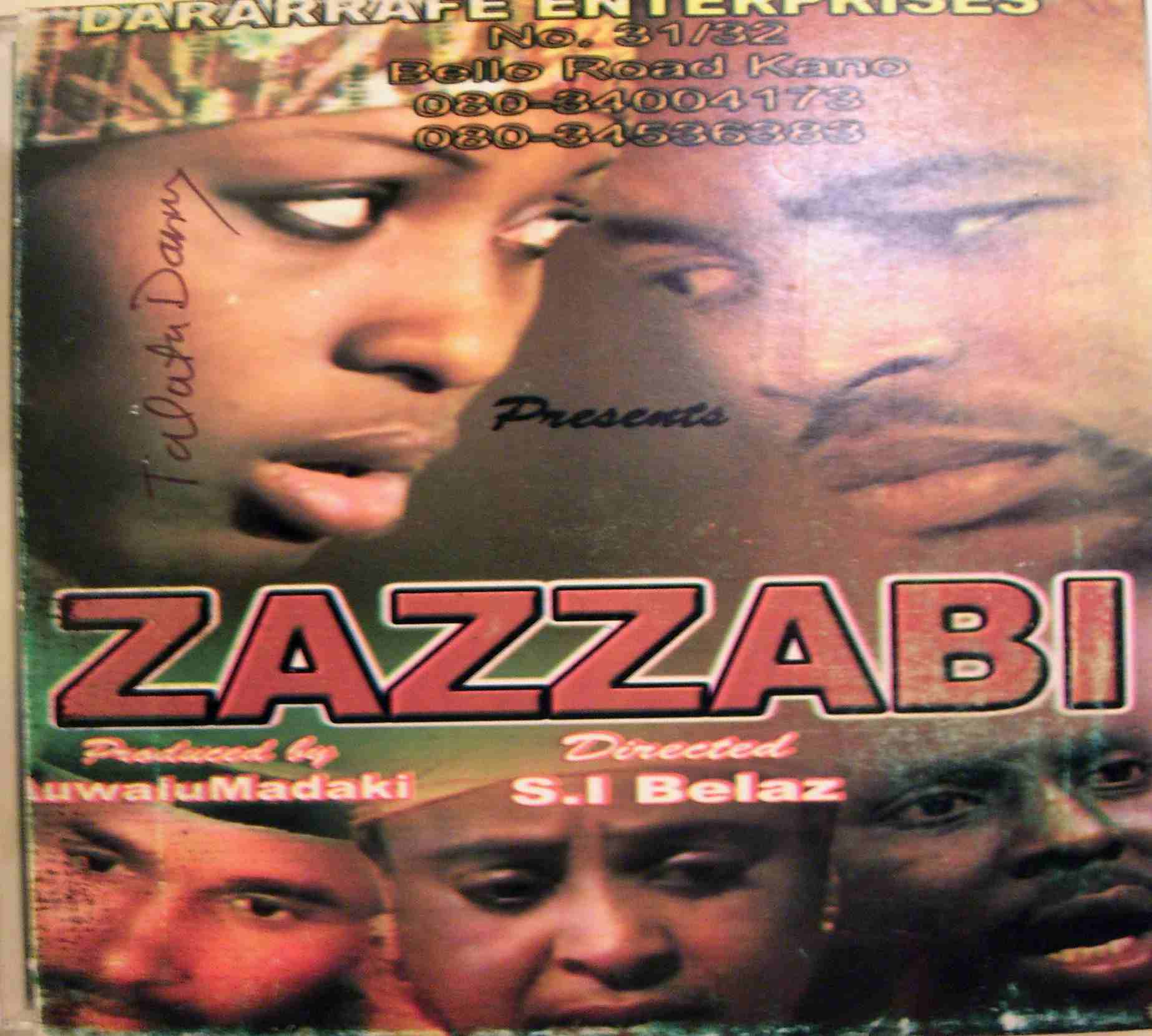
Zazzabi (Fever) directed by Sha’aibu Idris Belaz and produced by Auwalu Madaki (story by Salisu Buldoza) for Sa’a Entertainment in 2005 is one of my favourite Hausa films. And the first song in the movie, sung by Sadi Sidi Sharifai, Ikram Garba Ado, and Sa’a A. Yusuf, has obsessed me since 2006. Yes, that long. (I’ve mentioned and posted it in previous blog posts in November 2009 and just the other day in October 2013). It must have been pretty popular with its audiences too, because the songwriter Sadiq Usman Sale gained his industry nickname from the film: Sadiq Zazzabi.

It’s a story full of twists and turns, so I can’t talk too much about the plot here, in case there is someone who ever wants to see the film (if you can find it anywhere). But, as it becomes clear by the 6th verse of the song, it is a film about love and HIV, but it is no NGO film (thank God). HIV is one of the things that complicates the love between the characters in the love triangle between the characters played by Sani Danja, Mansura Isah, (who ended up marrying in real life) and Ibrahim Maishunku. (Because the characters played by Sani Danja and Mansura Isah are not named in the film, I call them Sani and Mansura here. The character played by Ibrahim Maishunku is named Salim in the film.)

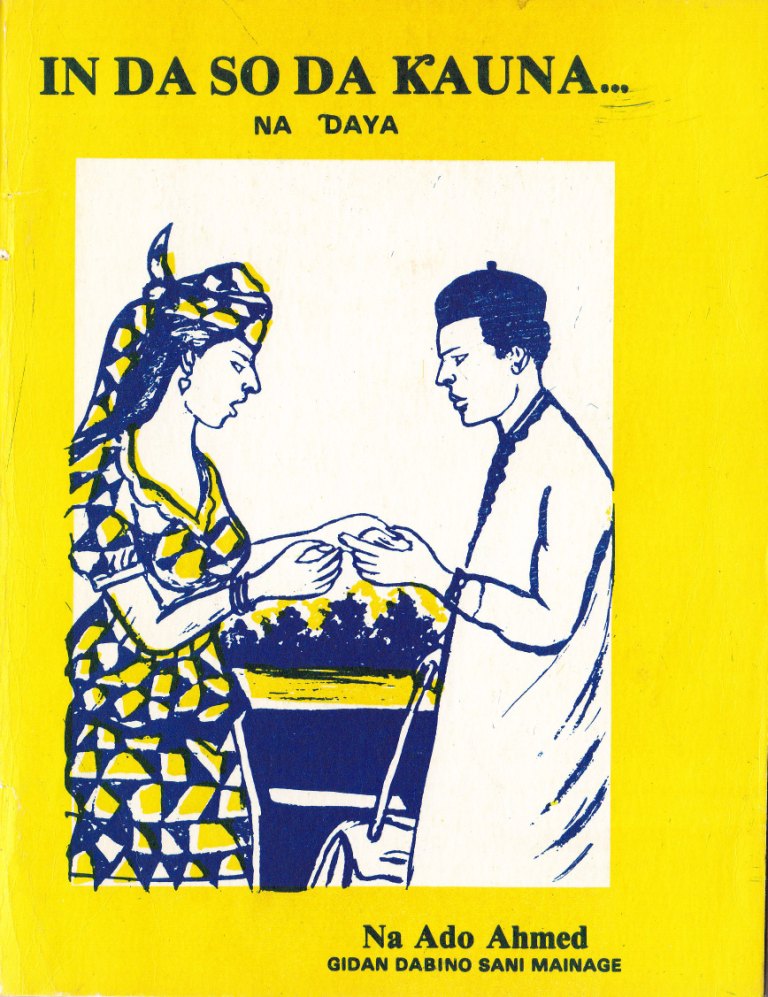
What I LOVE about this song is the ambiguity of the word zazzabi (fever). It can be used in the metaphoric sense as a fever of love, and that is the sense in which the audience would most likely initially interpret word. In Ado Ahmed Gidan Dabino’s bestselling novel In da So da Kauna, for example, the young lover Muhammad writes that he is fleeing Kano to Kaduna

Part 1 of Ado Ahmed Gidan Dabino's bestselling novel In da So da Kauna

Part 1 of Ado Ahmed Gidan Dabino’s bestselling novel In da So da Kauna

because he has been separated from his sweetheart Sumayya, “Ciwon sonta ne ya sa ba zan zauna ba/The sickness of loving her is the reason I won’t stay” (part 1, 85). Sumayya sings on a cassette to Muhammad, that  “In na tuna ka sai na farka daga barci na,/ Ciwon so ya sanya wannan ba komai ba/If I remember you I wake from my sleep/ The sickness of love makes it nothing” (part 1, 71). When she dreams that Muhammad has been killed in an accident she sings, “Ciwon so shi zan kashe ni/ The sickness of love will kill me“[or The sickness of love will make me kill myself] (part 1, 87).

However, the word “zazzabi” can also be used literally here, as a literal fever. Indeed it is when Sani complains about a fever that Mansura suggests he go for a medical check-up–a checkup during which he tests positive for HIV. The song thus layers a literal meaning of the “disease of love” on top of a metaphoric usage, creating a striking and disturbing image of the dangers love brings not only the heart but the body. In Verse 6, Sani comes out and says “Kanjamau cutar a jikina. Lafiya bata dawowa/ AIDS is the disease in my body. Health will not return.”

My attempts to transcribe the song (from the video below) and translate it– the transcription file on my computer dates back to 2009–however, has made me painfully aware of how much more Hausa I still need to learn. Of course, the poetic language of the song makes it a bit more difficult to transcribe than ordinary language. I’ve been sitting here with the R.C. Abraham dictionary, the Bargery dictionary, and the Hausa-Hausa dictionary published a few years ago by Bayero University, sometimes wondering if I have even divided the words correctly when I transcribed–or if the words I have written actually exist. So, I would love help from Hausa speakers and readers in checking 1) the transcription of the words of the song, 2) my translation. As I get corrections, I will try to make corrections on this post. At this point, I am not trying to be very literary in my translation–although I did translate “kauna” as “passion,” even though I know that “kauna” has a much milder connotation, because I felt it fit with the overall meaning of the song. For the most part, I just want it to be accurate. After I feel I have an accurate translation, I may try to make it sound more like poetry in English. But mainly, right now, I want a working translation that I can feel confident working with as I write about the song. At the moment, I probably don’t have the room to include an in depth analysis of the entire song in my dissertation–I’m using the refrain and chorus, which I understand fine. But I’m thinking I’d like to write a separate article on the entire song and the film at some point, and any suggestions people can give me here will help me work towards that goal.

UPDATE: 10 November 2013. Anas Musa just sent me some amazing corrections to my transcription via email, and suddenly it all begins to fall into place. I will make his corrections on the transcription here and keep working on the translation. I am so grateful. He heard words and expressions that I just couldn’t quite get like kwarjini and kamani and furucina and kudurina and burin ruhina and dimaucewa and gane batuna and jin lafazina and akwai uzurina and gurbi and kulli yaumin and hangena and the whole proverbial expression “Mai guri ya zo gurbinsa shinfidarka ka zo ka nade ta” and don in zam in ganta and kuwa ya cancanta and hawaye (instead of ta waye) and Gashi na yi biyu ko daya (rather than Ga shi na bude bako) and Wayyo kaina (rather than Wayyo Allah). As you can see he’s made a huge difference! I’m still working on the translation. It’s rough but a lot cleaner now that I can actually hear what words they are saying.

I will post the video and my transcription below that. The cinematography is rather grey and uninspiring, but the song is brilliant. Please note that the video is included in this blog post as part of fair use policies for review purposes:

Zazzabi

Fever

 by Sadiq Usman Sale (ie. Sadiq Zazzabi)

Refrain:

Sani:  Zazzabi ya sauka jikina, Zazzabi ciwo mai zafi, Ciwon so, ciwon kauna,

 A Fever has come to my body, Fever so hot. Fever of love, fever of passion,

Salim:  Zazzabi shi ne a jikina

A Fever is what is in my body

Female back up Chorus:  Zazzabi ya kama masoya, zazzabi ciwo mai zafi. Ciwon so. Ciwon kauna. Zazzabi ciwo mai kuna.

A fever has caught the lovers, A fever so hot,Fever of love, fever of passion, A fever that burns

Mansura:  Zazzabi ya sauka  jikina, Zazzabi ciwo mai zafi, Ciwon so, ciwon kauna, Zazzabi shi ne a jikina

Fever has come to my body, Fever so hot. Fever of love, fever of passion, A Fever is what is in my body

Verse 1

Sani: A gaskiya ciwon kaunarki, a tuntuni shi yake kamani.

Truly, lovesickness for you captured me long ago.

Female backup Chorus: Zazzabi ciwo mai zafi

Fever so hot

Sani: In na zo, wurin ji a gareki. Kwarjini shi yake kamani.

If I come to hear it from you. I am overcome with shyness.

Chorus: Zazzabi ciwo mai zafi

Fever so hot

Sani: Ina tsoron furucinki, shi ya sa jinkiri a gareni

I fear what you will say, that’s what made me delay

Chorus: Zazzabi ciwo mai zafi

Fever so hot

Sani: Kin ji, dai, dukkan kudurina, ya a bar burin ruhina

Hear my great passion for you, oh my deepest soul’s desire.

Chorus: Zazzabi ya kama masoya, zazzabi ciwo mai zafi. Ciwon so. Ciwon kauna. Zazzabi ciwo mai kuna.

A fever has captured the lovers, A fever so hot. Fever of love. Fever of passion. Fever of scorching heat.

Verse 2:

Sani: Ki amince da ni, don Allah, kar ki sa ni na dimaucewa.

Trust me, for God’s sake, don’t let me lose my mind.

Chorus: Zazzabi ciwo mai zafi

Fever so hot.

Sani: So da kauna abin girmamawa, kin ga shine tushen kowa….

Love and passion is an inestimable thing, you know it is the root of us all… 

Chorus: Zazzabi ciwo mai zafi

Fever so hot.

Sani: Na nutso kogin kaunarki ko dagowa bana yowa

I am drowning in a river of your love, I can’t come up out of it.

Chorus: Zazzabi ciwo mai zafi

Fever so hot.

Sani: Nai jiran amsa a gareki don kuwa duk kin gane batuna.

I wait for your answer, so that you understand all that I’ve said.

Chorus: Zazzabi ya kama masoya, zazzabi ciwo mai zafi. Ciwon so. Ciwon kauna. Zazzabi ciwo mai kuna.

A fever has caught the lovers, a fever so hot. Sickness of love, sickness of passion, Fever a sickness that burns.

Verse 3:

Mansura: Na ji dukka batunka bayani, to, tsaya don jin lafazina. 

I’ve heard all, all of what you’ve said. To, stop now and listen to me. 

Chorus: Zazzabi ciwo mai zafi

Fever so hot.

Mansura: Tun ada, tun tun na fahimta kai kana kauna a garena.

For long, I’ve understood that you love me

Chorus: Zazzabi ciwo mai zafi

Fever so hot.

Mansura:  Gaskiya ni da kai soyayya, ba na yi don akwai uzurina.

In truth, I have my reasons not to agree to love between me and you.

Chorus: Zazzabi ciwo mai zafi.

Fever so hot.

Mansura: Babu gurbi cikin ruhina sam… Salim shi ne a gabana

There’s no place in my heart. Salim, hes the one in my future now.

Chorus: Zazzabi ya kama masoya, zazzabi ciwo mai zafi. Ciwon so. Ciwon kauna. Zazzabi ciwo mai kuna.

It’s a fever that captures lovers, Fever so hot. Sickness of passion. Sickness of love. Fever a sickness that burns.


Verse 4

Mansura: Alkawari, ni da shi mun dauka duk wuya bama canzawa.

It’s a promise he and I have made each other. No matter the difficulty we won’t change.

Chorus: Zazzabi ciwo mai zafi.

Fever so hot.

Mansura: Son Salim, shi ne a gabana, kulla yaumin na ke ta tunawa

My love for Salim is before me,  I’m always thinking [of him].

Chorus: Zazzabi ciwo mai zafi

Fever so hot.

Mansura: So da kaunarsa ke ta bugawa zuciyata suke rayawa.

Love and passion are throbbing my heart to life again.

Chorus: Zazzabi ciwo mai zafi

Fever so hot.

Mansura: Son Salim shi ne hangena har ke loda harkar ganina.

Love for Salim is what I see from a far, it fills my vision.

Instrumental Interlude

 Refrain

Salim: Zazzabi ya sauka jikina, Zazzabi ciwo mai zafi. Ciwon so, ciwon kauna, zazzabi shi ne a jikana.

A fever has entered my body, A fever so hot. A sickness of love, a sickness of passion. A fever, that’s what’s in my body.

Mansura:  Zazzabi ya sauka jikina, Zazzabi ciwo mai zafi. Ciwon so, ciwon kauna, zazzabi shi ne a jikana

A fever has entered my body, A fever so hot. A sickness of love, a sickness of passion. A fever, that’s what’s in my body.

Chorus:  Zazzabi ya kama masoya, zazzabi ciwo mai zafi. Ciwon so. Ciwon kauna. Zazzabi ciwo mai kuna.

A fever has captured the lovers, a fever so hot. A sickness of love, a sickness of passion. A fever of scorching heat.

Verse 5:

Salim: Mai guri ya zo gurbinsa shinfidarka kazo ka nade ta

The longing lover has met his fate. Here’s your mat, come roll it up.

Chorus: Zazzabi ciwo mai zafi.

Fever so hot.

Salim: Ga ni gefen abar kaunata, in tsaya don in zam in ganta.

See me here by the side with my heavy love, I’ve paused here to stay and see her.

Chorus: Zazzabi ciwo mai zafi.

Fever so hot.

Salim: Zo mu je lambunmu na kauna, mu shige, don kuwa ya cancanta

Come let’s go to our garden of love, let’s enter it, because it is befitting.

Chorus: Zazzabi ciwo mai zafi.

Fever so hot.

Salim: Kai ku sai ka tsaya, bisa nan gun ke da shi, ku yi bankwana

You just have to stop all the familiarity you have with him,  you must say goodbye

Chorus:  Zazzabi ya kama masoya, zazzabi ciwo mai zafi. Ciwon so. Ciwon kauna. Zazzabi ciwo mai kuna.

Fever has captured the lovers. Fever so hot. Fever of love, Fever of passion. Fever of scorching heat.

Verse 6

Sani: Yau ina kuka da hawaye sai takaice nake ta tunawa.

Today I am weeping hot tears, I keep thinking of my loss…

Chorus: Zazzabi ciwo mai zafi

Fever so hot.

Sani: Ga shi na yi biyu ko daya babu rayuwata nake tausayawa

See, I have nothing, I pity my life.

Chorus: Zazzabi ciwo mai zafi

Fever so hot.

Sani: Kanjamau cuta a jikina. Lafiya bata dawowa

AIDS is the disease in my body. Health will not return

Chorus: Zazzabi ciwo mai zafi

Fever so hot.

Sani:  Rayuwata tana watakila mutuwa ko yau a wurina

I face the end of my life, maybe even today.

Chorus: Zazzabi ya kama

Fever has captured

Sani: Wayyo kaina,

Chorus: masoya, zazzabi ciwo mai zafi.

Lovers. Fever so hot

Sani: Wayyo Allahna

Chorus:  Ciwon so. Ciwon kauna. Zazzabi ciwo mai kona.

Fever of love. Fever of passion. Fever that burns.

Refrain

Mansura: Zazzabi ya sauka jikina, Zazzabi ciwo mai zafi. Ciwon so, ciwon kauna, zazzabi shi ne a jikana.

Fever has come to my body. Fever so hot. Fever of love, fever of passion, Fever is in my body.

Sani: Zazzabi ya sauka jikina, Zazzabi ciwo mai zafi. Ciwon so, ciwon kauna, zazzabi shi ne a jikana.

Fever has come to my body. Fever so hot. Fever of love, fever of passion, Fever is in my body.

Chorus: Zazzabi ya kama masoya, zazzabi ciwo mai zafi. Ciwon so. Ciwon kauna. Zazzabi ciwo mai kuna.

This fever has captured the lovers. Fever so hot. Fever of love. Fever of passion. Fever that burns.

The Sun, the Moon, and a cardboard box

The sun and the moon and me (c) CM

So today there was a partial eclipse. I hadn’t heard about it until I went to lunch with a friend, and in her car, she had armed herself with a box with a piece of white paper pasted on one side and a hole cut in the other, over which she had taped aluminum foil and pricked with a pin. This was her eclipse viewing device, she told me. I had heard about people making these things to view eclipses before. I wasn’t sure I wanted to go to the trouble. But around 2pm, as I sat on my couch reading the Sunday Trust, I looked outside and noticed that the light was long and harsh and strange, so I called her and asked if she was watching the eclipse through her box. Was it happening now? She told me I still had time, as the peak of the eclipse was supposed to happen at 2:40pm, so I went and found an old regulator box and made the same device.

It was not that dramatic as I was expecting. I had thought I might see some sort of photographic image coming through the pin–hole onto the white paper. Yes, people, there is a reason I’m not in the sciences. Instead, it was just a new moon shaped sliver of light, which showed the shape of the moon as it passed in front of the sun. I was too afraid to look up at the sun itself. Next time I’ll have to prepare myself ahead of time with properly treated goggles.

I showed the neighbours, and wandered about looking at it from different angles.

I had some poetic thoughts about it all, but in between going back inside to keep working on my current chapter and staying up too late before deciding to post, the eclipse poetry will have to wait for the next eclipse. In the meantime, here are a few of the photos I took of the sliver of light in my box. Note: there is nothing fancy or dramatic about these photos. I did not risk pointing my camera lens or my eyes towards the light. It’s just a recording of my delightful, dorky afternoon wandering around with a box with a hole taped over with tin foil and paper.

Look for the sun, look for the moon, they are there in the light, in the shadow, in the cardboard box.

Eclipse viewing device (c) CM

the sun, the moon, the box, and me.

The sun, the moon, and an evil forest (c) CM

The sun disappears behind the moon and the trees. (c) CM

The sun, the moon, me and a cardboard box (c) CM

Light (c) CM

Light (c) CM