Kannywood actor Jameel Ibrahim shows off his 9 April 2011 National Assembly vote, while on location for the Aisha Halilu movie, Armala, Sunday 10 April 2011. (c) Carmen McCain
(I wrote this post between 11:30am and 1:00pm on Saturday, 16 April 2011. My internet went out shortly before I planned to post illustrating the difficulties in celebrating too unreservedly the ability of ‘new technologies’ to bring about revolutionary change–fortunately it came back in about an hour….)
As, not being a Nigerian ‘citizen’, I am not allowed to vote today, I am hunkered down in my house, doing housework and planning to do some reading and writing later in the day. But for now, NN24, Nigeria’s challenge to CNN, BBC, and Al Jazeera hosted on DSTV and one of my new favourite channels, is constantly on in the background, with analysis of the accreditation process so far and i-reports from people from around the country who are texting and sending photos and videos from their polling stations. I love NN24. I love their energy and their youth focus, and their attention to the role new technology can play in encouraging the political process to be more transparent. For example, as with CNN, they have an application on their homepage, where ‘ordinary’ citizens (albeit those who can afford an internet-navigable phone or a laptop with a modem) can upload an i-report. They were the ones who organized the first debate between the presidential candidates, which I discussed in an earlier post. The only problem with NN24, as blogger Saratu Abiola noted in a powerfully written article posted to Nigerians Talk ‘On Debating Nigeria’, regarding the NN24 hosted presidential debates, is that it provides excellent content that is nevertheless limited to the viewership of those who can afford at least N2800 a month for the DSTV family subscription. Despite its idealistic goals, it limits itself, through its subscription status, to a wealthy elite. Yesterday, for example, there were three short ‘development’ films, ‘Vote Wisely’, an uplifting film where villagers drive away a corrupt politician trying to bribe them with rice for their votes, another ‘Too Young’ warning of the dangers of ‘unsafe pregnancies’ by showing a young girl attempting an abortion on herself, and another with a ‘northern couple’ (speaking English), where the husband refuses to let his wife, who has been in labour for two days be seen by a male doctor. The Ford-foundation sponsored Communicating for Change films shown as part of NN24’s ‘commitment to social responsibility’ were all targeted to ‘the masses’ (other than perhaps the one about the girl with the unwanted pregnancy), yet who among the masses are going to be watching NN24? How effective will English be in the North? Will someone who can pay at least N2800 a month to access NN24 and DSTV really be tempted to sell their vote for a mudu of rice or refuse to bring their wife into the hospital until she has already been in labour for two days? These ‘public service announcements’ are interspersed with ads for exclusive hotels in Lagos and Abuja and tourist ads for ‘Incredible India’ (featuring white tourists), revealing the wealthy, upper class audience who will actually be seeing these development films. (Convicting myself as I write this, I switch over to the publicly accessible NTA for a few minutes, where they are interviewing women about the lack of female politicians and cases of double voting. The tone here is much less exuberant and encouraging than NN24. I become so irritated by the stereotypical way the men on a discussion panel are discussing women politicians that I switch back to NN24 after about 5 minutes). Much more potentially powerful, I argue, are Nollywood/Kannywood films, especially those done in local languages, which incorporate political content into popular storylines. And perhaps even more powerful than those, radio content and music…
The conflict I have about NN24 is similar to the conflict I feel about celebrating how new technologies are making politics more transparent. It is commonly repeated in the media that tweeting and facebook played a large role in the Egyptian revolution and the social media also seem to be a large part of a ‘youth consciousness’ here in Nigeria. Yet, facebook and twitter and blogs are still very much limited to an upwardly mobile urban population who have the means to buy internet-accessible phones or at least browse at an internet cafe. And, passion and commitment to transparency, still cannot completely stop those who are determined to cause havoc, as we see in the increasingly worrisome trend of political terrorism throughout the country. (Two bombs have gone off in Maiduguri, one at an INEC office, and another at a police station, the latest in a series of bombs to go off around the country, including one in Suleja and Kaduna last week.)
That said, I’m an optimistic person, and I do love to see how passionate those I know are about the elections. I love how last week as I visited the set of the Aisha Halilu movie Armala, Kannywood actors engaged in good natured political debates, and how actor Jameel Ibrahim showed me the photos he had taken with his phone of his vote. ‘This is my record,’ he told me. ‘This is my vote. I want everyone to know how I voted.’ I love how friends on twitter re-tweet instructions from INEC about the rules for accreditation and voting, and how others campaign for their chosen candidates on facebook. I love to see the i-reports sent to NN24 by young people from their phones and the democratizing role these new technologies seem to be playing in these elections–the tweet, for example, sent in by a voter just reported by NN24 on how voters pounced on thugs sent by a politician and sent them running (a seeming replay of the ‘Vote Wisely’ skit aired on NN24) .
And beyond the technology available to those of means, I love how the young man I saw interviewed on Al Jazeera last week, said he was staying around for the rest of the day to make sure his vote was counted. I love that the elections (so far) seem to be one of the ‘free-est and fairest’ Nigeria has ever had, the determination of those I know to get out and vote, the civic-mindedness of those standing outside in the sun all day to make sure their voices are heard. Last week a young Kano-based musician Osama bin Music told me how in the last vote, he and his friends went to be accredited and then helped organize the crowds, trying to push through the small door of the school where the elections were taking place, into lines for men and women.
Osama bin Music (c) Carmen McCain
There may be young thugs hired by politicians, a trope that has become a stereotypical part of the Nigerian political landscape, but there are far more youth who want the voting process to work. They are there queuing in the sun. They want to make a difference. They want their votes to count. And it is in these youth that the hope for Nigeria lies.
The question, of course, is will the politicians who will be voted into power respect the faith the youth are placing in their votes? Or will they, despite the ‘free and fair’ vote, continue on with business as usual? And if that case, will new technologies make any difference in encouraging the youth to challenge the political culture in Nigeria in a more radical way or will it just comfort an elite that ‘their voices are being heard’?
I’m always reluctant to post news like this. It’s bad news, and I don’t like to bear it. The Hausa film star, Maryam Umar Aliyu, who retired from acting after she married actor and musician Misbahu M. Ahmed in December 2009, died yesterday in Kano. This is one in a long string of Kannywood deaths in the last few years, including actress Hauwa Ali Dodo (Biba Problem) in January 2010, Safiya Ahmed and director/actor Zilkiflu Mohammed in February 2010, actress Amina Garba (Mama Dumba) in November 2010, and just last month Baballe Costume, a film costumier.
I did not know Maryam well, but I had met her on enough occasions to be completely shocked when I first found out on facebook yesterday of her death. I first met her in 2006, and the film I first remember her in is Dan Zaki. The most recent film of hers that sticks out in my mind is Sai Na Dawo. The image of her that stays with me was sometime in 2008, she came into Golden Goose Studio studio wearing long dangly earrings and a beautiful outfit–a mixture of glamour and good natured sweetness. She sat on the floor with the rest of us, laughing and talking.
According to the Leadership article I will post below, she died yesterday from lingering complications of childbirth three months ago. She was still very young. Allah ya jikanta, ya rahama mata kuma allah ya sa Aljanna makoma ita. Allah ya ba mu hakuri.
If any readers would like to leave comments about memories they have of her or of their favourite films that Maryam featured in, I will consider including comments left by tonight (my deadline) in my column published on Saturday in the Weekly Trust.I will update this post as other news comes along, but to begin with I’ll post the short Leadership article by Abdulaziz A. Abdulaziz that came out today. To read on the Leadership website, click here:
WEDNESDAY, 13 APRIL 2011 11:14 ABDULAZIZ ABDULAZIZ, KANO
A prominent ex-Hausa film actress, Maryam Umar Aliyu (aka Maryam Kumurci), has died. The actress died yesterday afternoon in Kano after a protected illness.Until her death, She was the wife of renown playback singer, Musbahu M Ahmed.
LEADERSHIP also gathered that she died at a private hospital in Kano where she had been battling with complications arising from childbirth. She was said to have delivered of a stillborn baby three months ago.
Burial rites for the deceased was conducted at her family’s residence located at Gwammaja quarters. Just as she was later buried according to Islamic rites at Kofar Mazugal cemetery.
The late Maryam began her filmmaking career in early 2000s and rose to stardom by 2005. She featured in several Hausa home videos including Khudsiyya and Jani.
She later got married to an actor, Sha’aibu Lawal (alias Kumurci), following the death of his bride, Balaraba Mohammed. Maryam’s relationship with the actor earned her the same sobriquet as him; kumurci.
Honouring Kannywood: In Memory of Maryam Umar Aliyu
Saturday, 16 April 2011 00:00 Carmen McCain.
Kannywood received yet another blow this week when former actress Maryam Umar Aliyu died, Tuesday, April 12, after a lingering illness following a still-birth. The stylish, light-skinned actress, who was of Nigerien origin but grew up in Katsina, began acting in the early 2000s, appearing in dozens of films including Labarin Zuciya, Giwar Mata, Dan Zaki, Makauniyar Yarinya, Khudsiyya, Jani, and Sai na Dawo, among many others. She also produced one film Majiya. When a brief marriage to actor Shu’aibu Kumurci ended, she returned to acting, but retired again in December 2009 to marry actor and singer Misbahu M. Ahmad. Maryam’s death comes after a long string of losses to the Hausa film industry over the past year and a half: actresses Hauwa Ali Dodo, Safiya Ahmed, and Amina Garba, Director and actor Zilkiflu Mohammad, and producer Hamza Muhammad Danzaki all died in 2010. Last month, a costumier called Baballe Costume also died.
A fan, Khadijah Sulaiman, wrote on Facebook, that she “had never seen a film” of Maryam’s that “wasn’t good.” She most remembered her for the 2006 film Dan Zaki. Likewise, my first memory of seeing Maryam Umar Aliyu was in the Sani Danja film, Dan Zaki, with its echoes of oral literature, where she plays the role of a woman so jealous that she has a sorcerer transform the man she loves into a bird and make his wife go mad. The film had just come out when I arrived in Kano to begin my research. Maryam came to the house where I was staying to visit my hostess, and I remember thinking her quite the opposite of the character she had played in the film. She was sweet and kind and laughed a lot. I remember how, later, after my return to Kano in 2008, she came into Golden Goose Studio one day, a mixture of glamour and cheerfulness, with her dangly earrings, fashionable dress and unforgettable smile. She sat on the floor of the studio, ate kosai and fried potatoes, and chatted with everyone there.
Her laughter, patience, and kindness are what other people in the industry I spoke to remember of her as well. Aminu Sheriff (Momoh) wrote on my blog that “She was very kind and jovial person[…] May her soul rest in peace, amin.” Over the phone (any mistakes in translation from Hausa to English are mine) actress Fati Bararoji told me that Maryam was a very patient and kind person, who loved the people around her. She didn’t fight with anyone, Fati said. She’d put up with a lot. When she accepted a role in a film, she wouldn’t haggle over money but would just take what she was given. Fati remembered, in particular, Maryam’s patience and cheerfulness over a seven-day shoot in Abuja which she had been on with her, shortly before Maryam’s marriage in 2009.
Sakna Gadaz Abdullahi repeated much of what Fati had told me. “Her death is a big loss to the industry and to her family. The day I heard of her death, I couldn’t do anything else. I was so shocked. Maryam had become like my sister. Everyone who knew her in the industry knew that she was a good and loyal friend. She wasn’t materialistic.”
Sadiyya Mohammad (Gyale) wrote me that Maryam was very nice, patient and quiet. “I really loved Maryam.” Zainab Idris simply said that she had always gotten along well with Maryam. “Her death has really affected us. But we know that God loves her even more than us, and we too are on the road to the Hereafter whether today or any other time.”
Maryam’s death comes at a time when I’ve been thinking a lot about the relationship between the Hausa film industry, the wider Nollywood industry, and the role of film in Africa as a whole. In 1998, the Malian filmmaker Abdurrahmane Sissako made a film, La Vie Sur Terre/Life on Earth, which portrays a village where the news of the world comes in through international radio broadcasts, but where no information can escape. The villagers know about the world, yet the world does not know about them. The village post office can receive telephone calls but cannot call out.
Although the Hausa-speaking world is certainly no village and has access to phones, internet, radio, and other media (including a gigantic film industry which could be its gateway to the world), there is a metaphoric parallel here. Kannywood knows about Hollywood, Bollywood, and the larger Nigerian film industry of Nollywood, but they know very little about Kannywood. Despite Maryam Umar Aliyu’s prolific acting career, when I went online to try to find photos of her to put on my blog, I didn’t find more than three or four. It always surprises me how little you find online about Kannywood stars, whose faces, blazoned on stickers, are plastered on thousands of buses, motorcycles, and taxis all over Northern Nigeria, Niger, and surrounding countries.
Hausa is spoken by over fifty million people in Africa. The Hausa film industry is, according to the most recent National Film and Video Censor’s Board statistics, creeping to nearly thirty percent of the Nigerian film industry. Beyond death, the figures and faces of these actors and actresses will keep running and clapping, speaking and laughing, singing and dancing through our lives for as long as the plastic of the VCDs last and the television channels continue to broadcast them into our homes. They are known by millions yet strangely unknown beyond a barrier of language and class, loved by those who buy stickers and films and yet often disrespected by those with the power to write about them on an international stage.
The imbalances in what the world knows about Hausa film and society have their roots in colonialism, yes, but also tend to be continued by the attitudes of an elite who keep their television stations tuned to CNN and BBC. Despite the hundreds of singing and dancing sequences uploaded to YouTube (rarely labeled with names of composer or performer), the occasional Facebook fan page, the old FIM Magazine pages or the commendable Kannywood online fan community, the lack of information about the Hausa film industry online is a sign that it is not yet appreciated by a northern elite who have the most access to the internet. And a lack of financial and moral support from an elite means it is much more difficult for the industry to break into the international film arena, as Yoruba films are beginning to do. I often hear educated members of a Northern Nigerian elite talking about how embarrassed they are by Hausa films, and yet it was these very Hausa films (and also the novels) that attracted me to learn Hausa. I am an American here in Kano because of film. I am here because I saw Ahmed S. Nuhu and Hauwa Ali Dodo and Zilkiflu Mohammed and Maryam Umar Aliyu in stories that captivated me and made me want to let the world know about them.
I am sad that I wrote of Maryam only after she died. I should have written about her while she was alive. Every time I write a tribute to an entertainer or artist gone before their time, I feel this way. Why didn’t I write more? Why don’t we all write more, in Hausa first and then English, about the young talents who surround us, filling our radios with songs, our television screens with dramas, and our bookshelves with novels, not imported but homegrown? Let’s honour Maryam by honouring, respecting and supporting her colleagues, those hard working, cheerful, and kind members of the Hausa film industry who, insha Allah, will live and work and grow as artists for years to come. Only when we respect our entertainers, will they be able to build an industry that will make us proud.
UPDATE 25 April 2011:
Other memories of Maryam Umar Aliyu sent to me:
From Auwal Danlarabawa
ina mai mika ta’aziyya ta ga rasuwar maryam umar Allah ya gafarta mata ameen, akwai wani jarumta da tayi a lokacin da muke aikin film din kanfani a lokacin da doki ya gudu da ita amma bata ji tsoro ba ta zauna daram har diokin ya kare gudunsa ya tsaya wanda ba kowacce jaruma ce zatayi hakan ba, shine babban abinda na ke tunawa a mu’amalarmu da maryam Allah ya gafarta mata mu kuma in tamau tazo Allah yasa mu cika da imani
To read other tributes I’ve written for Hausa actors and filmmakers gone before their time, see my posts on
Kunle Afolayan at FESPACO filmmaker hangout, Independance Hotel, Ouagadougou, Burkina Faso, 2 March 2011. (c) Carmen McCain
I usually post the edited versions of my articles that are published in Weekly Trust. This week, however, I’m going to post the original version of my interview with Kunle Afolayan as submitted before publication in the Weekend Magazine feature of the Weekly Trust last Saturday.
While I agree with some of the editorial cuts made for tightening purposes and take a few of them here, some of the questions I was personally the most interested in got cut in publication. I was also a little dismayed that the published version mentioned that The Figurine got ten African Movie Academy Award nominations but not that it actually won five of those. If you would like to read the published version (with the edits made), here is the link to the interview on the Weekly Trust site. You can also click on the photos below to be taken to a large copy of each page on my flickr site. Here are the other posts I’ve written on Kunle Afolayan’s film The Figurine:
I conducted this interview the day after I met Afolayan at his first screening of The Figurine at FESPACO. Having since had more conversations with him, seen both of his feature-length films and read a lot more about the production of both, I now have deeper questions on language-use and philosophy, but this is a start. I saw Afolayan’s first feature film Irapadalast night. It wasn’t as technically polished or tight as The Figurine, and I missed some of what was going on because the subtitles were too small and fast, but it was just as thought-provoking and rooted in Yoruba theatre/literature as The Figurine, if not more so. Although I disliked the synthesizer piano track, I loved the rest of the sound track which fit the mood of the film and included songs in Yoruba and Hausa, which (at least the one in Hausa) contributed ironic commentary on the story. While it may not necessarily work for a popular audience who don’t like reading subtitles, I’m a big fan of what Afolayan does with language in his films. He unapologetically switches between multiple Nigerian languages, subtitling each in English. The Figurine included Yoruba, pidgen, and standard Nigerian English. Irapada was even more ambitious in this regard with conversation in Yoruba, standard Nigerian English, Hausa, pidgen, and a short segment in Igbo. Some of this may be an influence of Afolayan’s mentor, filmmaker Tunde Kelani, whose films also make brilliant use of codeswitching. In Magun (Thunderbolt), for example, the Igbo father of Ngozi, the woman struck with the curse of magun curse, converses in Igbo with her in front of the Yoruba babalawo. (If I’m remembering correctly), Her landlady also hides her own conversation with her nephew from Ngozi by using Yoruba. There’s a dramatic irony that comes with the revelation to the audience via subtitles what is hidden through language from other characters. In Afolayan’s films, language flows in the way Nigerians actually use it. In The Figurine, Sola and Femi switch to Yoruba for intimate conversations; youth corpers use pidgen in informal situations at their NYSC camp; Sola and Mona use English at home in their mixed-ethnic marriage but make a point of teaching their son greetings in both languages. In Irapada, comic relief comes when the Yoruba-speaking mother of the main character Dewunmi attempts to communicate with a Hausa-speaking porter at a train station; or when the Igbo-speaking Amaka, Dewunmi’s wife’s best friend, overhears some mechanics planning to cheat her Hausa-speaking friend, Shehu. (See the trailer below for a clip of each). In addition to the use of language, you can also see Kelani’s influence in other aspects of Afolayan’s of films (although some of this could be the influence of Yoruba theatre and film in general) in the questions about destiny vs independent human choices and the nods to the many cultures that make up Nigeria.
Before I paste the interview, here are trailers for Irapada and The Figurine. Enjoy.
‘Think of Nigeria First’: Kunle Afolayan on The Figurine, filmmaking, and Nollywood
Interview by Carmen McCain
Actor, producer, and director Kunle Afolayan grew up in the richly creative environment surrounding the Yoruba travelling theatre and early Nigerian cinema, of which his father, Ade Love, was one of the pioneers; however, it wasn’t until later in life, while working as a banker, that he became interested in making films himself. Mentored by one of Nigeria’s foremost filmmakers Tunde Kelani as he moved into an acting career and with training from the New York Film Academy, in 2010, Kunle Afolayan released his second film The Figurine, which earned him ten 2010 Africa Movie Academy Award nominations and five awards, including AMAA Best Picture Award, Heart of Africa Award for best film in Nigeria, Award for best actor in a leading role for Ramsey Nouah, Best Cinematography, and Best Achievement in Visual Effects. Carmen McCain spoke with him for the Weekly Trust on 2 March at FESPACO film festival.
How and when did you become interested in film-making?
I developed interest in filmmaking right from before I was an actor. All I wanted to do then was write my own story. I just felt there was a need for change in the Nigerian film industry, and I’m talking as far back as 1995. But there was no way I could achieve it because I was not a writer, I was not in any aspect of filmmaking. So, I went to Tunde Kelani, because I used to see him around when my father used to shoot film. I went to him to let my feelings be known. He said to me, “Instead of you wanting to start filming, why not start by being an actor? That might really work better.” So I said, ok, and I told him that I would like to be invited for audition, whenever they have any film. I got invited when they were going to shoot Saworoidein 1998, and I got selected to play the role. Saworoide was a blockbuster, and even up today is relevant in the Nigerian film circle. That was how I started acting.
Kunle Afolayan examines a toy camera at Independance Hotel, FESPACO. (c) Carmen McCain
Could you tell me a little bit about your father’s films? Were you ever involved in those?
I was never involved in the production. My father started as a theatre person, travelling theatre all around Nigeria and West Africa. His full name was Adeyemi Afolayan, also known as Ade Love. They started travelling theatre. He got invited to be part of a film project by Dr. Ola Balogun, who started commercial filmmaking in Nigeria in 1976. They shot a film titled Ajani Ogun, which featured my father. And thereafter, my father decided to go into filmmaking fully. So he shot his own first film, right after Ajani Ogun in 1978 or thereabout. That was how he started. He had eight celluloid films to his credit, and most of these films travelled to film festivals all over the world, especially Ajani Ogun, Ija Ominira, Kadara, and the rest of them.
Do you remember being at home and having other filmmakers around?
Well that was the memory. Cause, I grew up—sometimes I found myself on their sets. Myself and some of my sisters and brothers. We’d just go there to make noise and see how they do their things, and after some time, they’d be like ok, go home, you guys are disturbing us. I was familiar with some of the cast and crew, at that time, but I didn’t learn nothing. It was just children messing about at their father’s workplace. That was just it. So I didn’t start aspiring until the man was late.
So you started acting in 1998. How many films were you in?
They are not up to 15. Saworoide by Tunde Kelani and Agogo Eewo, which is a sequel to Saworoide,Dark Days, which is English, and some other films, but it’s not such a large number like some of my colleagues who have featured in about 1000 films. I resigned my appointment from the bank in 2005, and went to film school at New York Film Academy, studied digital filmmaking, came back, and set up Golden Effects, which is a production house.
How many films have you directed?
I’ve done two short films and two feature films. The first short film was a project in film school, and the second one was a collaboration with an American producer by the name of Catherine Sullivan. We shot with an all white cast and crew project, and I directed it. I co-directed Irapada, which is my first feature film, and soley directed The Figurine, which is the second.
Could you tell me a little bit about The Figurine, how you came up with the idea for it, and the process of producing, directing, and acting?
Ok, well, the idea came about in 2005, right after film school. For me, I think most Africans, most Nigerians, an average African is superstitious. So, I was looking around doing something that would not totally demystify the power of the gods but at the same time reveal human participation in our predicament and what happens in our lives. So that was what brought about the idea. I narrated my idea to a guy called Jovie Babs, who came up with the first draft, which we titled The Shrine, you know for like two years. We got the script ready, then Kemi Adesoye wrote this version of The Figurine. We had a script conference and did a lot of work and then we came and did the treatment and final script.
What was your biggest challenge in shooting?
One of my biggest challenges was getting the funding for the film, which took a while, but eventually we were able to. Then another major challenge was the location. Because of the time difference in the film, we had to do seven years, the first seven years, then the next seven years. There had to be a lot of make up differences, location differences. All those kind of things delayed, so we couldn’t move on to the next phase until we finished with the first seven years. So if any time we paint any scene, any shoot, it just keeps piling up, and that really slows it down. I had a bit of sound issue, because our 50K generator fell into the sea when we were trying to move to the location. So the shoot had to stop. A whole lot of things got messed up. When we eventually got smaller generators to power our stuff, the thing got burnt. I don’t know what happened. There was a spark and everything plugged to it got burnt. That set us back again. The lights, the laptop, the camera charger. The camera was pretty new, so we had to wait to order another charger.
What was the most rewarding thing for you?
The most rewarding thing for me so far is the acceptance. The film has really set a new standard, not only in Nigeria, but among the other filmmakers from other regions. Don’t forget that the film got ten nominations at the most prestigious African Movie Academy Awards and won five. And the dream of an average filmmaker is to win Best Picture category in any awards. I’m glad that the film has really travelled around to so many film festivals. And as a matter of fact, it was in competition, official selection and competition in some of them like FESPACO, Pan African Film festival, etc. Any time a festival is doing a retrospective on Nollywood, they are always inviting the film to be able to differentiate between the normal Nollywood style, and the New Nollywood, that is what I call it.
Kunle Afolayan at the 'Reading and Producing Nollywood' conference held at University of Lagos, 24 March 2011. (c) Carmen McCain
What kind of feedback have you gotten at other film festivals?
I realized after the screening, a lot of people want to wait for question and answer, to find out how we were able to do the film. Most of them seem surprised that such a high quality film could come out of Nigeria. An example is [Kenyan author] Ngugi [wa Thiong’o] when we were in Pan-African film festival. He came with his wife, and they stayed and watched the whole film and they stayed for the question and answer. And he stood up to commend the film by saying that he feels so proud to be an African, and he wrote me a letter, recommending the film to another film festival, saying he has not seen such in a long time, even as a writer, he feels so impressed. And that is like the review from every festival we’ve been. Amakula, Rotterdam, the talent contest at Berlin, New York Africa Film Festival, Tarifa in Spain and the other ones. The same thing at FESPACO, a lot of people stayed and wanted to find out, so it has been good.
So, right now, we are actually at FESPACO, and you were put in the video category rather than the main competition. Would you like to talk about that?
Well, that’s like strange, because all the festivals we’ve been to, the film has always in the same category with every film, even films from Hollywood. Even big budget films worth 50 million dollars fall into the same category with this film. So it’s going to be the first time that there will be a segment for video and for 35 mm. I mean, in this age and time, a lot of people would rather shoot on cheaper format but still achieve the same high quality. A good film is a good film regardless on what format it is being shot. If it looks good, it looks good. If it sounds good, it sounds good. There are no two ways to it. So I don’t think that is fair, and I don’t think that should continue. A lot of people were bitter about this, not just me. I met with other filmmakers, and a lot of them seemed to have a bit of issue with such decision.
You had also earlier talked about distribution of the film. Are you planning to release it anytime soon on video.
Yeah, we are now working on dvd release. We are discussing with the distribution company. Already we are in the middle of signing the agreement, and hopefully it should be out by April. Every copy will be encrypted, and it’s going to be well circulated. We have regional distributors, national distributors in the north, south, east, west part of Nigeria. It’s going to be all over Africa, UK, and it’s going to be online as well. So, I mean, we can rest assured that an average Nigerian will have access to the film.
To you, what are the major challenges of Nollywood, what does Nollywood need to do to go to the next level?
I think there is a lot of training [needed] within the industry, because a lot of people would rather say, we need infrastructure, we need sets and studios, and stuff like that. But what is the essence of building all those things if we don’t have people who will run them? Aside from training, there is need for a lot of support on government side. And that is why I’m glad that the president just channeled some money, two hundred million dollars toward the entertainment industry because that will help people who’ve really gotten trained and a good business plan to really benefit from such a gesture. I believe strongly that will take the industry to the next level. Especially if the money is given to the right people who can utilize it. Like, let’s say distribution, for example. There are quite a number of people who are trying to set up a proper distribution framework, from cinema to dvd and pay-tv, and all of it. So, if all those people can benefit, then content-providers as well, if they can benefit from this, I think it can change the industry. Distribution, I believe, is our major, major challenge. If we have all these benefits in place, I believe it will help change the industry.
So you suggest government set up structures that would allow people to make use of that?
The government doesn’t necessarily have to set up structures. But I mentioned the two hundred and fifty million dollars which the president has put in entertainment for people to apply for a loan. It’s not a grant, it’s a loan, but it’s only going to be subject to single-figure interest rates. So, instead of going to a bank where you have to pay 20-30 percent, this one will really help the industry.
Is there any major thing that you would like to tell other Nollywood filmmakers or young filmmakers starting out if they want to get to the place you are now.
Well, I think they should first consider starting at home. Because their primary audience are Nigerians. They should start by thinking of stories that will appeal to the average Nigerian before they start thinking of the outside audience, the international audience. When you think of Nigeria, then you think of Africa, because we reason alike, and the distribution channel that the likes of Silverbird is trying to put in place, will definitely cut across Africa. So you have platforms to distribute your films, all within Africa. And also there is need for them to really study whatever area of filmmaking that they may want to specialize. Be it scripting, be it lighting, hands-on-camera, sound, makeup, and you know the other departments, set design and all that. It’s better to get trained, so that, even if you’re getting people to do stuff for you, you’ll have a basic understanding of how things run. And also they should try to attend film festivals, even if they don’t have films there, at least, to see how things are run, to see what are the parameters for getting your film into festivals. You have opportunities like AMAA awards in Nigeria. You can explore such options. So majorly, story and production value. Those are the two major things that make them have a film that will be successful commercially and will be international.
Kunle Afolayan and Ghanaian actor Majid Michel on the red carpet at the 2011 AMAA awards. (c) Carmen McCain
So, when you say “get training,” do you mean on set or going to school for it?
I mean going to school for it. If you can do both, it will be nice because experience really counts. But if you go on set in Nigeria, you’ll only know—the capacity of the people you are working with is where your knowledge will end. But if you get others, even like short courses, workshops outside Nigeria in whatever area you want to specialize, it will broaden your thinking, broaden your mind.
You said that Tunde Kelani suggested that you act first before you made films. Do you feel like the acting experience helps you as a director?
Yes, and the fact that I watch a lot of films, even before going to film school. And I’m always conscious of the area that I want to specialize. I picked a few directors, I look out for films that are in that genre, and I watch them, do a case study on them, so that has really helped me.
Are there any particular films that are your favourites?
Apocalypto is one of my favourite films and Forest Gump. I love Forest Gump. The last Tarantino film, Inglourious Basterds. Films like that.
What about Nigerian films?
Hostagesby Tade Ogidan, most of Tunde Kelani’s films, Owo Blow by Tade Ogidan, as well, and some of the films that were shot in the 70s and 80s and Ogunde’s films, Ade Love films.
Along with that are there particular directors? You mentioned Tunde Kelani, what about Hollywood directors?
Like I said, Tarantino, Mel Gibson, Spielberg. I like Spike Lee as well because he’s very experimental. I watch a lot of Indian films, as well.
There’s a lot of criticism of Nigerian films. People say they are all about rituals, they’re corrupting the youth, they’re bad quality etc, even the idea of relegating your film to a video category, how do you respond to people who look down on Nigerian films?
Well every industry has got their style, and if that is the style Nollywood has adopted right now, and it is working for them, then so be it. They’ve been able to create a market for their films, and if there is anyone who wants to do otherwise, like something not in that direction, then of course the industry is very, very big. But I just think that we all can’t continue to do the same thing. Most of those people who are criticizing. In Burkina Faso, I know that they used to do about ten films before, but now I’m sure they don’t do more than two films a year. Is that a growing industry or a deteriorating one?
The Nigerian industry is a phenomenon, because we are moving from one phase to another. There was a time that it was strictly celluloid, then people moved to video because it was cheaper to shoot, and now people are moving back to higher formats, higher definition. Mahmood Ali-Balogun just shot on 35 mm, and the film was actually submitted to FESPACO, but it wasn’t selected. So, if it was all about format, then what are we talking about? Then, when you say story—an average Indian film portrays their police as being corrupt. So would you say that is affecting their economy or the Indian film industry? No. So, they should look inward and look at the best way to have a pan-African film industry, instead of condemning a growing industry from Nigeria.
If people say Nigerian film are giving Nigeria a bad image, how do you respond?
I don’t think it is giving Nigeria a bad image. If it was giving Nigeria a bad image, all those actors would not be celebrated all over Africa. Wherever it is they go… people are stuck on those films. That is where the Caribbeans, that is the only way they see that we actually have big houses and big cars. Those films might not be doing well in the world film circle, but commercially they are doing great. I’m not into such films but I think they are playing their own mark in the world film circle.
In conclusion, is there anything you would tell an audience, anything you think they should know about Nollywood or their films.
Keep supporting Nollywood, and you can get details of The Figurine from figurinemovie.com. Keep supporting Nigerian films.
Kunle Afolayan presents an award at the 2011 AMAA awards. (c) Carmen McCain
I realized with dismay, when I emerged from my house yesterday afternoon to go find a copy of the Weekly Trust, that I had done several near-all-nighters this week working on articles for a paper that would probably be one of the least read this year. Because of the election (that was not), there were very few people on the streets and I had to ride for about 15 minutes on an acaba to find a vender selling a newspaper. Here is this week’s column that I wrote on my experience at the Africa Movie Academy Awards (AMAA) in Yenagoa, Bayelsa. I’ve included a few extra photos below. To read at the Trust site, click here. To read in the original version, click on the photo below, which will take you to a large readable copy. To read on my site, scroll down below the photo. I will upload the interview I did with The Figurine director, producer, and actor Kunle Afolayan later in the day. For another excellent post on AMAA, written by my travel buddy Fulbright scholar Bic Leu, check out her blog.
Celebrating Africa’s film industries, building of pan- African cinema
Saturday, 02 April 2011 00:00 Carmen McCain
As my readers may have noticed from recent columns, this month for me has been a mad dash from one film event to another, from the FESPACO Pan-African film festival in Ouagadougou from February 26 to March 5, to a presentation at the “Reading and Producing Nollywood” symposium hosted at University of Lagos from March 23 to 25, to, finally, a rather unexpected but delightful invitation to attend the Africa Movie Academy Awards (AMAA) held in Yenagoa, Bayelsa, on 27 March.
Nollywood scholars Onookome Okome, Jonathan Haynes and Carmela Garritano trade laughs at the “Reading and Producing Nollywood” conference held at the University of Lagos, 23-25 March 2011. (c) Carmen McCain
AMAA was a bizarre mix of the humble and glamorous that seems inherent to Nollywood. The flight from Lagos to Port Harcourt was filled with filmmakers, many of them from the diaspora, and we continued on to Yenagoa by bus. I sat at the back of a 12-seater between Ghanaian-British filmmaker Julius Amedume, who won best Diaspora short for his film Precipice, and British filmmaker Wayne Saunders, who received a double nomination for Best Diaspora Feature for two feature films, Nothing Less and The Village. The next seat up, Nigerian Hollywood actor Hakeem Kae-Kazim (Hotel Rwanda, Wolverine), who most recently starred in Jeta Amata’s musical Inale [which later won the AMAA for best soundtrack] and the yet to be released Black Gold, was jammed in between Nollywood star Olu Jacobs and Aspire Magazine publisher Celine Loader. The cramped bus made it felt rather like a university outing, only with movie stars and filmmakers rather than students, and the three hour trip, through Port Harcourt traffic and over pot-holed roads, was long but jolly, with much loud debating about Malcom X, Martin Luther King Jr, global inequalities, black consciousness, and quiet sharing of plans for future films. We ended up at the Bayelsa State Tourism Development & Publicity Bureau, where hundreds of filmmakers milled about, eating food from buffet lines and trying to find places to sit before finally being transported to their hotels. The bureau became the defacto meeting and eating spot. The next day, I ran into Kannywood stars Ali Nuhu, Lawal Ahmad, and Rahama Hassan there.
RFI journalist, Kannywood actress Rahama Hassan, Radio France International journalist Salisu Hamisou, and actors Ali Nuhu and Lawal Ahmad at the AMAA press conference. (c) Carmen McCain
At a press conference on the afternoon of 27 March, AMAA jury members pointed out the purpose of the awards to unite Africa. AMAA CEO Peace Anyiam-Osigwe said, “AMAA is about everybody that is a filmmaker in Africa…It’s about you. We are Africans. We have no borders.” In this pan-African vision, the body seems to be following in the footsteps of earlier African cinema movements such as FEPACI (Federation of African filmmakers) and FESPACO Film festival. However, unlike these earlier, mostly Francophone, African initiatives, AMAA does not merely promote art films made by African filmmakers and often funded by Europe, but emphasizes the importance of actual film industries.
AMAA CEO Peace Anyiam-Osigwe speaks about the pan-African vision of the AMAA awards at a press conference, 27 March 2011. (c) Carmen McCain
Beirut-based Zimbabwean juror Keith Shiri pointed out, “I think people who are familiar with FESPACO are also familiar with other infrastructures, which are really suffering because of the negative attitude which we have about ourselves.” Shiri said it was important to recognize AMAA as “the only platform in the whole continent, which is, in my view, celebrating African cinema, and trying to build an infrastructure which enables us to begin to evaluate and consider the importance of this industry.”
Film curator and AMAA juror Keith Shiri speaks at the AMAA press conference, 27 March 2011. (c) Carmen McCain
The atmosphere of university outing transitioned to full-fledged Nollywood glamour by the time we arrived on the red carpet, Sunday night, where TV presenters hung out looking for interviews and camera flashes were constant. Outside, fans pressed their faces to the gaps in the wall. You could tell whenever a big star arrived by the volume of the roar outside.
American Fulbright Scholar Bic Leu, Best short film nominee Kenyan filmmaker Zipporah Nyaruri, Nigerian Hollywood actor Hakeem Kae-Kazim, American winner of the Best Diaspora feature LaQuita Cleare, and Nigerian-American Best short Diaspora film nominee Temi Ojo on the red carpet at the AMAA awards. (c) Carmen McCain
Best short film nominee Kenyan filmmaker Zipporah Nyaruri being interviewed on the red carpet. (c) Carmen McCain
Ghanaian star Majid Michel being interviewed on the red carpet. (c) Carmen McCain
The awards ceremony was hosted by Jim Iyke and Nse Ikpe-Etim, with other appearances by Rita Dominic, Kate Henshaw-Nuttal, Kunle Afolayan, Ali Nuhu, Olu Jacobs, and performances by Dr Sid, Wande Coal, Tee Mac, Ebisan, South African group Malaika, among others. It went from around 8:30pm to 2:30am, and was followed by a middle-of-the-night dinner at the Yenagoa government house. Compared to FESPACO, which was arty, elitist, and seemed irrelevant to the tastes of a popular African audience, the glamour of the AMAA awards was generated by beloved Nollywood stars, who arrived in fancy dress, gave interviews on the red carpet, presented awards, and took photos with their fans. As Keith Shiri had pointed out at the press conference, this was an event that celebrated and promoted film industry infrastructure, not just film. Peace Anyiam-Osigwe reinforced this point at the ceremony, “We should celebrate ourselves year in and year out… but I’d also like to see our filmmakers make money from what we are doing. So wherever you are in the next few years, Nigeria, Kenya, South Africa, I’m sure all over Africa, you’re going to have the chance to say I need you to realize the input I am making to my industry and to my country.”
Nollywood stars Jim Iyke and Nse Ikpe-Etim host the AMAA awards 2011 (c) Carmen McCain
AMAA awards adorn the table at the late night dinner, while the winners relax. (c) Carmen McCain
Perhaps because of this focus on commercially-viable films, the films nominated also seemed quite different from those on offer at FESPACO. Out of the over 56 films I counted from the AMAA nomination list and the 187 films in the FESPACO catalogue index, I could only find seven films that overlapped and only one overlap in prizes: South African film Hopevillewon best film in the TV/Video category at FESPACO; At AMAA the film received nine nominations and one award for Themba Ndaba’s performance as Best Actor in a Leading Role. AMAA was much more Anglophone-focused than FESPACO, with fewer submissions from North and Francophone Africa.
Yet, it was a film from a Francophone country, Congo-Kinshasa, the edgy Viva Riva!that ended up sweeping the Awards, surpassing the five AMAAs won by Nigeria’s The Figurineby Kunle Afolayan last year, with six AMAAs for Best Film, Best Actor in a Supporting Role (Hoji Fortuna), Best Actress in a Supporting Role (Marlene Longage), Best Cinematography, Best Production Design, and Best Director (Djo Tunda Wa Munga). According to producer Boris Vanglis as he jubilantly accepted the “Best Film” award, Viva Riva, which had been absent from FESPACO, is “the first film in Congo-Kinshasa in 20 years in Lingala.”
Although Nollywood glamour dominated the evening and though there was a much larger presence of Nigerian and Ghanaian films nominated for the awards, only three Nigerian films won awards: Niji Akanni’s Aramotu won Best Costume Design and Best Nigerian film. Jeta Amata’sInalewon Best Soundtrack, and Obi Emelonye’sMirror Boy won Best Young Actor for the performance by Ugandan actor Edward Kagutuzi. Ghana was represented by three awards for Sinking Sands, directed by Leila Djansi, which won awards for Best Screenplay, Best Make-Up, and Best Actress in Leading role for actress Ama K. Abebrese.
Unfortunately, the nature of the event, as an awards ceremony rather than a festival, meant that I had seen none of the films that were awarded, and it seemed somewhat problematic that despite the appeal to a popular audience in the glamour of Nollywood and celebration of industry, the films awarded, much like those at FESPACO, seemed inaccessible to an African audience beyond their own regions. AMAA selection committee chairman Shaibu Husseini noted this predicament, pointing out the difficulties of an award based on popularity since films released in one part of the continent are not always seen in others. “By the time you put it to popularity test, the text messages will come from the countries where these films have been produced. And by the time, you award the films, it will not be representational.”
AMAA Selection committee Chairman Shuaibu Husseini speaks at the press conference, 27 March 2011. (c) Carmen McCain
Yet, despite the difficulties of such structures, I came away from the AMAA awards with a more positive feeling than I had from FESPACO. FESPACO felt like a tired old legend moving into its last days. AMAA, even with its moments of disorganization, felt vibrant and full of promise, like its Nollywood base. Even though the films awarded are still unavailable to most of their African audiences, perhaps the popular focus of the African Movie Academy Awards, will work towards building a canon of African films made by African film industries, not just by cineastes. And hopefully some wise distributer with pan-African connections will seize the opportunity and make these films available all over the continent, giving accessibility and a public face to a truly popular African cinema.
Best short film nominee Zipporah Nyaruri with Best Diaspora short film nominee Temi Ojo. (c) Carmen McCain
Rahama Hassan laughs as Ali Nuhu makes a point. (c) Carmen McCain
Kannywood star Lawal Ahmad. (c) Carmen McCain
Kannywood star Rahama Hassan. (c) Carmen McCain
Best Diaspora feature double nominee, Wayne Saunders being interviewed. (c) Carmen McCain
Best Young Actor winner Edward Kagutuzi and ‘Inale’ actor Hakeem Kae-Kazim. (c) Carmen McCain
Hakeem Kae-Kazim photographs Zipporah Nyaruri pre-award ceremony. (c) Carmen McCain
Best Diaspora feature film winner LaQuita Cleare and Best Short film nominee Zipporah Nyaruri pre-AMAA ceremony. (c) Carmen McCain
Me, Bic Leu, Zipporah Nyaruri, Temi Ojo, and LaQuita Cleare.
Hollywood Nigerian actor Razaaq Adoti on the red carpet. (c) Carmen McCain
Best Diaspora short film nominee, Sowande Tichawonna, on the red carpet. (c) Carmen McCain
Fulbright scholar Bic Leu, Best Diaspora short film nominee Temi Ojo, and Best short film nominee Zipporah Nyaruri. (c) Carmen McCain
Best Diaspora short film nominee Temi Ojo on the red carpet. (c) Carmen McCain
Best Diaspora Short film nominee Sowande Tichawonna, Actor Razaaq Adoti, and Best Short Film nominee Zipporah Nyaruri. (c) Carmen McCain
Best Diaspora feature winner LaQuita Cleare is interviewed on the red carpet pre-ceremony (before she knew she won). (c)Carmen McCain
Best Short Film nominee Kenyan filmmaker Zipporah Nyaruri with Freedom Express reporter. (c) Carmen McCain
Bayelsa State Cultural group performs at the beginning of the Award Ceremony (c) Carmen McCain
Kannywood crossover actor Ali Nuhu helps present the best award for Best African language film. (c)Carmen McCain
Nollywood star Olu Jacobs was mobbed by fans wanting a photograph with him, and he patiently put up with them for about 30 minutes. He poses here with L.A. based Best Diaspora Feature award winner LaQuita Cleare. (c) Carmen McCain
Kannywood/Nollywood star Ali Nuhu at the late night AMAA dinner. (c) Carmen McCain
A late night dinner at the Bayelsa State government house after the AMAA awards (c) Carmen McCain
L.A. based actor Hakeem Kae-Kazim with Fulbright scholar Bic Leu at the late night. (c) Carmen McCain
I’m behind at posting my old columns, but I was reminded of this article that I wrote a month and a half ago, while briefly sitting beside Omoni Oboli at the dinner after the AMAA award ceremony. Omoni Oboli was nominated for Best Actress for her portrayal of the pregnant Joyce in Lonzo Nzekwe’s film Anchor Baby. She didn’t win the award, but she certainly deserved it. Her admirable acting in The Figurine and Anchor Baby puts her on my favourite Nigerian actress list. To read the article, which was published on 12 February, on the Weekly Trust site, click here. To read the hard copy of the article, click on the photo below, which will take you to a readable version of the article on flickr. To read it on this site, just scroll down past the photo.
Anchor Baby and the dark underbelly of the American Dream
Saturday, 12 February 2011 00:00 –
When anyone asks me what my favourite Nigerian movie is, I tell them it’s The Figurine, which was directed, produced, and acted in by Kunle Afolayan.
The film has a tight and continuously gripping storyline that polishes and refines Nollywood genres of spiritual thriller and family drama. But if I’m asked to recommend films, I’ll closely follow my recommendation of The Figurine with the film I went to see last week in Abuja’s Silverbird cinema: Anchor Baby, written, directed, and produced by the debut filmmaker Lonzo Nzekwe, who claims he taught himself filmmaking by reading books and watching “making of” documentaries. In Anchor Baby, which won Best film at the Harlem International Film festival among other awards, Figurine actress Omoni Oboli is compelling in her role as a pregnant Nigerian woman on the run from the American Immigration and Customs Enforcement. Anchor Baby, the title referring to the derogatory American term for babies born as citizens in the U.S. to non-citizens, is a cautionary tale about the dark side of the American dream. The disillusion of emigrants from Nigeria is a theme that has been dealt with in short stories by Chimamanda Ngozi Adichie, EC Osondu, Helon Habila, and others, and is becoming a genre of Nigerian films produced in America as well. The yet to be released film Unwanted Guest directed by Daniel Ademinokan and set in New York, for example, explores the domestic complications an already married Nigerian man faces when he marries an American woman for a green card. The 2008 Hausa film Kano to Saudiyya directed and acted by the late Ziklifu Mohammed deals with similar immigration themes of disillusion with life in Saudi Arabia.
The United States doesn’t come across in a very flattering light in Anchor Baby, but it is an America I recognize, even though it was shot entirely in Ontario, Canada. I walked into the cinema five minutes late just as we see the character, Paul Unonga (Sam Sarpong), run across a parking lot and down the grassy incline of an industrial park, chased by American Immigration and Customs Enforcement officials. The film is shot on the film-quality digital RED camera, but the lush colours the RED is capable of capturing are toned down here into dreary grays and browns. It is winter, and the grass is dead. Paul runs past rows of dirty semi-trucks. This is the ugly side of America, not often seen in glamorous Hollywood films. ICE officials eventually catch him at home in the bleak white hallway of his low-income housing flat. Paul’s pregnant wife Joyce (Omoni Oboli) luckily misses the immigration sweep because she has gone out for an early morning walk. The rest of the film follows the trials of Joyce, as she tries to fulfill the couple’s dream of staying in the U.S. until her baby is born, so that the baby, the “anchor” of the title, will be granted U.S. citizenship.
The celebrated comforts of American life, the film points out, are available only when one is linked into an organized system of legal identity. Once her husband is deported, Joyce finds herself in an almost impossible situation. To escape the immigration officials, she is forced to leave their apartment. The isolation of American life means she knows no one well enough to ask for assistance. She can’t get a job because she has no work papers. Staying at cheap motels becomes too expensive for the small savings she has left, but she is unable to rent a new apartment without government issued id. Similarly, she is unable to receive pre-natal checkups at the clinic, because she has neither health insurance, government id, or the large sum of cash needed to see to the doctor. Eventually, Joyce becomes dependent on the kindness of strangers, the sympathetic free lance writer Susan, brilliantly acted by Terri Oliver, and her interior designer husband, Tim (Colin Paradise). But while she appreciates their kindness, Joyce becomes increasingly uncomfortable by her benefactors’ marriage problems. Her loneliness is portrayed best as she stands on the verandah of a cheap hotel, staring out over the dead winter landscape, an American flag flapping on the railing beneath her.
Although the focus of the film is on Joyce’s experiences, there is also a brief portrayal of the coping mechanism other illegal immigrants face, in the pathos of a Mexican family who make a living out of forging government documents. The film ultimately shows the price of the anchor baby, and the ironies lurking behind the American dream.
I would show this film anywhere, to Nigerians wanting to move to the often idealized U.S., and to Americans who don’t understand the challenges immigrants face. However, there are certain moments that, to my American eye, seem off. When Joyce stays in a basement apartment, the windows should be high, submerged in the ground at eye-level, yet there are points at which we see low sitting window sills and a light source that seem more appropriate for a first floor room. When Paul calls Joyce from the immigration detention centre and tells her to move out of their apartment, it seems strange that this phone call, placed from prison, is not tapped by the police and that Joyce is not picked up by immigration officials before she moves out of the apartment.
My own encounters with American immigration and customs have been few compared to what immigrants face. When I attended university in the U.S., I volunteered with Amnesty International to interview illegal immigrants being held in a prison for deportation to see if there was any way we could assist them with legal help. On a recent trip to the U.S. I wore an abaya and veil to see if I would be profiled by immigration officials at the airport. I was. The only person dressed like a Muslim in the line at a security checkpoint waiting to exit passport control into America, I was also the only one chosen for a pat-down body search. In both instances, the immigration officers I observed displayed more of a bored and unthoughtful officiousness, an institutionalized bias, than deliberate brutality, more like what is seen in the film where Joyce Unanga is denied an apartment and health care because she doesn’t have insurance card or government id. The kind but condescending and bureaucratic immigration officer in the airport, who calls up his boss and says he has an “illegal” for him, is likely more usual in America than the trigger-happy immigration officer Mark Castello (Michael Scratch), who drops racial slurs and blows cigarette smoke into Paul Unonga’s face. But the over-the-top villain works well for dramatic effect, and there are certainly many documented cases of police brutality from the assault against Haitian Abner Louima in a New York jail and the shooting of Guinean Amadou Diallo in the Bronx, New York, in the 1990s, to more recent acts of discrimination, torture, and secret extradition following Patriot Act laws of the 2000s. This is the dark underbelly of the American dream.
In terms of world cinema, Anchor Baby reminds me of the Indian film, My Name is Khan, released last year. In the film, an autistic Indian immigrant living in California is discriminated against by his neighborhood and by airport officials because of his Muslim name. Seemingly made for a non-American audience, My Name is Khan sometimes fudges geographical detail and stereotypes non-Indian characters (I think particularly of the way African American characters are portrayed) but tells a compelling story of how differences strengthen, rather than weaken, American culture. And, to be fair, the exaggeration of detail that you find in My Name is Khan or Anchor Baby are nothing so extreme as the stereotyping of other cultures and countries found in Hollywood films. There is something quite satisfying about these non-American interventions into representations of America, which like the Al Jazeera coverage of the U.S., as opposed to the glossy portrayals of Hollywood and CNN, focus on the poor and downtrodden of “God’s own country.” In a time in which the film industries of an established Bollywood and a rising Nollywood have relegated America’s celebrated industry to number three, and where an economically depressed America seems to be struggling increasingly with xenophobia against non-citizens, we can expect more of the same. I eagerly await Lonzo Nzekwe’s next film.
UPDATE: 25 March 2012. You can rent, buy, or watch a preview of Anchor Baby, in the embedded video here (Anchor Baby).
The excerpt comes from the first chapter of the novel, which I have completed three (rough) chapters of so far. In addition to needing to finish translating the entire novel, the translation of the three chapters I have completed still need a lot of polishing and editing. But I do appreciate Sentinel Editor, Richard Ali being so committed to start featuring translations of African-language works that he urged me to send this in as is.
Ado Ahmad Gidan Dabino is the bestselling author of In Da So Da Kauna, a Hausa language novel that sold over 100,000 copies. Winner of the 2009 Engineer Mohammad Bashir Karaye Prize in Hausa Literature for his play Malam Zalimu, he is also a founding member of the Hausa film industry, and has produced or directed sixteen films in Hausa, including his most recent Sandar Kiwo, which has been shown internationally.
Here is an excerpt from the excerpt:
On Monday, the 23rd day of Ramadan, after we broke fast, my good friend Kabiru visited our house. I saw him as he came into the room, and I quickly got up and grabbed his hand.
“Kai, look who we have here in town today. Kabiru, ashe, are you around? Long time no see!” I said, holding on to his hand.
As we sat down, Kabiru said, “I traveled for a week, that’s why you haven’t seen me. You know that if I hadn’t traveled, it would have been hard to go for seven days without seeing you.”
“I was thinking maybe the fasting was keeping you from going anywhere,” I answered. “You know how the fasting wears you out when the sun is beating down.”
“Well, the sun may be hot, but there’s no sun at night. I was told that you came to my house looking for me while I was gone. Have you forgotten?”
“Oh, I know. I just asked to see what you would say.” We both smiled.
Kabiru looked at me. “Oho, so you want to catch me out, do you?”
“Ai, well, that’s why you should marry relatives. They know you. You know them. If you take the bait, it’s not my fault,” I laughed.
“Ok, well, jokes aside. I have something important I want to talk to you about.”
“I’m listening. What’s up?” I tilted my head to one side to listen.
***
Unfortunately, the English translation published by Sentinel extends beyond the Hausa that was also given, and I have currently misplaced my copy of the book, but as soon as I find it, I will put up the Hausa portion of this excerpt for a side-by-side comparison. To read more, see the Sentinel site.
Hausa novelist Ado Ahmad Gidan Dabino and (translator) Carmen McCain in his office, August 2005.
The past two weeks in my column “My Thoughts Exactly” in the Weekly Trust, I have briefly analyzed and compared the two Nigerian films, The Figurine and Champions of Our Time, that were in competition in the FESPACO Video Feature category. (The week before that I had talked about the politics of what FESPACO considers a film, in “FESPACO: Politics of Video and Afolayan’s The Figurine”). Champions of Our Time, directed by Mak Kusare, won the jury prize (second prize) in the category, as well as a special ECOWAS jury prize. I will copy the articles below (and will add the hard copy of this week’s article when I am able to find one. To read the hard copy, just click on the photo and it should take you to a version big enough to read.) To read on the Weekly Trust site, click here for Part 1, and here for Part 2.
As Africa’s longest running and most famous “pan-African” film festival, FESPACO, kicked off last week, the absence of Nigeria’s sprawling film industry, cited as the second largest in the world by UNESCO, was glaring.
Out of the one hundred and eighty-seven films listed in the official festival catalogue index, only five films from Nigeria were scheduled. Restless City, made by expatriate Nigerian filmmaker Andrew Dosunmu Waheed, was the only Nigerian film in the main feature-length film competition but was withdrawn before it could be screened. Didi Cheeka’s gut-wrenching Bloodstones and Julius Morno’s whimsical The Camera (and apparently Mak Kusare’s Duty[Please note this is a correction from my earlier mistake of identifying the film as Ninety Degrees, a feature length film directed in 2006 by Mak Kusare-CM 9/4/11], though it was not listed in the catalogue) were shown as part of a short film special screening but were not in competition. Only two feature Nigerian films Champions of Our Timedirected by Mak Kusare and The Figurinedirected by Kunle Afolayan even made it into the condescending TV/Video Fiction Category, reserved for feature films submitted on digital formats rather than 35 millimeter film.
Considering the noticeable omission of Nigeria from the festival, I imagine that by the time the jury for the “Best work in TV/Video” category met, they were feeling a certain amount of political pressure to award a Nigerian film with a prize. They awarded South African film Hopeville directed by Trengoue John with the best video prize, and chose Nigeria’s Champions of Our Time directed by Mak Kusare, which was also awarded an ECOWAS special prize, for the special jury (second) prize.
Since I often argue that Nollywood films should be taken seriously, I should be ecstatic that the film Champions of Our Time, a heartwarming, nicely shot tale of a child in a wheelchair and her struggle to participate in a secondary school television quiz competition, did Nigeria proud by winning two prizes at FESPACO. Unfortunately, although I am happy that a Nigerian film received such recognition, I find the selection of Champions of Our Time for the video prize problematic, perhaps because it seemed such an obvious snub of the only other feature-length Nigerian film in the competition, The Figurine, a film I have mentioned in this column as being “the best Nigerian film I have ever seen.”
I had expected The Figurine to win the category. It pushes genre elements developed by Nollywood in a new direction with beautiful cinematography, a moving soundtrack placed at all the right moments, excellent acting and set design, and sophisticated story rooted in certain cultural obsessions as developed in both in Nigerian “high” literature and more popular art forms. I did not see Hopeville so have no point of comparison, but I saw Champions of Our Time, or at least enough of it, to conclude that, at least to me, The Figurine, is by far the superior film, in terms of literary and artistic merit, if not in terms of promotion of a certain social agenda.
Champions of Our Time deals with an important topic I’ve never seen featured in any other Nigerian film, Mak Kusare is a clearly talented director, and the film has a very real emotional power, featuring several touching performances between Segun Arinze and Treasure Obasi, and an electrifying one by Ejike Asiegbu, whose character observes on national television that people throw small change at him, assuming him to be a beggar simply because he is in a wheelchair. However, compared to The Figurine, Champions is formulaic and sentimental, the sort of “disadvantaged character comes out triumphant and teaches everyone else a lesson” that has been done hundreds of times in Hollywood and Bollywood. A formula is fine if it is done in an exciting way. After all, oral tradition is built of formulas, individual performances judged better or worse by the skill with which they are executed. But when it comes to a written screenplay, there’s only so much so much even the best director and actors can do with a stiff and didactic script that quickly reveals its government funding in long memorized textbook passages on Nigerian history parroted by the contestants in the quiz show.
I admit my viewing experience of both Nigerian films was not balanced and my comparison is perhaps not quite fair. First, Champions of Our Time and The Figurine are wildly different in genre, and ideally we should appreciate each on its own merits, the social motivation/advocacy film for what it is, the spiritual thriller for what it is. I would not normally discuss the two films in the same essay. In a different context, I would probably be more positive about the intentions of Champions of Our Time, which is geared towards children—the sort of film we need more of in Nigeria—and the laudable highlighting of difficulties faced by physically challenged people in Nigeria. Second, my viewing experience of the two films was not at all equal. I’ve seen The Figurine twice, once with a stunned audience at Zuma Film Festival in Abuja, and second at FESPACO. On the other hand, I have only seen a preview copy, not even the final cut, of Champions of Our Time at FESPACO after the official copy did not work in the projector. Not only did the picture have “preview” floating over it for a third of the screening, but I did not see the end of the film because the DVD stopped at the emotional climax of the film when Sophia, a young girl in the wheelchair, decides to speak out at the quiz show award ceremony.
In obsessing over what could have made both FESPACO and ECOWAS judges choose Champions of Our Time for their prizes, I have begun to think that the decision was rooted in privileging a simplistic interpretation of “third cinema” (even if funded by problematic sources) over the crowd-pleasing “popular art” of Nollywood. Perhaps Champions won because of its good intentions and because it dealt with a topic that has not been dealt with before in Nollywood—not because it was a particularly exceptional film
At first glance, Champions of Our Time is the film that more self-consciously deals with social issues in Nigerian society. It tells the story of a competition between a privileged girl, Sharon (Feyisola Owuyemi), who wants to win the St. Flair’s NGO sponsored secondary school quiz competition so her father will give her permission to stay in Lagos, and a physically challenged girl, Sophia (Treasure Obasi), who wants to win so that she will have the money to have surgery abroad. Over the course of the competition, Sophia becomes “the voice” of those living with physical challenges in Nigeria. One scene in the film provides insight into the politics of award-giving. As the two girls reveal their equally competitive skills at memorization for the quiz, Sharon’s wealthy mother (Ayo Adesanya) tries to undermine Sophia’s credibility to an already wildly prejudiced committee member (Joke Silva). The mother argues that the committee should think about the international reputation of Nigeria, especially with the new rebranding exercise: if Sophia went on to represent Nigeria in France, people outside would say that the best Nigeria could offer is a “crippled girl.” This statement reveals the character’s prejudice and serves as a critique, on the part of the filmmakers, of such shallow ideas of “rebranding.” Of course, the film implies, the “more enlightened” St. Flair’s organization of France, which was so wildly misinterpreted by its Nigerian committee members, would see nothing amiss or embarrassing about a contestant in a wheelchair.
Ostensibly speaking out in defense of those with physical differences, the film appeals to film festival judges with its political correct ideology. We are the opposite of the prejudiced mother, the film, and its government backers, seems to say. We dare to present a film to represent our nation that features a girl in a wheelchair as the main character and reveals the prejudice of our citizens. This is Nigeria rebranded as UN-charter compliant.
The problem is that it is all too obvious. The film glosses over the complexity of actual experience. The committee member villains are just a bit too flat and stupid and willfully hateful, and the physically challenged people are portrayed as helpless victims until bright young Sophia “becomes their voice.” Even the man with the most powerful voice in the film (Ejike Asiegbu), a PhD holder in agricultural engineering who crawls up three flights of stairs to interrupt the quiz show in defense of Sophia, sighs that he has not been able to get a job. Of course, there are terrible prejudices in Nigeria, as well as a lack of public policy to address the needs of the physically challenged. An exposé of such discrimination in film is a necessary corrective, but it would have been even more empowering and ultimately more respectful to those many professionals with physical challenges living in Nigeria to at least allow the PhD in the wheelchair a job.
Last week, I questioned the motivations behind FESPACO and ECOWAS juries awarding Champions of Our Time, a film dramatizing a quiz competition between two secondary school students, the wealthy Sharon (Feyisola Owuyemi) and the underprivileged and physically-challenged Sophia (Treasure Obasi). I argue that the more deserving Nigerian film in the FESPACO “video feature” competition was the The Figurine, which depicts the changed lives of several Youth Corpers after they find a figurine of the goddess Araromire.
The politics of prize-giving in Champions of Our Time, and the competition between the privileged Sharon and the marginalized Sophia, becomes a prescient introduction to the politics of prize-giving at FESPACO and other award ceremonies. On the face of it, it seems that Sophia has symbolically triumphed. A film highlighting a social problem in Nigeria, featuring a young girl living with a disability, was up against an unapologetically commercial film that had won five AMAA awards and had played to sold out theatres in London. In competition, it might seem that Champions of Our Time was a David against the Goliath of The Figurine. But is this really a fair comparison? Not to me.
While Kunle Afolayan worked independent of established funding structures, funding his film with product placement and a bank loan (which he paid off after screenings at sold out theatres, apparently accomplished by innovative word-of-mouth marketing on facebook), Champions of Our Time was apparently funded by the Lagos State government. Although, The Figurine won 5 AMAA awards, official structures in Nigeria seem to favour their own Champions of Our Time, which rebrands Nigeria as actually being concerned about social issues rather than just embarrassing “ritual films,” a theme The Figurine uses and questions rather than avoiding. At the Zuma Film festival in Abuja, I was shocked when The Figurine, which blew away the audience, received only an honorable mention. Champions of Our Time (which I had not yet seen) won best film category.
If, as I suggested last week, award juries are rewarding Champions for its compliance with the ideals of Third Cinema—outlined by theorist Teshome Gabriel as a “public service institution” which presents the “lives and struggles of Third World peoples” and works as “an ideological tool,” by performers “speaking indigenous language”—how well does the film measure up? On the surface, the exposé of how people living with disabilities are ostracized, seems to well fit the goals of such a political cinema. When one digs deeper, less so.
First, the dialogue was scripted in an over-formal English nobody, other than perhaps the Queen, actually speaks, and which the best of Nollywood has moved past. Second, the entire story revolves around a rather boring quiz show contest, to which the secret of winning seems to be how well one can memorize information in a study manual. If the producers were going after Slumdog Millionaires style success by dramatizing a quiz show, their intentions fell flat.
Even more problematic, while Champions of Our Time follows self-consciously in a “third cinema” tradition of national development, it also reveals a dependency on the affirmation of a Western audience, just as FESPACO and Nigeria’s rebranding program do. Despite all its Nigerian government sponsorship and reciting of Nigerian history, the characters in Champions of Our Time seem to look outward for help. St. Flairs, the organization that sponsors the competition, is based in France, and when the doctor (Segun Arinze) challenges the prejudiced interpretations of the Nigerian St. Flair’s members, he appeals to the more enlightened sensibilities of the European main branch. He goes into such a long description of St. Flairs that I had to google it afterwards to see if the protracted speech was part of a product placement. (It was not, though such valorization of a French NGO could be seen as a plug for French film funding.) The French founders are obviously more enlightened about “physically challenged” people than the Nigerian members. So is the UN, which, the doctor repeatedly claims, has “expunged” the term “disabled” from its language, though such a vocabulary distinction would only matter to an English-speaking audience, and I could find no evidence for this claim on the UN website for the “Rights and Dignity of Persons with Disabilities.” The superiority of NGO work in Nigeria or the appeal to the outside as the arbiter of “more enlightened” views and source of aid is not questioned.
As a teacher, I was particularly disturbed by the kinds of vague questions, expected to be answered in a few minutes, asked in the quiz show (one being “Explain Islam and its Origins”). At one point when Sophia gets stuck on a question, even though she is portrayed as an intelligent girl who reads Time Magazine and is interested in international politics, she doesn’t venture any response from her own general knowledge but rather complains that the answer was missing from the manual she was given to memorize. Instruction which encourages memorization of government textbooks rather than critical thinking is exactly the sort of neocolonial education that Burkinabé filmmaker Dani Kouyaté critiqued in his film Keita: the heritage of the Griot. But, this pedagogy, apparently endorsed by St. Flair’s of France, is not questioned here. Finally, while certainly understandable, the intention of Sophia to use prize money to travel abroad for surgery further reinforces a dependency on outside structures. Ultimately, though the film nobly attempts to “give voice” to the those living with disabilities in Nigeria, thus self-consciously following in a political “third cinema” tradition, Champions seems more an appeal to an elite to be more politically correct in their language than an actual challenge to the deep power structures of society. That said, if the film motivates the elite to use their power to to lobby for more inclusive policy changes, it will have done its job.
The only political claim Kunle Afolayan makes for The Figurine, on the other hand, is that it is an “all-Nigerian” production made by Nigerians in Nigeria. I would venture to argue that its success as a “national Nigerian film” comes from its independence of international, NGO, or government funding, as well as its story rooted in structures of Yoruba storytelling. The Figurine has much more in common with the concerns developed in Nigerian theatre and literature than Champions, asking deeper questions about the psyche of people who often shrug away from personal responsibility with spiritual explanations. It resonates with popular Yoruba plays from the traveling theatre, and intellectual plays by Wole Soyinka and Femi Osofisan; with Nollywood films, and novels by writers like Chinua Achebe, Flora Nwapa, and Helon Habila, which question how one navigates the complex interaction between one’s destiny as foretold by the gods and personal responsibility. The film makes self-conscious, though subtle references, to such influences as can be seen in the tributes to Soyinka scattered through the text and the casting of artist Chief Muraina Oyelami, one of the founding members of the Duro Lapido Theatre Company, as the Professor who explains the myth of Araromire (as well as using Oyelami’s gallery as a location and paintings as props).
In The Figurine the dialogue effortlessly transitions between Yoruba, English, and pidgin in the way Lagosians actually talk and adds to social characterization in the same way that codeswitching between French and Wolof does in Ousmane Sembene’s celebrated films. The pidgen banter between youth corpers and their trainer provides a crowd-pleasing humour I imagine got lost in translation to the FESPACO jury.
Of course The Figurine has its share of imperfections. When I first watched the film at Zuma Film Festival, I was looking for them. I wasn’t sure I believed all the characters were as young as they were supposed to be at the beginning. Tosin Sido, who plays Femi’s (Ramsey Noah) sister, sometimes has that Nollywood whine. I was initially annoyed by the dramatic excesses of Femi’s girlfriend played by Fulola Awofiyebi-Raimi, who is desperate to land a man in her life. I thought she embodied an unfair stereotype of the aging single woman, but, by the end of the film, she won me over as her character deepens and we see her giddiness harden into steel. On a technical level, there are a few moments where it looks like the camera operator was having trouble pulling focus, and the lighting in the storm scene seemed off.
But those moments are less important to me than the brilliance of the overall effect: the story, the soundtrack, the cinematography, the acting. It may be that The Figurine’s defiant independence, unapologetic Naija-ness, and unrepentant commercial appeal is what turned off the FESPACO judges. Yet, it is these same aspects that have made Nollywood Africa’s largest cinema and the second largest film industry in the world. And it is the snobbery against popular audience appeal and an uncritical promotion of tired interpretations of “third cinema” that make FESPACO increasingly more irrelevant.
Concluded.
UPDATE 9 April 2011
Here are the trailers for both films [NOTE that these trailers are embedded in this blog under Fair Use laws, for review purposes]:
Champions of Our Time
The Figurine
As I noted in my review, it was probably not fair of me to be so hard on the multiple award-winning Champions of Our Time without seeing the entire film, while comparing it to The Figurine, which I have now seen twice and am judging on overall effect. The reason I did so was because I didn’t know how I could see the entire film, which is not yet released on video, before the relevance of my article on FESPACO passed and I felt what I had seen was enough to make the specific critiques I made. As I also noted, the two films really shouldn’t be compared, as they are doing two very different things–my problem was in the politics of the award-giving. To read more positive articles about the film, see these links:
For those who did not see the Nigerian Presidential Debates, between General Muhammadu Buhari, Nuhu Ribadu, and Governor Ibrahim Shekarau, you can watch the debates online, here:
I have transcribed the questions Governor Shekarau was asked regarding the hisbah, censorship, and Kannywood during the debates. Emphasis in red mine:
Timecode: 42:56
Moderator: Now Malam Shekarau, Nigeria is a plural society and yet in the state that you govern, Kano State, the hisbah, which is the morality police, is known to brutally enforce sharia and in the process sometimes trampling on people’s rights as enshrined in the Nigerian constitution. How do you reconcile this intolerance with your desire to be the leader of a country as diverse as Nigeria.
Shekarau: Thank you very much. In the first place, I do not agree that the hisbah was brutalizing and overriding the constitutional right of our citizens. We did not just wake up and create the hisbah without going through the legislation. We used the same constitutional provision that allowed any state to create any policy, any program, any law that will maintain law and order within the state. The hisbah is no more than what today you call community policing. We have the hisbah in virtually every community. Their duty is to ensure there is peace, there is law abiding, and this is exactly what they do. It is those who violate the rules of the land, and we did challenge anyone, whoever thinks that the hisbah has done anything to him contrary to the rules and regulations that rule the land to take his case to the law courts and challenge the creation of the hisbah. So we didn’t just by the wave of a hand create the hisbah, it went through the legislation. There was law promulgated. In fact, the first item on the law of the hisbah is that the hisbah is to assist the Nigerian police in the maintenance of law and order. (Clapping)
Moderator: Now, you say that but in practical terms the impact of the hisbah in Kano has included killing a film industry that was providing employment, what is known in Nigeria as Kannywood. So there has been an exodus of filmmakers out of Kano, who get harassed when they are on shoots, who have been asked to submit their scripts for inspection, and a total disregard of the people’s rights to express themselves through art in that particular way.
Shekarau: No, I think that is totally wrong. The hisbah has nothing to do with the censorship. We have a full fledged censorship board, created by law through the legislation. And the censorship board has created rules and regulations that govern the conduct of any film industry. We have a right to decide what is right for the community. The government has the moral responsibility to protect the right, the interest, the instant transformation (?) of the society. (Clapping). So all we did, all we did, we said, if you want to register and run a film industry, you should comply with A,B, C, D, F, and we told anybody who feels any of these rules and regulations contradicts the provision of the constitution of the Federal Republic of Nigeria should challenge us in court, and nobody has done that anyhow.
Moderator: You seem to be very strong in terms of protecting the rights of the majority. What about the rights of the minority inside the state that you govern.
Shekarau: We are protecting. In fact it may interest you to know that Kano state today is the most peaceful state in Nigeria. If you ask any of the so-called minority or non-indigene, they are quite happy, they are quite peaceful. In fact, today, you will be surprised to find that those you call non-indigenes or even the non-Muslim prefer to go for settlement of disagreement within the community either to the hisbah court or to the censorship board. We don’t have any problem at all. The rules are working. The society has accepted it. The film industry is thriving very well. All we say is abide by the rules and regulations. And there is no community that will live without guiding principles, without rules and regulations and will think that there will be discipline and order in that community.
Although I thought the most impressive performance in the debate came from the moderator, Kadaria Ahmed, who had no qualms with interrupting these “big men” with hardtalk style questions (and would gladly vote her for president if I had a vote), from the feedback I saw on Facebook and Twitter, the majority opinion seemed to be that Governor Shekarau “won” the debate. He did speak eloquently and seemed well-prepared.
“we told anybody who feels any of these rules and regulations contradicts the provision of the constitution of the Federal Republic of Nigeria should challenge us in court, and nobody has done that anyhow.”
And
“We don’t have any problem at all. The rules are working. The society has accepted it. The film industry is thriving very well.
From my observations of the interaction between the Kano State Censorship Board and the Hausa film industry based in Kano (and, most recently, in Kaduna) for the past three years, these statements, especially the claim that there has been no legal challenge to censorship implementation, are a bit disingenuous. Below find copied a list of blog posts I have written since 2009 on legal challenges that have been made either to the Kano State government, the Kano State Censorship Board, the Kano State police, and or the head of the censor’s board in his personal capacity.
Well, you know, we started this whole process of going to court with our case on Hafsah when it was arrested in the market, and we challenged the authority of the Kano Censors Board to do so. We have since then initiated another suit against the Kano Censors Board, as a national body, that is MOPPAN, challenging the legality of the board as well as bringing out the issues to do with conflict between the National Film and Video Censors Board and the state Censor’s Board as enacted by the state assembly. It is interesting that ever since we did that, we expected the Kano State censors board to allow status quo to remain until when these issues were clearly explained by the legal authorities. But the state censor’s board has gone on to arrest our members indiscriminately without any cogent reasons.
What principally we needed was an injunction restraining Kano State Censors Board from attacking, harassing, humiliating and imprisoning our members. We dragged four bodies to the court. One is National Film and Video Censor’s Board for issuing a license to our members which gives them the right to exhibit, to sell, and show their films throughout Nigeria, yet a particular state attacks or arrests them for doing that, and they have not come out and said anything. Is the registration they issue our members fake or does it not have jurisdiction in Kano? So here I’m saying there’s a clash between the national and the state jurisdiction of two boards. What we understand in accordance with discussion with our lawyers is that when there is a clash between state and federal law, the federal law takes precedence, so does the interpretation of that in the court. We dragged the Kano State Censors Board to court for its action. We dragged the DG of the Kano State Censor’s Board for the guidelines he issued out which we believe are quite unconstitutional. They contradict some fundamental human rights because the guidelines are too stringent and are quite unbearable. And we dragged the speaker, Kano State House of Assembly for allowing the section of the law establishing the board which contradicts national law. We need them to review the law. We have to look at the laws establishing the board because most of them contradict national laws. That’s why we dragged the four of them to the court.
The case was going fine in the court. We brought our evidence. They said we had to exclude the DG of the censor’s board out of the case. Our lawyer vehemently defended that he had to be in. They said we had to include the Kano State government. We said we sued Censor’s Board and the state house of assembly, because the state assembly are the lawmakers, so Kano State Government is automatically included in the case. He slated 26 of October for the final ruling of the case, and unfortunately [Sarari laughs]… there was this strike [of court workers]. They just resumed this month. So we are just urging our lawyer to find which date are they going to give, and we are very much hoping that the ruling is going to go in our favour.
between the applicants 1. Ashiru Sani Bazanga, 2. Mohammed Rabiu Rikadawa, 3. Aliyu Abdullahi Gora, 4. Sulaiman Sha’ani, 5. Musa Aminu, 6. Jamilu Adamu, 7. Abubakar Sani, 8. Tahir I. Tahir, 9. Tijjani Asase, 10. Yusuf Haruna, 11. Yakubu Lere, and 12. Adam Zango and the respondents 1. Commissioner of Police, Kano State; 2. Attorney General and Commissioner of Justice, Kano State, 3. Chief Magistrate Court 25 Kano, Kano State; 4. Abubakar Rabo. The applicants are seeking damages of Ten Million Naira as compensation for the “violation of the applicants fundamental human rights.”
Other Posts, in chronological order, that may be of interest in learning about the relationship between the Kano State Censorship Board and the Hausa film industry:
I have just arrived back home after a nearly three week trip, as follows: Kano -> (public taxi) -> Abuja -> (flight) -> Lagos -> (public taxi) -> Cotonue -> (bus) -> Ouagadougou -> (private car) -> Niamey -> (bus, motorcycle, and private car) -> Sokoto -> (public taxi) -> Birnin Kebbi -> (public taxi) -> Kano. It’s very good to be back in my own space, to my internet modem, and to my battery and inverter which allows me to charge my laptop and phones even when there is no electricity (as is the case right now).
Hommage to bygone days at the Siege du FESPACO, Ouagadougou, Burkina Faso, March 2011. (c) Carmen McCain
I thoroughly enjoyed my first FESPACO film festival, although I felt the politics of it were problematic. It seems that FESPACO is torn between being an international film festival (that seems to privilege a European [particularly French] aesthetic and audience), a national Burkina Faso tourist attraction promoted by a head of state who has been in power for over twenty years, and a Pan African cultural event that celebrates progressive politics and “third cinema” while showing evidence of being more concerned with a “second cinema” and equally problematic conservative ideas about what make good films. There are many breaks and fissures between these identities, and the absence, in particular, of the largest African film culture of Nollywood, Ghollywood, et al. is quite noticeable.
The Filmmaker.... part of a sculpture display at the Siege du FESPACO, Ouagadougou, Burkina Faso, March 2011. (c) Carmen McCain
The event was, however, attended by several Nigerian filmmakers: Tunde Kelani of Mainframe Movies (who attended the CODESRIA workshop on African film and video but did not have a film screened at FESPACO this year), Kunle Afolayan (whose film The Figurine was competing in the rather condescending Video Feature award, for those films not submitted on 35 mm film) , Mak Kusare (whose film Champions of Our Time ended up winning second prize in the [as noted condescending] FESPACO video feature award, and who also apparently had an impressive short film 90 Degrees there as well, although I did not see it) from the southern industry. Dr. Ahmad Sarari, Nasiru B. Mohammad, and Mikail Isah Bin Hassan (Gidigo) from the northern Hausa film industry of Kannywood also attended the event. There may have been a couple of other Nigerian/Ghanaian filmmakers I missed meeting.
Hausa filmmakers Mikail Isah bin Hassan (Gidigo), Dr. Ahmad Sarari, and Nasiru B. Mohammad at Cinema Burkina, the main cinema for FESPACO. (c) Carmen McCain
Although the main events, such as the opening and closing ceremony, were conducted simultaneously in English and French and while the CODESRIA research workshop I attended was dominated by English, the film screenings themselves were not particularly friendly to non-French speakers. Most of the films I saw (whether in Arabic, or other African language) were only subtitled in French (even when the audio was also in French). Since I speak a little, very poor French, I was able to, with the often stunning visual language of the films, get the basic gist of much of what was going on, but a few of my colleagues who spoke no French had a hard time enjoying many of the films.
The list (in French) of the final winners of the FESPACO awards can be found at Fasozine:
The Golden Yennenga Stallion prize was won by «Pegase» directed by Mohamed Mouftakir of Morocco, (Maroc), with a value of ten million CFA francs
The Silver Yennenga Stallion was won by «Un homme qui crie» directed by Mahamat Saleh Haroun (Tchad), at a value of five million CFA francs
And the Bronze Yennenga Stallion was won by «Le mec idéal» directed by Owell Brown (Côte d’Ivoire), with a value of 2.5 millions CFA francs.
Notable for Nollywood were the prizes awarded in the TV/Video Feature category:
-The Prize for best TV/Vidéo Fiction went to «Hopeville» directed by Trengoue John (South Africa), with a value of two million CFA francs.
-And the special jury prize for for TV/Video fiction went to «Champions of our time» directed by Mak Kusare (Nigeria), with a value of one million CFA francs. «Champions of our time» also did Nigeria proud by winning a special ECOWAS prize.
Champions of Our Time, the Nigerian jury prize winner for the FESPACO Video Feature category
Of the films mentioned here, I only saw the Chadian «Un homme qui crie» and Champions of Our Time, and both of those only partially. (One of my frustrations at the festival was that I didn’t see nearly as many of the films as I had hoped to see.) I love Mahamat Saleh Haroun’s films and I imagine he deserved the Silver Stallion, but I must admit I fell asleep during the entire middle section, which is crucial for understanding the story. It was me, not the film. It was a 10pm showing, the final screening of the film. I was exhausted from late nights, and I had gone all day without eating anything. What I saw of the film, a reflection on an old man and his relationship with his son who has taken over his position at a hotel swimming pool, was pensive and beautiful, the sort of film that wins festival prizes (and indeed won a jury prize at Cannes), but which a non-art-house audience would not go to see. Nigerian film Champions of Our Time was geared towards a more popular audience, using the old formulas of “disadvantaged character competes against privileged characters and teaches everyone a lesson along the way,” in the story of a young girl confined to a wheelchair whose dearest wish is to compete in a televised secondary school quiz show sponsored by the St. Flair’s organization of France. Unfortunately, I went to see it on its third screening, and the official festival dvd that had worked in the two other theatres did not work at this cinema. Director Mak Kusare had not been given a personal copy of the final cut by the producers, so he ended up slotting in a preview copy that was not a final cut and had “preview” floating in big white letters over half the film. The DVD shut off at the emotional climax of the film and refused to go further, so I did not see the rest of the film. The problems with the screening here were also experienced with the showing of the other Nigerian film in the competition, Kunle Afolayan’s The Figurine, which on its first screening at the small venue of the Institute Francaise took about four tries to get the thing started with sound. Similar problems were experienced in the screening of Zimbabwean film I Want A Wedding Dress directed by Tsitsi Dangarembga, also the author of one of my favourite novels Nervous Conditions (Though her novel is one of my favourites, I was less impressed with this film, an “HIV film” which seems dominated by NGO aesthetics.) The European technician ended up cutting short the Q&A after The Figurine screening, saying the schedule was running late (due to the technical problems on the previous films at the venue.) This seemed yet another instance of perhaps unintentional marginalizing of Anglophone films at FESPACO. And although shuttling many of the films out to empty open-air cinemas on the outskirts of Ouagadougou was done in an attempt to draw a local audience into the film festival, I wonder if the extremely low turnout I observed at a screening of Kunle Afololayan’s The Figurine had to do with people assuming the films were just “FESPACO films” and of little popular interest. In several of the screenings I went to, the audiences were 70% European….
I intend to write more reviews of the films I saw at the festival for my column in Weekly Trust and will post them as they are published. But for a sneak preview of what I think about Champions of Our Time winning out over The Figurine in the video competition….. Let’s just say for now that I am very unimpressed with the jury on this decision…. Stay tuned for why….
Nigerian filmmaker Kunle Afolayan, sporting a Kenya cap, promotes his The Figurine, a naija-centric film with Pan-African appeal, at FESPACO. (c) Carmen McCain
Saturday, 05 March 2011 00:00 Carmen McCain
I write from a backless bench in a dark open air theatre on the outskirts of Ougadougou, Burkina Faso, where I’m waiting with director, producer, and actor Kunle Afolayan for the second screening of his film The Figurine. It is far from the city centre where it seems Ouagadougou, with its roundabout monument shaped like a ciné camera, and film fliers at every hotel, has been entirely modified to accommodate the FESPACO.(Festival Panafricaine du Cinema et de la Television de Ouagadougou) film festival. This is my first time in Burkina Faso’s capitol city, which is perhaps best known outside the region for this biennial festival, now in it’s 22nd incarnation. During the festival, one wanders from cinema to cinema, from film to film, from lunch to party, with people who talk about aesthetics and history and cuisine and the politics of film in Africa. In the city centre, this morning, women cycled past on their bicycles and motorbikes. European tourists wandered in gaggles. Street musicians with loudspeakers provided a distant soundtrack. I jumped with startled delight when suddenly the familiar sound of P-Square’s “Do Me, I Do you” filled the air.
Cine Patte Doie, on the outskirts of Ougadougou, where Kunle Afolayan's film The Figurine was screened. (c) Carmen McCain
Here at Cine Patte Doie, the electricity goes off and comes back on two minutes later. The stars are bright overhead. “This reminds me of growing up, in the cinemas,” Kunle says, remembering his father Adeyemi Afolayan, one of the early Yoruba filmmakers who translated travelling theatre to the screen. Dead Weight, the Ethiopian film scheduled before The Figurine plays in jumps and starts. I tell the Burkinabe man beside me in French that the electricity is worse in Nigeria but that everyone has backup generators. “We are a poor country,” he tells me. “We can’t afford generators. We get our electricity from Cote D’ivoire, but with the war, it has gotten worse….”
The first two days of the festival, I attended the Pan-African social research organization CODESRIA’s workshop, “African Film, Video, and the Social Impact of the New Technologies” attended by scholars of African cinema, video, and filmmakers. Much of the symposium was spent in discussions of the relationship of African cinema to the growth of Nollywood, which is challenging old assumptions about how and why African films should be made. While Nollywood scholars like Onookome Okome celebrate how Nollywood reflects the imaginary of ordinary people, telling the stories of the streets, other scholars, particularly Ethiopian scholar Professor Salem Mekuria, currently at Wellesley College, MA, in the United States, were dismissive of the phenomenon. Though she had only seen a few “bad examples” of Nollywood, Professor Mekuria thought the symposium spent too much time talking about Nigerian films. Kenyan documentary filmmaker Judy Kibinge mentioned to me that though she was very interested in Nollywood, especially in its relation to the Kenyan video film industry Riverwood, she thought that too much clichéd rhetoric about Nollywood dominated the discussion. The discussions seemed to revolve around the same old arguments about Nollywood: the rituals in films are giving Nigeria a bad name, the sex in Ghanaian films is getting out of control, the quality isn’t high, people shouldn’t just wake up one day and decide they can be a filmmaker. Even renowned playwright Professor Femi Osofisan didn’t add anything new to the discussion as he repeated his regularly stated concern about the potential harmfulness of Nollywood, although I did enjoy his witty conclusion that the name “Nollywood” was apt because Nigerians traditionally sent bad things to the evil forest—here the “wood” of Nolly. There was little discussion of the internal variances in Nollywood films, and almost no mention of films made in Nigerian languages: Hausa, Yoruba, and smaller languages, such as Nupe and Itsekeri. Though most of the perspectives at the symposium were scholarly, it was refreshing to hear the perspectives of actual filmmakers, particularly Nigerian director and producer Tunde Kelani, who spoke of his frustration at being identified as a video maker when Francophone directors also working in a digital medium were listed as filmmakers.
Nigerian heavyweights, Filmmaker Tunde Kelani, Film scholar Onokome Okome, and Playwright Femi Osofisan at the CODESRIA workshop on film and video. (c) Carmen McCain
This problematic discourse referring to Nigerian popular video vs.Francophone art cinema ran throughout much of the festival, with the snickers from a largely European audience at a Nollywood-style Senegalese short film involving a mammy water spirit, to the listing of Kunle Afolayan’s stunning thriller, The Figurine, shot on a digital camera with cinema lenses, under the television and video competition rather than the main film competition, because it was not submitted on a 35 millimeter print. Ironically, all the films I saw in the main competition were projected from dvd, rather than from the film prints that were supposed to have been submitted. The director of the Toronto International Film Festival told me that other than FESPACO very few film festivals around the world differentiate between films shot on digital and film anymore. Apparently, the transportation of fragile 35 millimeter film prints are usually the most expensive parts of film festivals, and more and more festivals are moving to digital film projection, just as more and more filmmakers are going digital.
Although many Nigerian films reflect the “lives and struggles of Third World peoples,” and although the Nollywood industry began as a grassroots initiative, “managed, operated and run for and by the people,” both aspects of the “combative phase of third world cinema” formulated by theorist Teshome Gabriel, the Nigerian video films have long been dismissed by many Francophone African filmmakers and their critics, as “subpar” productions “concerned only with making money.” However, there are ironies in this critique considering most Francophone African films are seen mostly at festivals attended by a mostly Western and Western-trained elite, have very little accessibility to popular audiences in Africa, and make hardly any money. They are thus unsustainable and have seemingly little responsibility to the preferences of their audiences. African film scholars Manthia Diawara and Roy Armes have pointed out that Francophone African filmmakers often had the topics and style in which they made their films strongly directed from France, where they received their funding, and by the European crews which shot and edited the films. At the workshop it was also pointed out that many French technicians and film graduates who had little working experience in France were pointed to Africa as a place to improve their skills while working on African films. Ironically, with a few exceptions, many of the Francophone films that self consciously responded to imperialism or proudly presented “African culture” were mediated through the aesthetic and thematic preferences of their funders in France. While the filmmakers often subtly subverted outside expectations, it still strikes me as incongruous that despite all the lofty ideals of “cinema” filmmakers, their films often have more relevance to elite festival audience than to the mass viewing public of Africa.
Although Kunle Afolayan’s film The Figurine was shunted by FESPACO organizers to a premier on a small screen at the Institute Francaise and a later screening at the open air theatre with the epileptic electricity, rather than one of the larger theatres, I wanted to jump out of my seat and applaud when Afolayan introduced his film saying that “The film was shot, produced, edited, […] all the members of crew […]are all Nigerian. Everything was done in Nigeria by Nigerians.” I remembered the stunned feeling I had after first watching the film at the Zuma Film Festival, realizing, as I watched the closing credits that almost every name there was Nigerian. The Figurine takes the certain genre elements developed by Nollywood, the ritual horror, the family drama and love triangle, the glamour of wealth, and pushes it to the next level. It is seen at its best in the cinema, as most Hollywood and European films are, but it is a film that stands on its own. It inserts itself, an unapologetic commercial film made in Yoruba, English, and pidgin, defiantly into the artsy programme FESPACO. It doesn’t need validation from the West or European art critics to be a good movie. Though not perfect, The Figurine has an aesthetic integrity that provides the best role model I’ve yet seen for Nigerian filmmakers, and whether FESPACO film critics agree with me or not, I would say that Kunle Afolayan is not just one of the best upcoming Nigerian filmmakers but one of the best upcoming African filmmakers.
Filmmaker Kunle Afolayan waiting for The Figurine to begin at Cine Patte Doie on the outskirts of Ouagadougou, Burkina Faso. (c) Carmen McCain
In the end we leave the theatre early. There are only about twenty people there, sitting in the dark under the stars. But before we leave, a man stands up and introduces his wife, telling Kunle, “This is a very good film. I can tell from even just the beginning.” At the FESPACO premiere, Kenyan documentary filmmaker Judy Kibinge stood up at the end and said, “I’m from Kenya, but I’m as proud of this film as if I were Nigerian.” She didn’t know it but she was echoing an earlier statement of the great Kenyan author Ngugi wa Thiong’o, who told Kunle, “I stand tall as an African, when I see this film.”
Kunle Afolayan's film The Figurine plays under the stars in Cite Patte Doie, on the outskirts of Burkina Faso, during FESPACO. (c) Carmen McCain
Carmen McCain is a participant in the Amazon Services LLC Associates Program, an affiliate advertising program designed to provide a means for us to earn fees by linking to Amazon.com and affiliated sites.
If you buy on Amazon by clicking through links to on my blog through my #AmazonInfluencer store, I’ll earn some pennies.



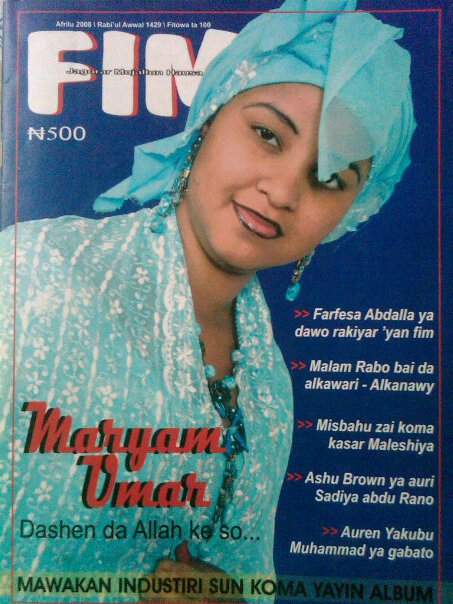




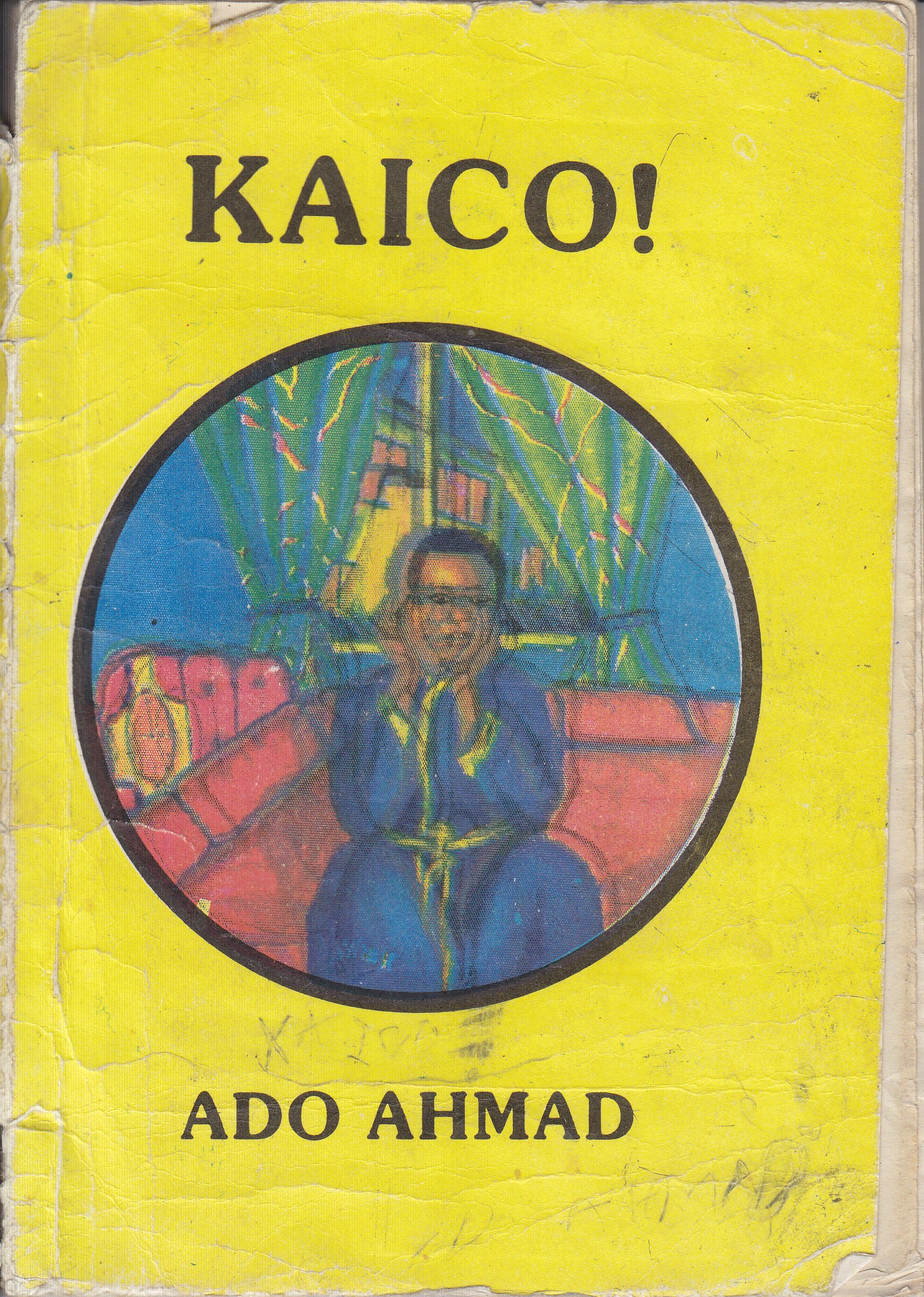
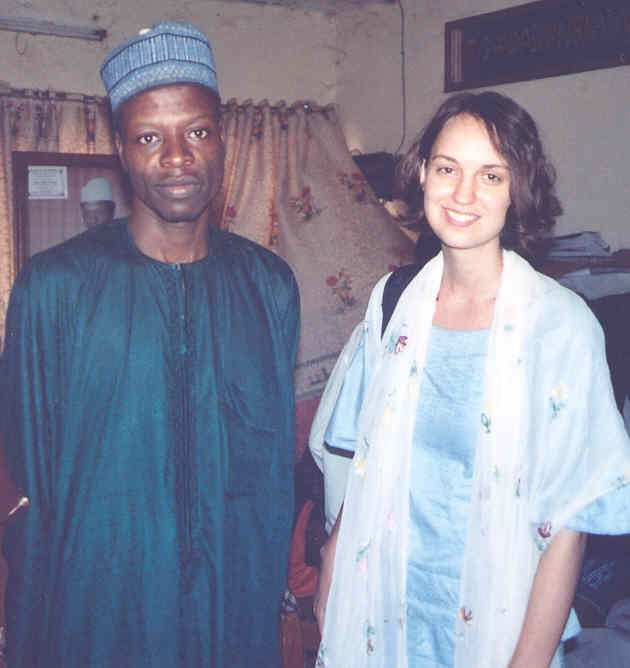


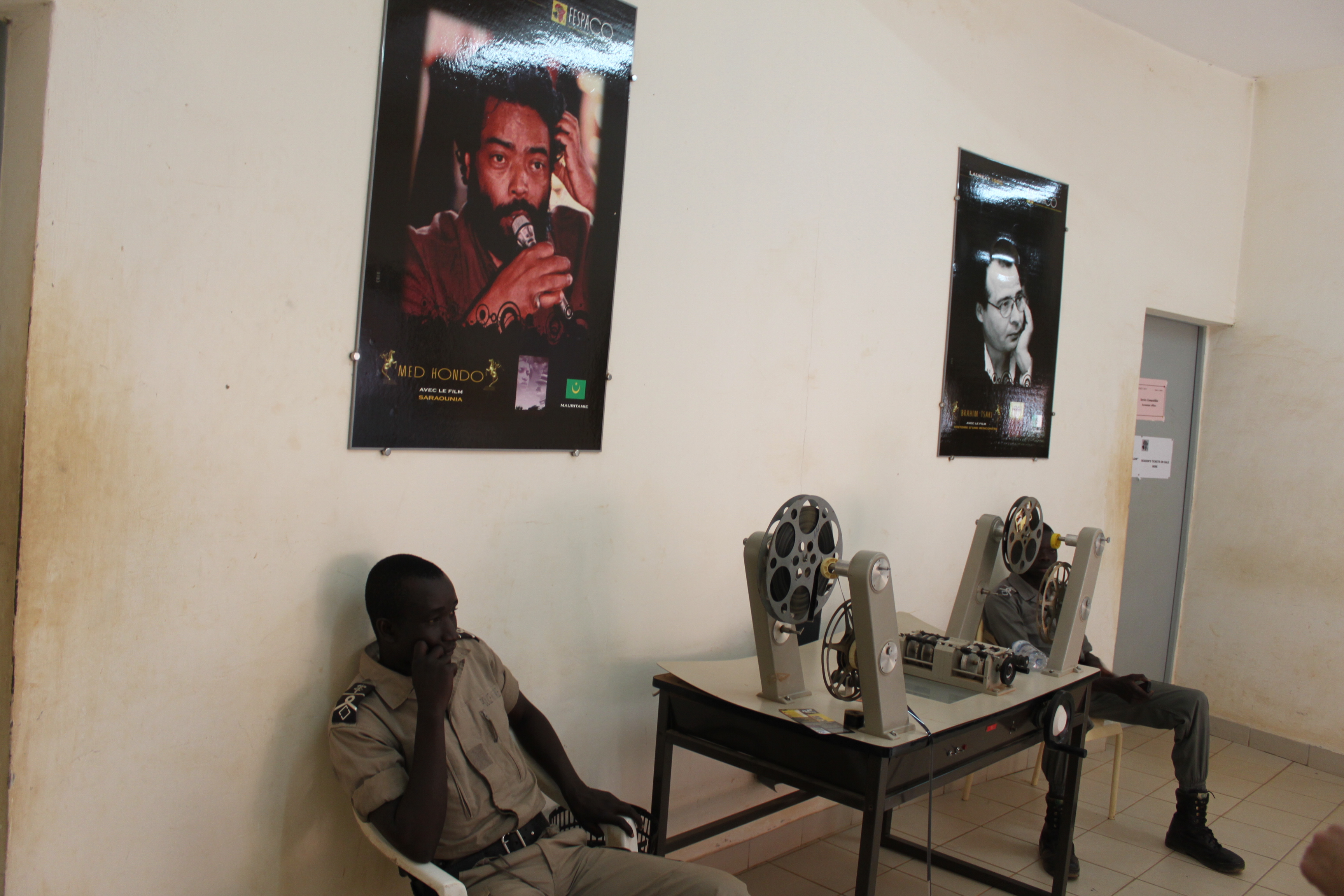


 A Tunanina...